A new window can have good glass, a strong frame and a clean colour, but still look disappointing if the finishing is poor. Gaps around the frame, messy sealant, oversized plastic strips or rough edges can make even a new installation feel cheap.
That is why uPVC window trim matters. It is not the most exciting part of a window quote, but it has a big effect on the final appearance, draught control and how professional the installation feels.
If you are still comparing the main styles, materials and buying decisions, our uPVC Windows Guide is the best place to start before looking at the smaller finishing details.
What is uPVC window trim?
uPVC window trim is the finishing material used around the edge of a window frame. It can cover small gaps, tidy up edges and create a cleaner join between the window and the surrounding wall, plaster, brickwork or reveal.
Common places where trim is used include:
-
around internal window reveals
-
along the edge of the frame
-
around the sill or window board
-
externally where the frame meets brickwork
-
to cover small installation gaps
-
to make older openings look neater after replacement
The trim should make the window look finished.
Why trim affects the finished look
Many homeowners focus on frame colour and glazing specification, but the trim is what you often notice when standing close to the window.
Good trim should look neat, straight and balanced. It should not dominate the frame or make the window look boxed in.
The best solution is to choose the smallest trim that gives a clean finish. If very wide trim is needed everywhere, it may suggest the opening, plasterwork or measuring needs closer attention.
Internal trim: what should you check?
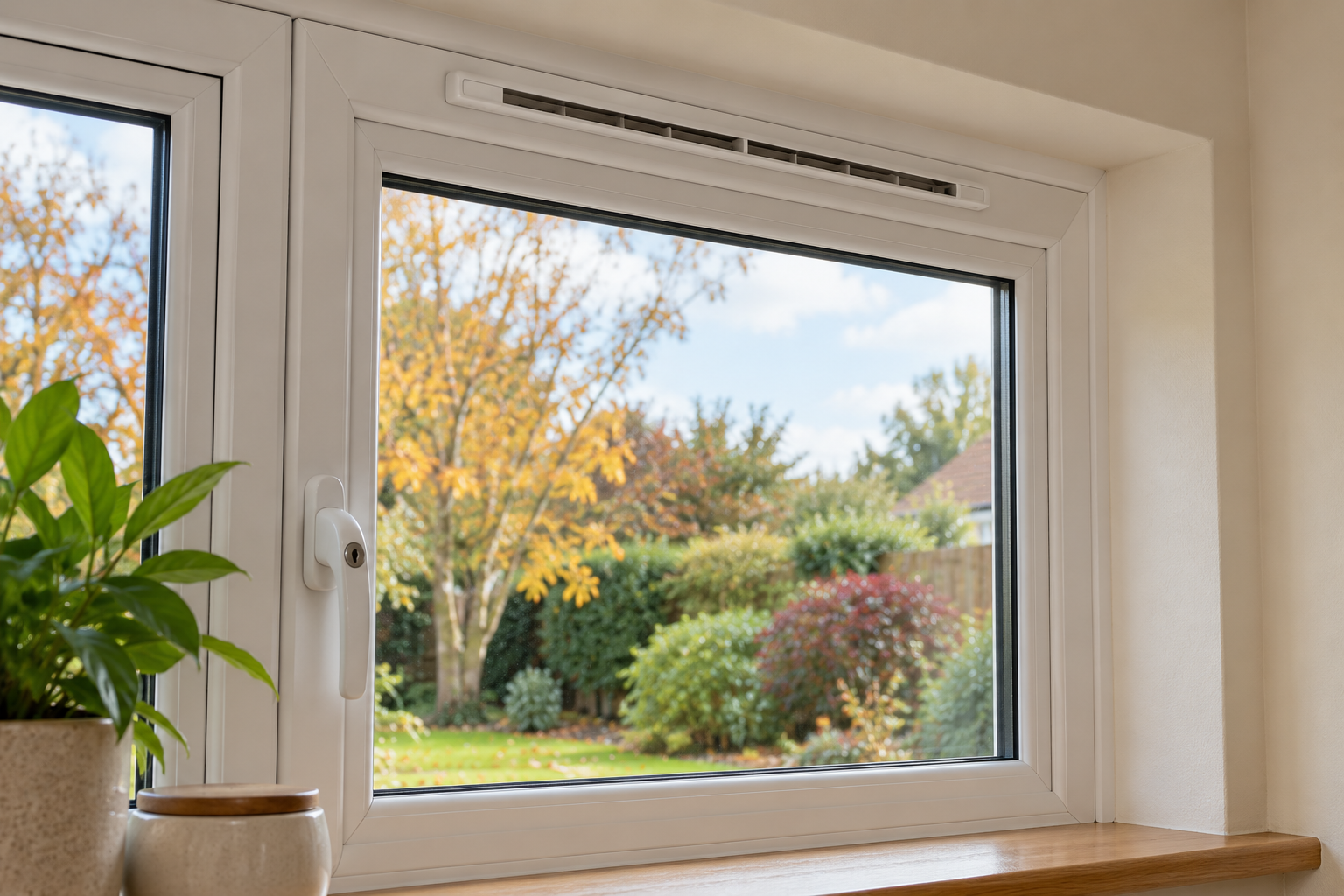
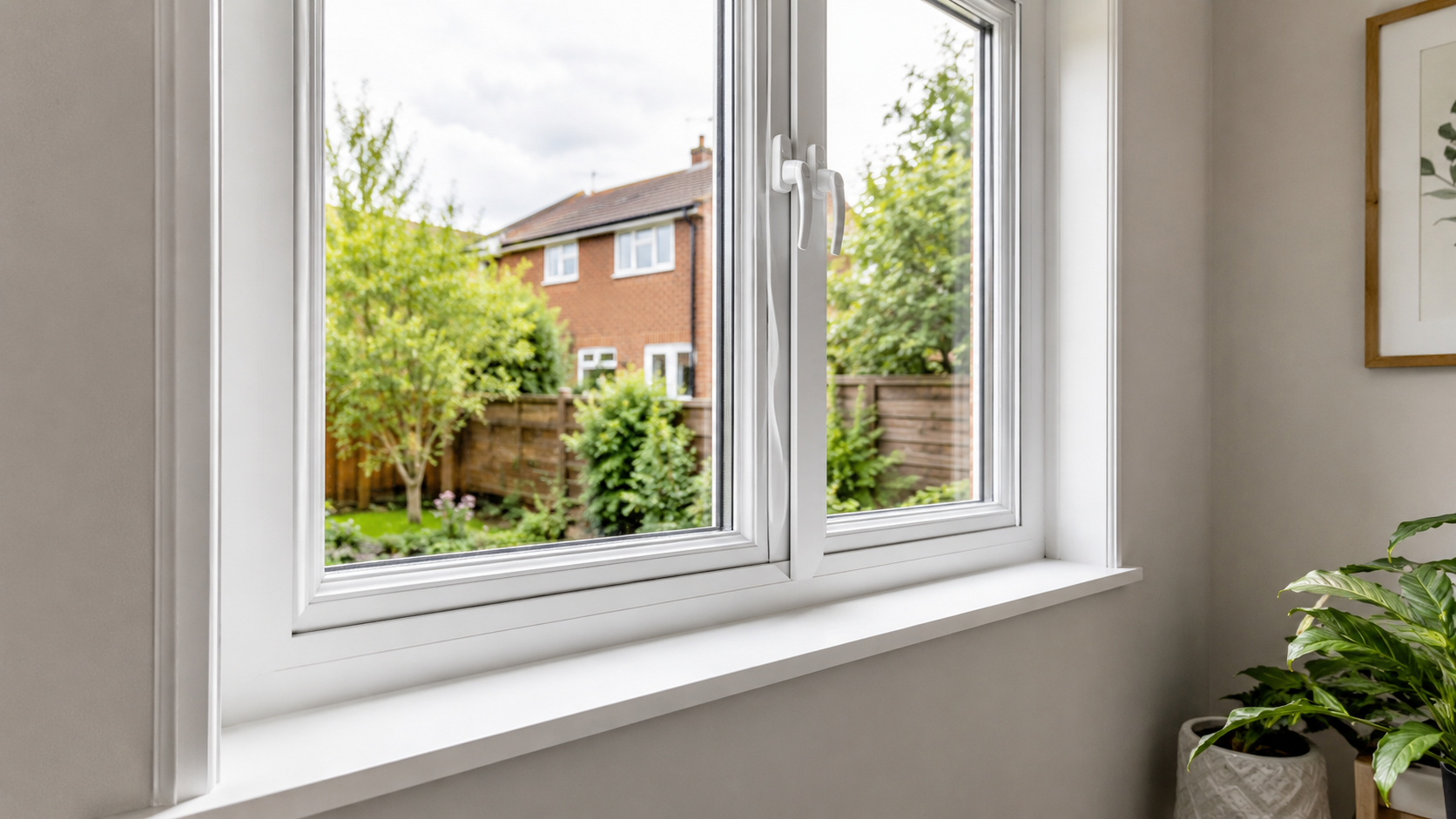
Internal trim is often used where the new window frame meets the inside wall or reveal.
After installation, check:
-
the trim sits straight
-
corners are cleanly cut
-
there are no obvious gaps
-
sealant lines are smooth
-
the trim does not cover too much of the frame
-
the window still looks balanced from inside the room
If your internal ledge or sill is also being replaced, make sure the trim works neatly with it. Our guide to uPVC window ledges and sills explains how internal boards, external sills and finishing details all affect the final result.
External trim and weather sealing
External finishing is not just cosmetic. It also helps protect the join between the frame and the property.
Outside, the key details are:
-
correct sealant
-
neat frame-to-brickwork finish
-
suitable external trim where needed
-
proper drainage around the sill
-
no open gaps for water to sit in
-
no messy overuse of silicone
A clean external finish should help shed water away from the window. It should not trap water or create ledges where dirt and moisture collect.
This is especially important on older homes where the brickwork or render may not be perfectly even. In those cases, a careful installer can still make the finish look tidy, but it needs proper preparation.
Trim should not replace proper sealing
This is one of the most important points.
Trim can tidy up the edge, but it should not be the only thing stopping draughts or water movement. The window should be properly fixed, insulated and sealed before the visible trim is added.
If a room still feels draughty after new windows are fitted, the issue may be poor sealing, worn gaskets, incorrect adjustment or gaps around the frame. Our article on uPVC window seals explains how seals and closing pressure affect warmth and comfort.
The practical solution is to ask the installer what is happening behind the trim.
Why some quotes include more trim than others
Two window quotes can look similar but include different levels of finishing.
One company may include basic frame replacement only. Another may include internal trims, new window boards, making good, external sealant and waste removal.
When comparing quotes, ask:
-
Is internal trim included?
-
Is external finishing included?
-
Are window boards or ledges included?
-
Is making good around plaster included?
-
Is old trim removed?
-
Is waste removal included?
-
What colour will the trim be?
-
Will the trim match the frame?
These small details can make the difference between a clean installation and a job that needs fixing afterwards.
What does good uPVC window trim look like?
Good trim should feel almost invisible. It should support the window visually, not draw attention to itself.
A good finish usually has:
-
clean straight lines
-
consistent trim width
-
tidy mitred corners
-
smooth sealant
-
no excessive gaps
-
no bulky plastic strips where they are not needed
-
a neat join with the sill and reveal
The aim is not to cover everything with plastic. The aim is to make the window look like it belongs in the property.
Can trim be replaced later?
Yes, in many cases internal trim can be replaced or improved later, especially if the window itself is sound.
This can be useful if:
-
old trim has yellowed
-
corners are poorly cut
-
sealant has failed
-
decoration work has changed the reveal
-
the window board has been replaced
-
the finish looks untidy after previous work
However, if the trim is hiding a larger installation issue, simply replacing the visible strip may not solve the problem.
Should you choose white, anthracite or matching trim?
White trim is common because many uPVC windows are white inside. But if your windows are anthracite grey or another colour, ask how the inside and outside finishing will look.
Some homeowners choose coloured frames outside and white inside. Others prefer matching trims for a more consistent look.
The best option depends on:
-
internal wall colour
-
frame colour
-
room style
-
external brickwork or render
-
whether windows are coloured both sides
-
budget
A good quote should make this clear before installation.
How trim affects long-term value
uPVC window trim is a small part of the project, but it affects how the work feels when finished. Poor trim can make a new window look rushed. Good trim can make the installation feel clean, modern and properly planned.
If you are replacing several windows, it is worth understanding likely costs before speaking to installers. The Double Glazing Cost Calculator on Bestpricevalue.com can help you compare realistic UK price ranges and prepare for quotes more confidently.
Final thoughts
uPVC window trim is not just a finishing strip. It is part of the overall installation quality. The right trim can hide small joins, create a neat finish and make the window look properly fitted. The wrong trim can make a good window look cheap.
Before accepting a quote, ask how the inside and outside edges will be finished, whether trims and making good are included, and what the final result should look like. A well-finished window should look clean, balanced and natural in the home.
For more practical home improvement advice and project updates, follow Bestpricevalue.com on LinkedIn.