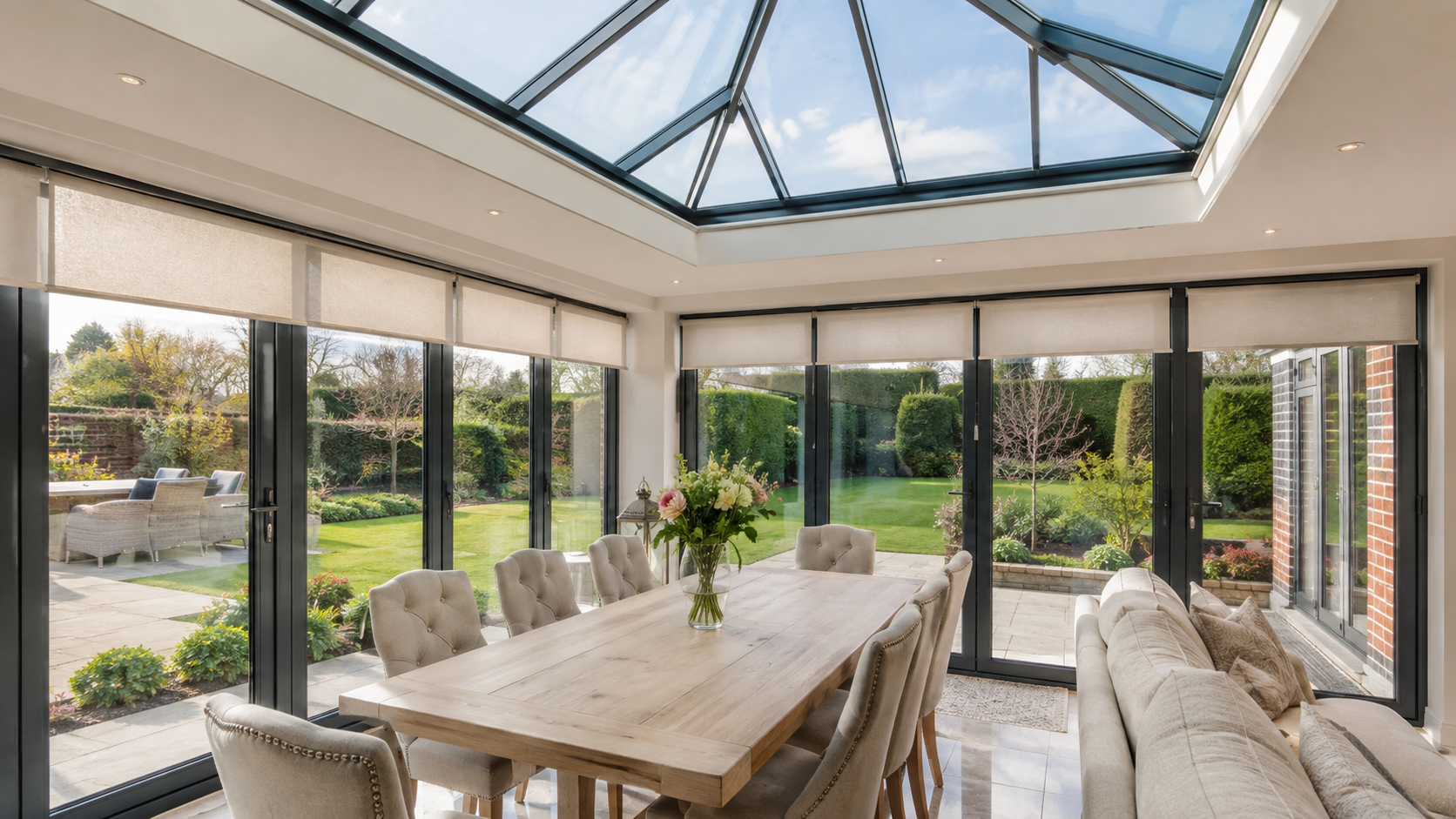
An orangery can look beautiful when the sun is shining through the roof lantern and large glazed panels. But real homes need more than a bright design photo. They need privacy, glare control, comfort and a room that still works on hot afternoons and darker winter evenings.
That is why orangery blinds are worth thinking about early. Blinds are not just a finishing accessory. In the right places, they can help control sunlight, improve privacy, reduce glare and make the room easier to use throughout the year.
If you are still planning the main structure, our Orangery UK Guide is the best place to start before choosing roof lanterns, glazing and finishing details.
Why blinds matter in an orangery
An orangery usually has more glass than a standard extension. That is one of its biggest advantages, but it also means light and heat need to be managed properly.
The most common problems are:
- glare on TV screens or laptops
- too much direct sun during summer
- lack of privacy from neighbouring gardens
- a room that feels exposed at night
- roof lantern light becoming too strong at midday
- furniture fading near large glazed areas
The solution is not simply to cover every window. The better approach is to choose blinds only where they solve a real problem.
For example, a south-facing roof lantern may need shading, while a north-facing side window may not. A garden-facing wall may stay open, while side-facing glass near a neighbour may need privacy blinds.
Roof lantern blinds: when are they worth it?
Roof lantern blinds are one of the most useful upgrades for some orangeries, especially if the room receives strong overhead sun.
They can help with:
- reducing glare
- softening strong daylight
- improving comfort during summer
- making the room feel cosier in the evening
- giving more control over how the space feels
For roof lanterns, manual blinds can be awkward because they are high up. That is why electric roof lantern blinds are often the more practical solution. They cost more, but they are much easier to use every day.
If you are still deciding on the roof design, our guide on what is the best roof for an orangery explains how lantern, flat and solid roof choices affect light and comfort.
Should you choose blinds or solar-control glass?
This is where many homeowners make the wrong comparison.
Blinds and solar-control glass do different jobs.
Solar-control glass helps reduce the amount of solar heat entering the room. It is useful for sunny elevations and roof glazing where overheating could become a problem.
Blinds give more flexible control over glare, privacy and the feel of the room.
The best solution is often a combination:
- solar-control glass for strong sun exposure
- roof lantern blinds for flexible shading
- side window blinds for privacy
- good ventilation to let warm air escape
For sunny or south-facing orangeries, ask installers whether solar-control glazing is included in the quote. It may cost more than basic glass, but it can make the room more comfortable and reduce the need to keep blinds closed all day.
Best blind types for an orangery
Different areas of the orangery may need different blind types.
Pleated roof blinds
Pleated blinds are popular for roof lanterns because they fold neatly and soften strong overhead light. They can work well in modern or traditional orangery designs.
Roller blinds
Roller blinds are simple, clean and practical for side windows and doors. They suit modern rooms and can be made with privacy, blackout or solar-filtering fabrics.
Venetian blinds
Venetian blinds give adjustable privacy and light control. They can work well on side windows but are usually less practical for roof lanterns.
Perfect-fit blinds
These sit neatly within the window or door frame without drilling into surrounding walls. They can be useful for glazed doors or smaller window panels.
Electric blinds
Electric blinds are especially useful for roof lanterns and hard-to-reach glazing. They are more expensive, but they solve the everyday problem of access.
Privacy: what should you cover?
Privacy depends on the layout of the home.
If the orangery faces a private garden, you may not need much coverage at the rear. But side windows facing a neighbour, road or shared boundary may need privacy from day one.
Useful solutions include:
- privacy blinds on side windows
- obscure glass for smaller side panels
- lower-level screening with planting outside
- carefully positioned furniture
- roof lantern blinds for evening comfort
The important point is to plan privacy before the build is finished. Once the glazing is installed, options can become more limited or more expensive.
Heat control: blinds are only part of the answer
Blinds can help reduce glare and direct sunlight, but they are not the full heat-control solution.
A comfortable orangery usually needs:
- suitable glazing specification
- good roof design
- ventilation
- shading where needed
- sensible heating and cooling planning
- correct orientation advice
For example, roof vents can help warm air escape. Solar-control glass can reduce heat build-up. Blinds can then give extra control when the sun is low or bright.
If you are planning a kitchen or dining orangery, this matters even more because the room may already have heat from cooking, appliances and larger gatherings.
How much do orangery blinds cost?
Prices vary widely because roof lantern blinds, electric controls and custom shapes cost more than standard window blinds.
As a rough guide:
- simple side window blinds are usually the lowest-cost option
- made-to-measure blinds cost more than standard sizes
- roof lantern blinds usually cost more because of size and access
- electric roof blinds are normally the premium option
The exact cost depends on size, fabric, control type and installation. If you are budgeting for the whole project, it is sensible to include blinds and shading as a finishing allowance rather than treating them as an afterthought.
Before comparing full project quotes, the Orangery and Conservatory Cost Calculator on Bestpricevalue.com can help you estimate realistic UK price ranges and understand what may affect your final budget.
Final thoughts
Orangery blinds are not just about decoration. They help control privacy, glare, sunlight and everyday comfort. The best choice depends on the room’s direction, roof lantern size, glazing specification and how you plan to use the space.
For most homeowners, the smartest approach is to plan blinds, glazing and ventilation together. That gives you a brighter room when you want light, better privacy when you need it, and more control throughout the year.
For more practical home improvement advice and project updates, follow Bestpricevalue.com on Instagram.