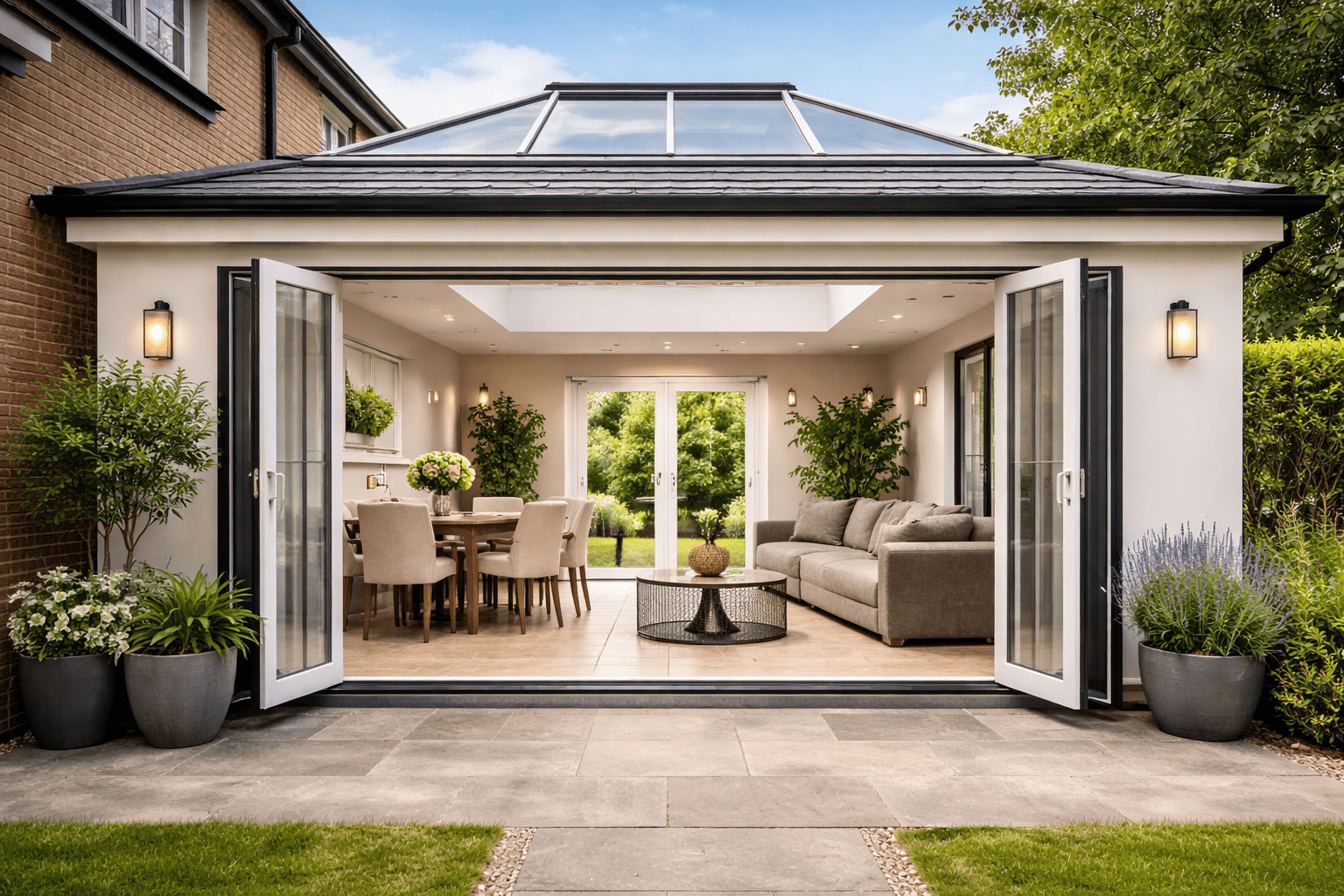
The roof is what truly defines an orangery. It controls how much light enters the space, how comfortable it feels throughout the year and how well it integrates with the rest of the home.
If you’re still exploring layouts and sizes, it’s worth starting with this orangery UK guide covering design, sizes and build rules before deciding on the roof style.
The three main orangery roof types
Most orangeries in the UK are built using one of three roof styles:
- roof lantern (most common)
- flat roof with glazing sections
- solid roof design
Each option changes how the space looks and performs in real life.
Roof lantern: the classic orangery choice
A roof lantern is the most recognisable orangery feature. It sits raised above a flat roof and allows light to enter from multiple angles, creating a bright and open feel.
Benefits:
- maximum natural light
- premium appearance
- strong visual impact
Things to consider:
- higher cost
- can require solar control glazing to prevent overheating
This style is often used in modern extensions, especially where homeowners want a brighter alternative to a traditional orangery extension designed for year-round use.
Flat roof with glazing sections
This option uses a flat roof with smaller glass sections or rooflights instead of a full lantern.
Benefits:
- more affordable
- cleaner, modern look
- better control of sunlight
Limitations:
- less dramatic than a lantern
- slightly reduced light levels
This design is popular in contemporary homes where simplicity and cost control are priorities.
Solid orangery roof
A solid roof creates a more enclosed space, making the orangery feel closer to a traditional extension.
Benefits:
- excellent insulation
- consistent indoor temperature
- reduced glare
Drawbacks:
- less natural light
- less visual connection to the garden
This option is often chosen when the orangery is used as a lounge or home office rather than a bright open-plan space.
Choosing the right roof for your home
The best option depends on how you plan to use the space:
- want maximum light → roof lantern
- want balance and affordability → flat roof with glazing
- want comfort and insulation → solid roof
It also helps to compare how these designs differ from other extensions. If you’re still deciding between options, see our guide on orangery vs conservatory and which is best for your home.
Glazing performance matters more than design
Even the best roof design depends on the quality of the glazing used.
Modern orangery roofs often include:
- solar control glass
- low-emissivity coatings
- thermal insulation layers
These features help prevent overheating in summer while keeping the space warm in winter.
For a deeper breakdown of how glazing and structure affect comfort, see our guide on orangery roof options, glazing and performance.
Cost differences between roof types
Roof design is one of the biggest factors affecting the total price of an orangery.
Costs vary depending on:
- size
- materials
- glazing specification
- installation complexity
Before choosing a design, it helps to understand realistic pricing.
You can use the orangery cost calculator on Bestpricevalue.com to estimate typical UK costs based on your project.
Final thoughts
The roof is not just a design feature — it determines how your orangery performs every day. Light, temperature and usability all depend on getting this decision right.
Focusing on how the space will actually be used leads to better long-term results than choosing based on appearance alone.
For more home improvement insights and practical guidance, follow Bestpricevalue.com on Facebook, where we regularly share tips and real project advice.