Bifold doors are designed to open up a home and create a seamless connection to the outdoors — but when things go wrong, leaks and drafts can quickly become a concern.
The truth is, most issues are not caused by the doors themselves, but by how they are designed and installed.
Do bifold doors actually leak?
Properly installed, high-quality bifold doors should not leak.
However, problems can occur when:
- installation is poor
- thresholds are incorrectly fitted
- drainage is not considered
- low-quality systems are used
In many cases, leaks are preventable with the right setup.
The most common causes of leaks
Understanding where issues come from helps you avoid them entirely.
1. Poor installation
This is the biggest cause of problems.
If the frame is not level or properly sealed:
- water can enter around the edges
- seals may not compress correctly
- doors may not close tightly
2. Low threshold designs
Many homeowners choose low or flush thresholds for a modern look.
While great for access, they:
- reduce water protection
- rely heavily on drainage design
Without proper planning, water can track inside during heavy rain.
3. Drainage issues
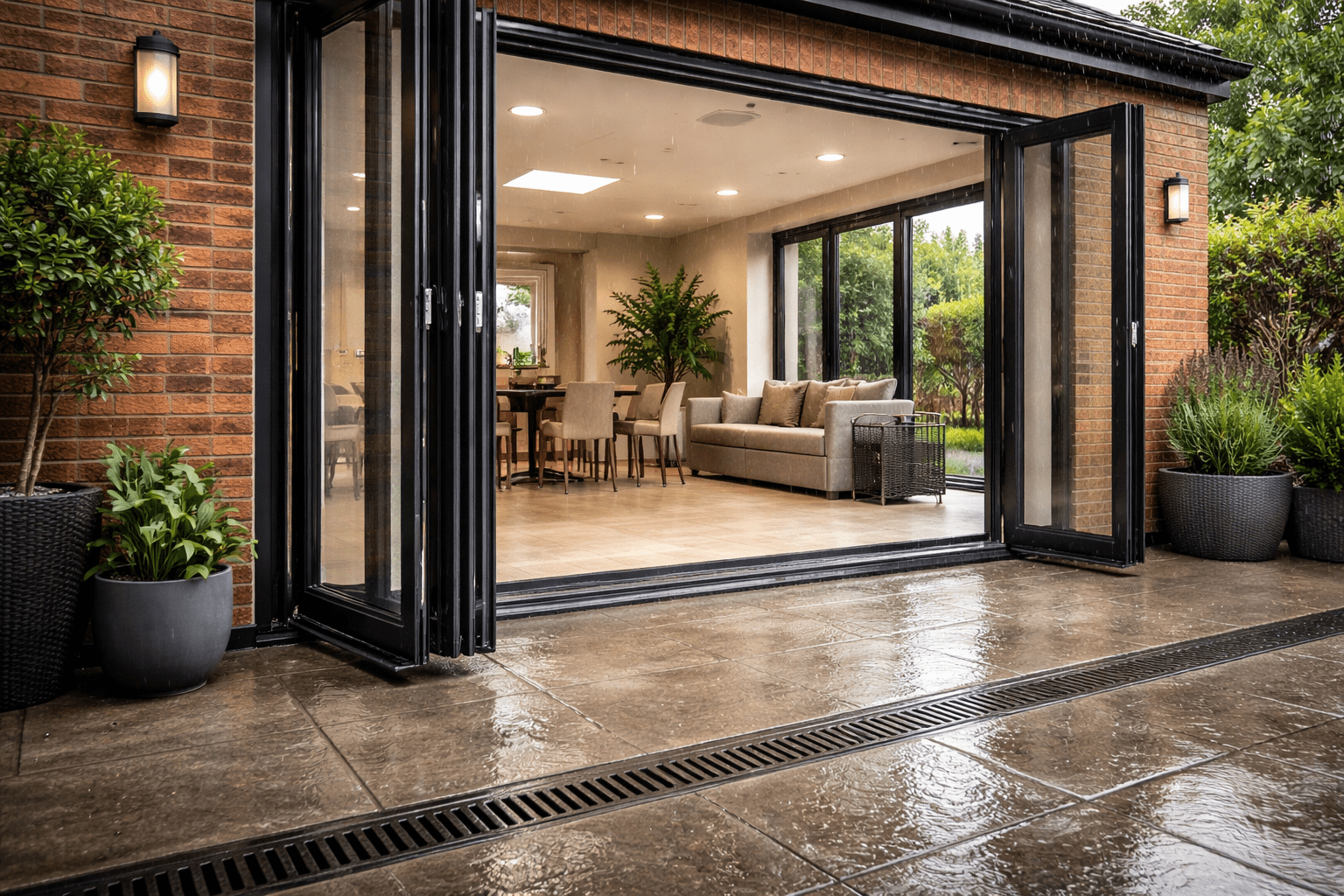
Bifold systems are designed to manage water — not eliminate it completely.
Problems happen when:
- external drainage is missing
- patio levels are too high
- water cannot flow away from the door
4. Worn or poor-quality seals
Over time, seals can degrade or fail, especially in cheaper systems.
This can lead to:
- drafts
- small leaks
- reduced thermal performance
How to prevent leaks from the start
Most problems can be avoided before installation even begins.
A good installer will:
- ensure correct threshold selection
- design proper drainage solutions
- install with precise alignment
- use high-quality sealing systems
This is why choosing the right company matters more than choosing the cheapest quote.
Are bifold doors worse than sliding doors?
Not necessarily — but they behave differently.
Bifold doors:
- have more moving parts
- rely on multiple seals
- require precise installation
Sliding doors:
- have fewer seals
- are often slightly more weather-resistant
If you’re comparing both options, it’s worth reading our guide on bifold vs sliding doors before making a decision.
What about UK weather?
UK conditions (rain, wind, temperature changes) make installation quality even more important.
A well-installed system will:
- handle wind-driven rain
- maintain thermal performance
- stay watertight over time
A poorly installed one will show issues quickly — especially in exposed areas.
Understanding costs vs quality
Lower-cost bifold doors often mean compromises in:
- frame strength
- sealing systems
- installation quality
This is where many problems begin.
Before choosing, it helps to understand realistic pricing.
You can use the bifold door cost calculator on Bestpricevalue.com to compare typical UK price ranges based on your project.
Final thoughts
Bifold doors themselves are not the problem — poor installation and bad design decisions are.
Getting the details right from the start ensures long-term performance, comfort and peace of mind.
For more practical home improvement advice and real project insights, follow Bestpricevalue.com on Facebook, where we regularly share tips and updates.