One of the biggest questions homeowners ask before building an orangery is simple: will it actually feel warm enough in winter?
It is a fair concern. Older conservatories built with too much glass and too little insulation gave many people the impression that all glazed extensions become cold, draughty and expensive to heat. But a modern orangery is different. When designed properly, it can feel far more like a true extension than a seasonal add-on.
Why some orangeries feel warmer than others
Not all orangeries perform the same. Warmth depends less on the name of the structure and more on the quality of the design and build.
The biggest factors are:
- roof design
- glazing specification
- brickwork and insulation
- door and frame quality
- heating and ventilation layout
A well-built orangery usually includes more solid structure than a conservatory, which helps with insulation and year-round comfort. That is one reason many homeowners now see an orangery as a smarter middle ground between a full extension and a lighter glazed room.
Roof design makes a huge difference
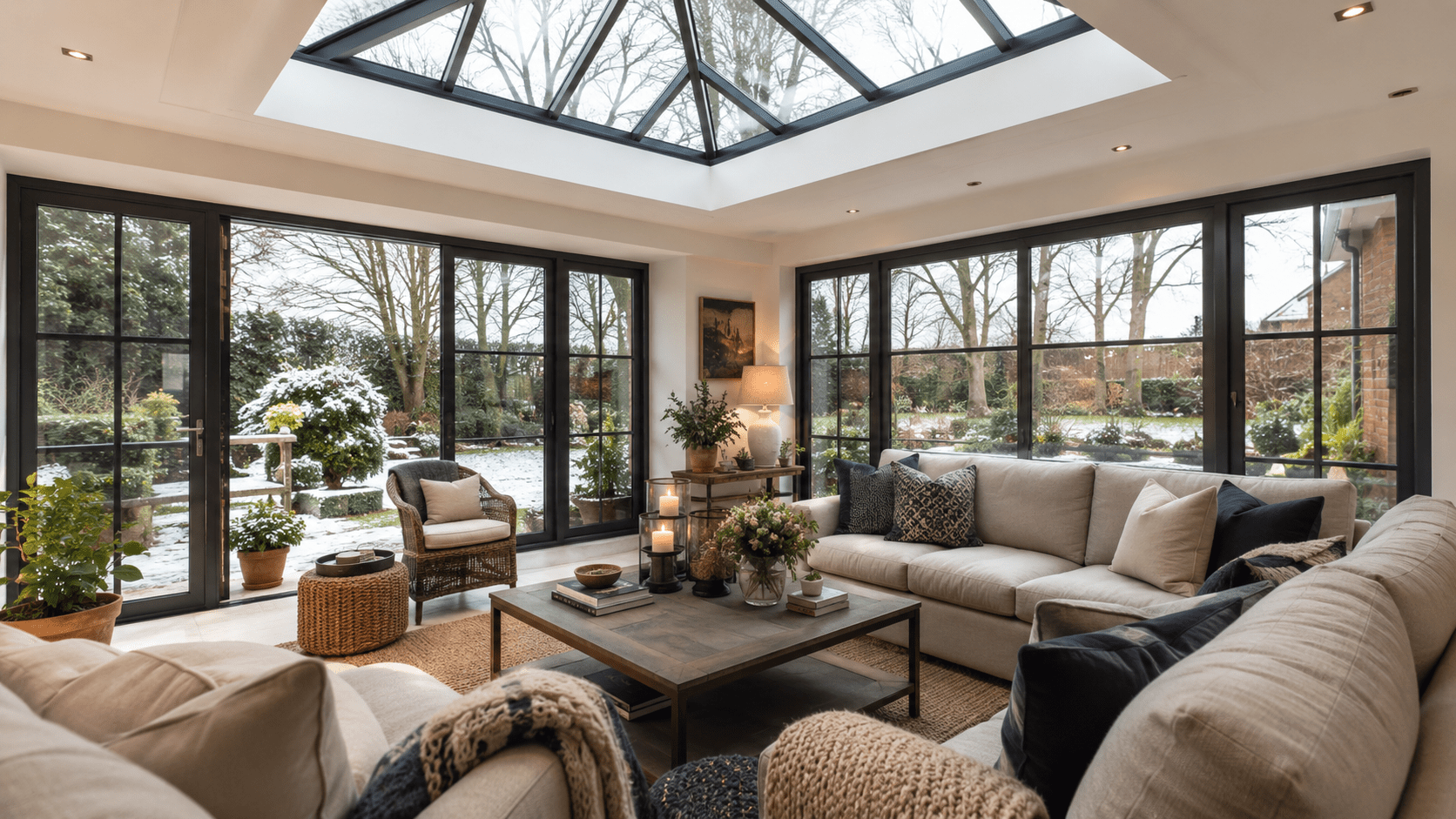
The roof is one of the biggest comfort factors in any orangery. A poorly designed glazed roof can allow too much heat to escape, while a well-specified lantern roof can balance light with insulation much better.
If you are still comparing layouts, materials and performance, our guide to orangery roof options, glazing and what affects comfort explains why roof choice has such a big effect on how usable the room feels in colder months.
This is especially important in the UK, where winter comfort matters more than how impressive the room looks on a sunny brochure photo.
Glazing matters more than people expect
Many homeowners focus first on size and style, but the glass specification often matters just as much. Modern glazing can significantly improve winter performance, especially when combined with thermally efficient frames and better sealing.
That means the real question is not just “is an orangery warm in winter?” but “how well is this particular orangery specified?”
Cheap glazing and weak installation standards can make even a beautiful design feel disappointing in real life.
Heating and layout still matter
Even a well-insulated orangery needs sensible heating planning. The heating system should be sized for the room and planned alongside insulation, glazing and controls. Our orangery heating ideas guide compares underfloor heating and radiators and explains the decisions to make before installation.
Furniture placement, door openings and the size of the connection to the main house all influence how warm and practical the room feels day to day. That is why the best orangery extension designs are not just about appearance — they are planned for real use in every season.
Is an orangery warmer than a conservatory?
In many cases, yes.
Because an orangery usually has:
- more brick or solid wall structure
- a more insulated roof design
- a stronger “extension” feel
it is often easier to keep comfortable in winter than an older-style conservatory. That does not mean every orangery is automatically warm, but it does mean the format has stronger year-round potential when built well.
Compare costs before you decide
Warmth and performance usually come back to specification, and specification affects price. Better glazing, improved roof design and higher-quality installation all influence the final quote.
Before speaking to installers, it helps to benchmark realistic costs first. You can use the Orangery & Conservatory Cost Calculator on Bestpricevalue.com to compare likely UK price ranges based on your project.
Winter orangery FAQs
Can an orangery be used every day in winter?
Yes, when its insulation, glazing, draught control and heating are designed together. Ask for a room-by-room heat-loss calculation and a heating design based on the proposed room, rather than assuming a roof lantern or extra radiator guarantees comfort.
Is underfloor heating always the best option?
No. It depends on the floor construction, available floor height, heat requirement, heat source and how you use the room. Radiators may suit some projects better. Compare installation work and running costs using the same room specification and usage assumptions.
What should I check if an existing orangery feels cold?
Start with draughts around opening doors and windows, heating controls, roof and floor insulation, and the condition of the glazing. Ask an installer to identify the main source of heat loss before paying for a larger heater or replacement glazing. Keep designed ventilation working.
Does the cost calculator estimate heating bills?
No. The Orangery & Conservatory Cost Calculator gives an indicative project budget. Running costs depend on heat loss, the heating system, energy prices, thermostat settings and hours of use. Request a separate heating assessment if the room will be used daily.
Final thoughts
Yes, an orangery can absolutely be warm in winter — but only when the design, glazing and insulation are right. The label alone does not guarantee comfort. What matters is how the room is built and how well it suits the way the home is actually used.
For more practical home improvement advice and updates, follow Bestpricevalue.com on LinkedIn.