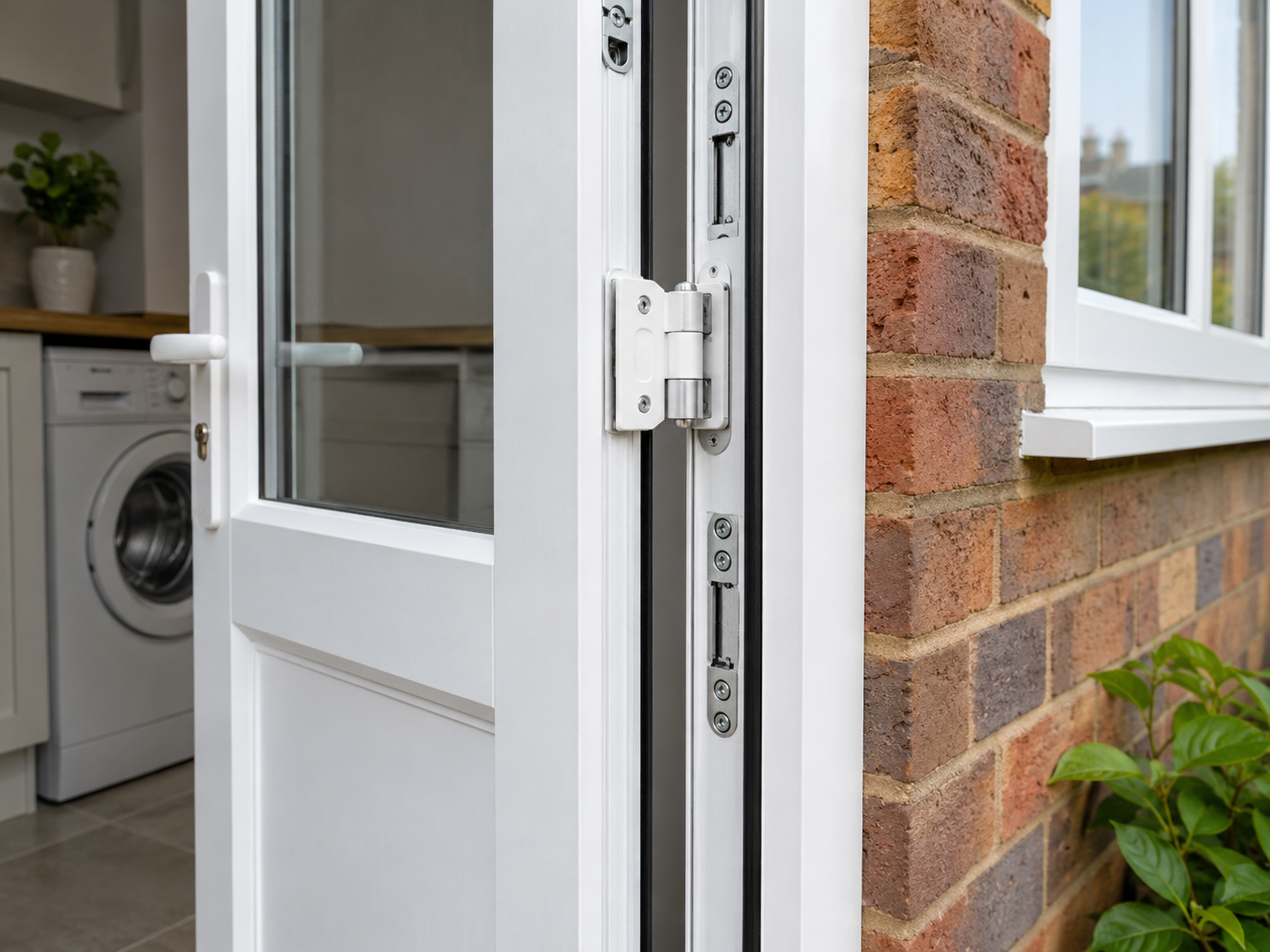
A uPVC door can look perfectly fine but still become frustrating to use. It may catch the frame, drag along the threshold, need lifting before it locks, or feel like it has “dropped” over time. In many cases, the problem starts with the uPVC door hinges.
If you are comparing modern uPVC doors, hinges might not be the first detail you think about. But they affect how the door closes, seals, locks and performs every single day.
Why uPVC door hinges matter
Door hinges do more than hold the door in place. They help control the position of the sash inside the frame. If the door is even slightly out of alignment, it can create problems with locking, draughts and everyday use.
Common signs include:
- the door catches at the bottom
- the handle becomes hard to lift
- the lock does not engage smoothly
- there is a gap around part of the frame
- the door needs pushing or lifting to close
- the threshold shows rubbing marks
The useful question is not simply “are the hinges broken?” but:
Is the door out of adjustment, or has the hardware actually worn out?
That difference matters because adjustment is usually cheaper than replacement.
Can uPVC door hinges be adjusted?
Yes, many uPVC door hinges can be adjusted. Depending on the hinge type, an installer may be able to move the door slightly up, down, left, right or closer to the frame.
This can help when the door has dropped slightly or no longer lines up with the locking points.
A proper adjustment can often improve:
- closing pressure
- draught control
- locking smoothness
- weather sealing
- handle operation
The solution is usually to adjust the hinges and then test the lock, seals and threshold together. Adjusting only one part without checking the full door can leave the problem half-solved.
If your main symptom is the lock not engaging smoothly, our guide on uPVC door lock problems explains how alignment and locking faults often connect.
Why do uPVC doors drop?
A door can drop for several reasons.
The most common causes are:
- normal long-term use
- heavy glazed panels
- hinge wear
- poor original installation
- frame movement
- repeated slamming
- incorrect adjustment
A heavier door with large glass panels puts more pressure on the hinges than a lighter panelled door. That does not mean glazed uPVC doors are a bad choice, but it does mean the hinge quality and installation standard matter.
For a main entrance or busy back door, it is worth asking installers what hinge system is used and whether the door is reinforced properly for the weight of the sash.
When is hinge adjustment enough?
Hinge adjustment usually makes sense when:
- the door is otherwise in good condition
- the frame is still square
- the lock works once the door is aligned
- the hinges are not cracked, bent or badly worn
- the door has only dropped slightly
In this situation, a professional adjustment can often restore the door without needing a full replacement.
A simple clue is how the handle behaves. If lifting the handle becomes much easier after the door is pushed into the correct position, alignment is probably part of the issue.
When should hinges be replaced?
Hinge replacement may be the better option when:
- the hinge is visibly damaged
- the door keeps dropping again after adjustment
- screws no longer hold properly
- the hinge has too much movement
- the door is heavy and the existing hinges are weak
- adjustment range has already been used up
The important solution is to replace like-for-like only when the existing hinge type is still suitable. If the old hinges were not strong enough for the door, using the same weak specification may only delay the same problem.
A good fitter should check the door weight, hinge type, fixing points and frame condition before recommending replacement.
What about draughts?
A dropped door can create draughts even if the seals still look fine. When the door is out of line, the sash may not compress evenly against the frame. That means one part of the door might seal properly while another part lets air through.
The fix is not always new seals. Often the better first step is to check alignment, hinges and locking points. Once the door closes evenly, the seals can do their job properly.
This is why quote comparisons should include more than just the visible door style. A good uPVC door should be fitted, adjusted and tested so that the lock, hinges, frame and seals all work together.
When a new uPVC door may make more sense
If the door is old, draughty, difficult to lock and already showing several hardware issues, hinge repair may not be the best long-term value.
At that point, it may be smarter to compare the cost of repeated repairs against a replacement door with better security, improved glazing and a modern frame system. Our uPVC door replacement cost guide can help you understand what usually affects price before speaking to installers.
You can also use the Double Glazing Cost Calculator on Bestpricevalue.com to compare realistic UK price ranges for doors, windows and related glazing projects.
Final thoughts
uPVC door hinges are a small part of the door, but they can affect comfort, security and daily usability. If the door is catching, dropping or becoming hard to lock, the hinges and alignment should be checked before assuming the whole door needs replacing.
The best approach is simple: diagnose the real cause first, adjust where possible, replace hardware when needed, and only consider a new door if the wider system is no longer performing properly.
For more practical home improvement advice and project updates, follow Bestpricevalue.com on Instagram.