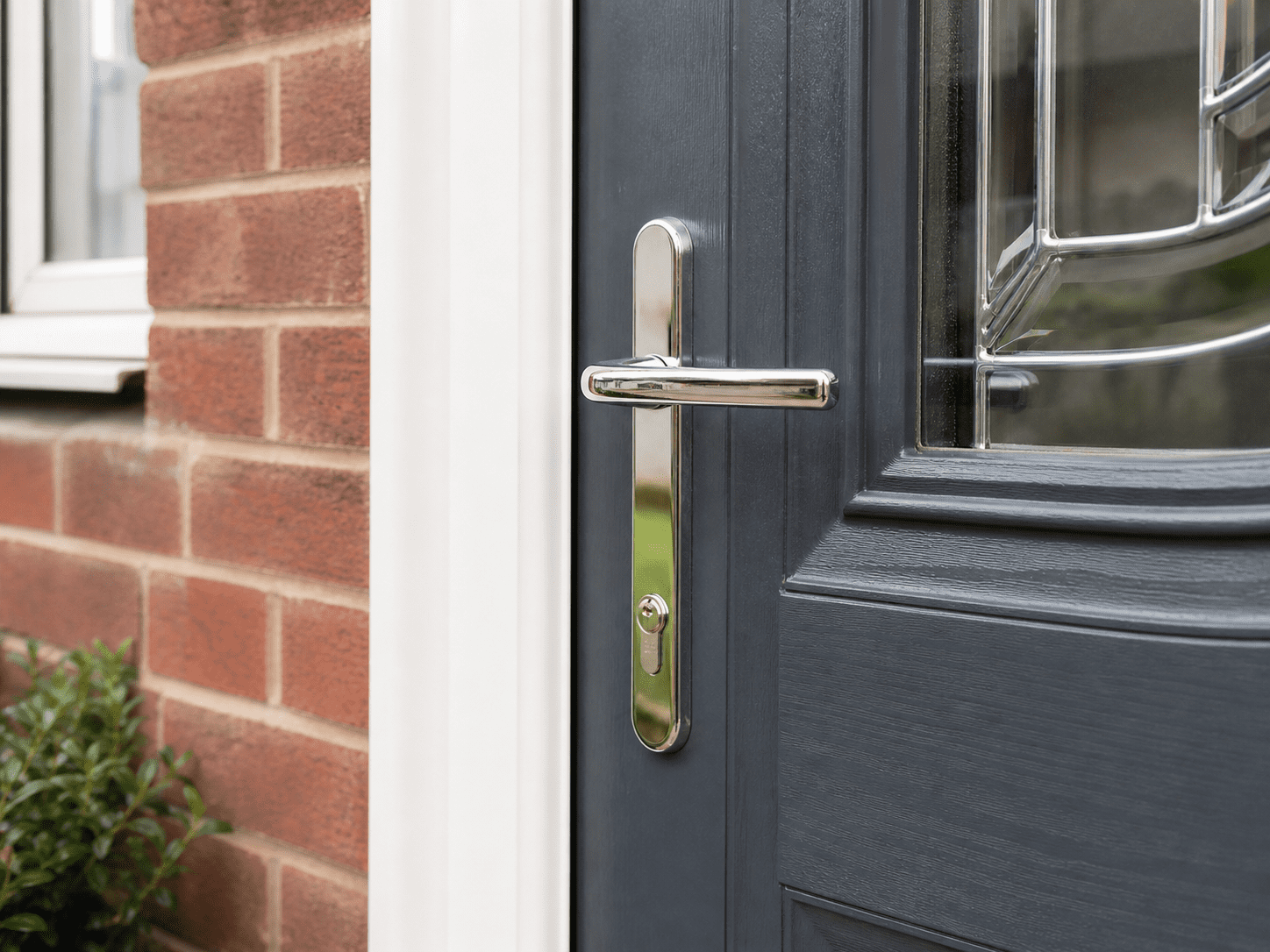
A door handle seems like a small detail until it starts sticking, wobbling or refusing to lock properly. That is why uPVC door handles are searched so often. For many homeowners, the handle is the first part of the door system that starts to feel worn, even when the rest of the door still looks fine.
If you are comparing the wider features, security and specifications of modern uPVC doors, the handle is one of the most practical details to pay attention to. It affects how the door feels every single day.
The main types of uPVC door handles
Not all uPVC door handles are the same. The most common styles include:
- Lever/lever handles – used on many front and back doors where a handle is needed on both sides
- Lever/pad handles – common on doors where the inside uses a full lever and the outside has a fixed pad
- Inline handles – designed so they can work on left- or right-handed doors
- Offset handles – used where the handle position needs to align with a specific locking setup
The right choice depends on the door style, the lock centre measurements and whether the handle is meant for a front door, back door or secondary entrance.
What usually goes wrong?
Most handle problems are not dramatic at first. They tend to start as minor irritations:
- the handle feels loose
- the lever drops or sags
- it becomes stiff to lift
- the lock does not engage smoothly
- the key turns, but the handle still feels wrong
In some cases, the handle itself is worn. In others, the issue is really in the door alignment or locking mechanism. That is why symptoms matter. If the whole door feels misaligned or hard to close, it may be worth reading our guide on uPVC door lock problems and what to expect before replacing the door, because the handle is not always the real cause.
When should you replace the handle?
Handle replacement usually makes sense when:
- the handle is cracked or visibly damaged
- it stays loose even after tightening
- the spring action has failed
- the finish has badly worn away
- the lock and spindle no longer engage properly
A simple handle replacement is often much cheaper than changing the full door, especially when the frame and glazing are still in good condition.
Security matters too
A handle is not just a comfort feature. On many doors, it also plays a part in security. A poor-quality or worn handle can make locking feel unreliable, which is the last thing you want on a main entrance. If security is your priority, our article on uPVC door security, locks and the upgrades that actually matter explains what to compare beyond just the handle itself.
Repair, replace or upgrade?
For older doors, replacing the handle can be a sensible refresh that improves both look and usability. But if the handle issue is part of a bigger pattern — poor locking, draughts, misalignment or worn hardware across the whole door — then a wider upgrade may be worth considering.
That is where realistic pricing helps. Before requesting quotes, you can use the Double Glazing Cost Calculator on Bestpricevalue.com to compare likely UK price ranges for doors and glazing projects.
Final thoughts
uPVC door handles are easy to overlook, but they have a big effect on daily use, security and overall feel. Choosing the right type — and recognising when the issue is deeper than the handle alone — can save time, money and frustration.
For more practical home improvement advice and updates, follow Bestpricevalue.com on X.