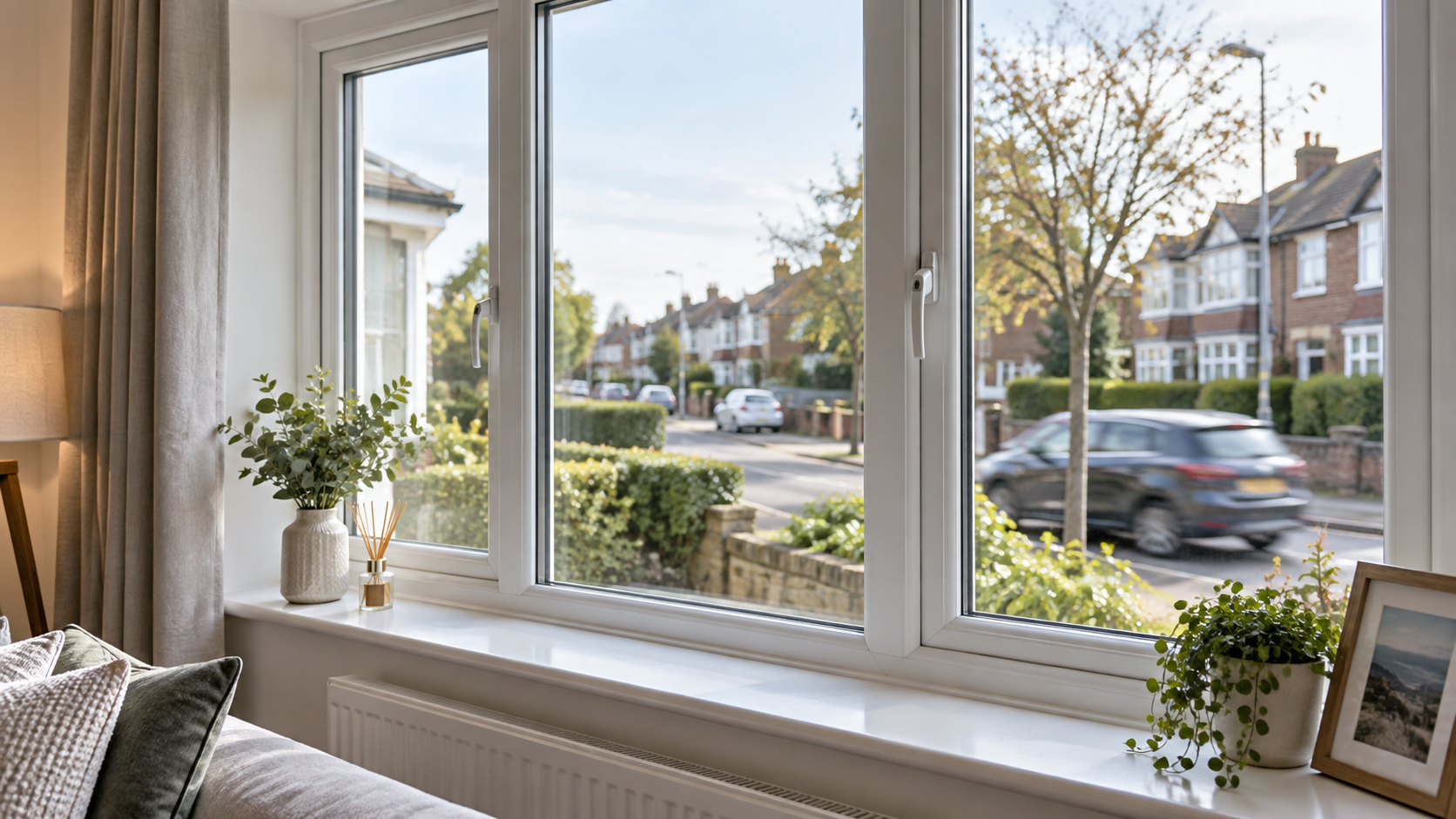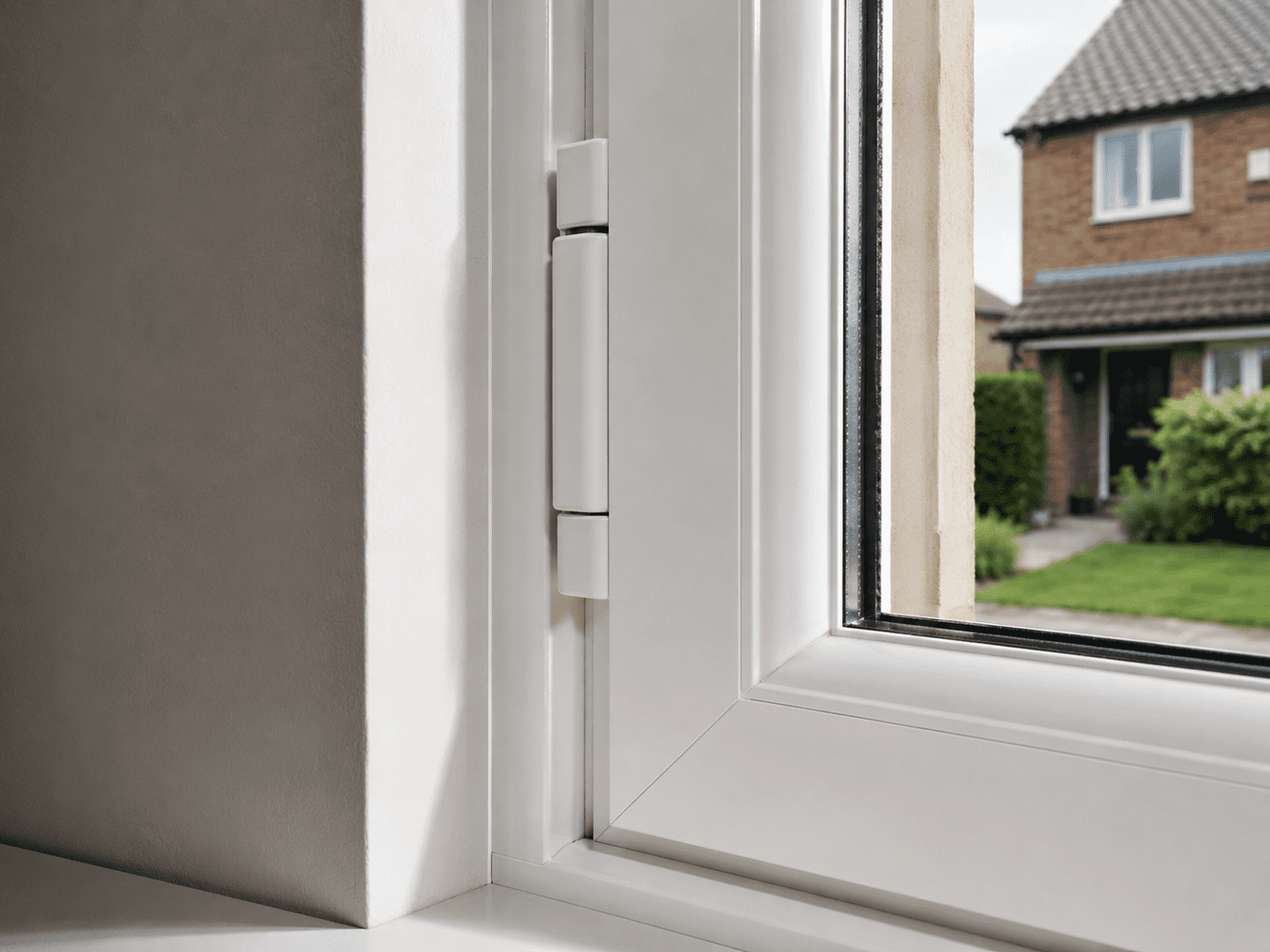
Most homeowners blame the handle when a window starts feeling stiff, draughty or awkward to close. Very often, though, the real issue is lower down the chain: the hinges.
That is why uPVC window hinges are worth paying attention to. They affect how the sash opens, how tightly it closes, and whether the window seals properly against the frame. If you are comparing the wider features, lifespan and performance of modern uPVC windows, hinge quality is one of those small details that has a much bigger effect than people expect.
What usually goes wrong with uPVC window hinges?
Most hinge problems show up in familiar ways:
- the window drops slightly when opened
- the sash catches the frame
- the handle becomes harder to turn
- you notice draughts near the hinge side
- the window closes, but does not pull in tightly enough
In many cases, the hinge has simply worn over time. Friction stays, rust, or poor alignment can all stop the sash from compressing properly against the seals.
Why this matters more than people expect
A hinge issue is not just an irritation. It can affect:
- comfort
- security
- energy efficiency
If the sash is not pulling in correctly, the window can lose its weather seal. That means more draughts, weaker insulation and a room that feels colder than it should. The practical solution is not guessing — it is identifying whether the problem is the handle, the alignment or the hinge itself. If you are seeing several of these symptoms at once, our guide on fixing uPVC window problems helps separate minor faults from bigger ones.
Can window hinges be adjusted?
Sometimes, yes.
A slightly misaligned sash may be improved by adjustment, especially if the hinge is not badly worn. But adjustment is only the solution when the hinge still has enough life left in it. If the metal is worn, bent or no longer pulling the sash in properly, replacement is usually the smarter option.
That is the key buying point for homeowners:
adjustment helps alignment problems; replacement helps worn hardware.
What should you look for instead?
If hinge replacement is needed, the useful questions are:
- is it the correct hinge type for the window?
- does it restore a tight seal when closed?
- is the replacement suitable for the sash size and weight?
- is corrosion resistance good enough for long-term use?
This is where better hardware matters. A cheap like-for-like swap may solve the issue temporarily, but better-quality replacement hinges usually give smoother operation and a tighter close.
When does replacement make more sense than repair?
Hinge replacement is usually worth it when:
- the window is otherwise in decent condition
- the frame is sound
- the glazing still performs well
- the issue is isolated to one or two windows
But if several windows are developing the same problems — hinges, handles, draughts and poor sealing together — the better decision may be to compare repair costs against full replacement. Our guide on how long uPVC windows last is useful here, because ageing hardware is often one of the first signs that a full upgrade is getting closer.
Before speaking to installers, it also helps to benchmark realistic costs. You can use the Double Glazing Cost Calculator on Bestpricevalue.com to compare likely UK price ranges.
Final thoughts
uPVC window hinges are not the most visible part of the window, but they play a major role in how it performs every day. When a sash starts dropping, catching or letting in draughts, the hinge is often the part that deserves attention first.
For more practical home improvement advice and updates, follow Bestpricevalue.com on Facebook.