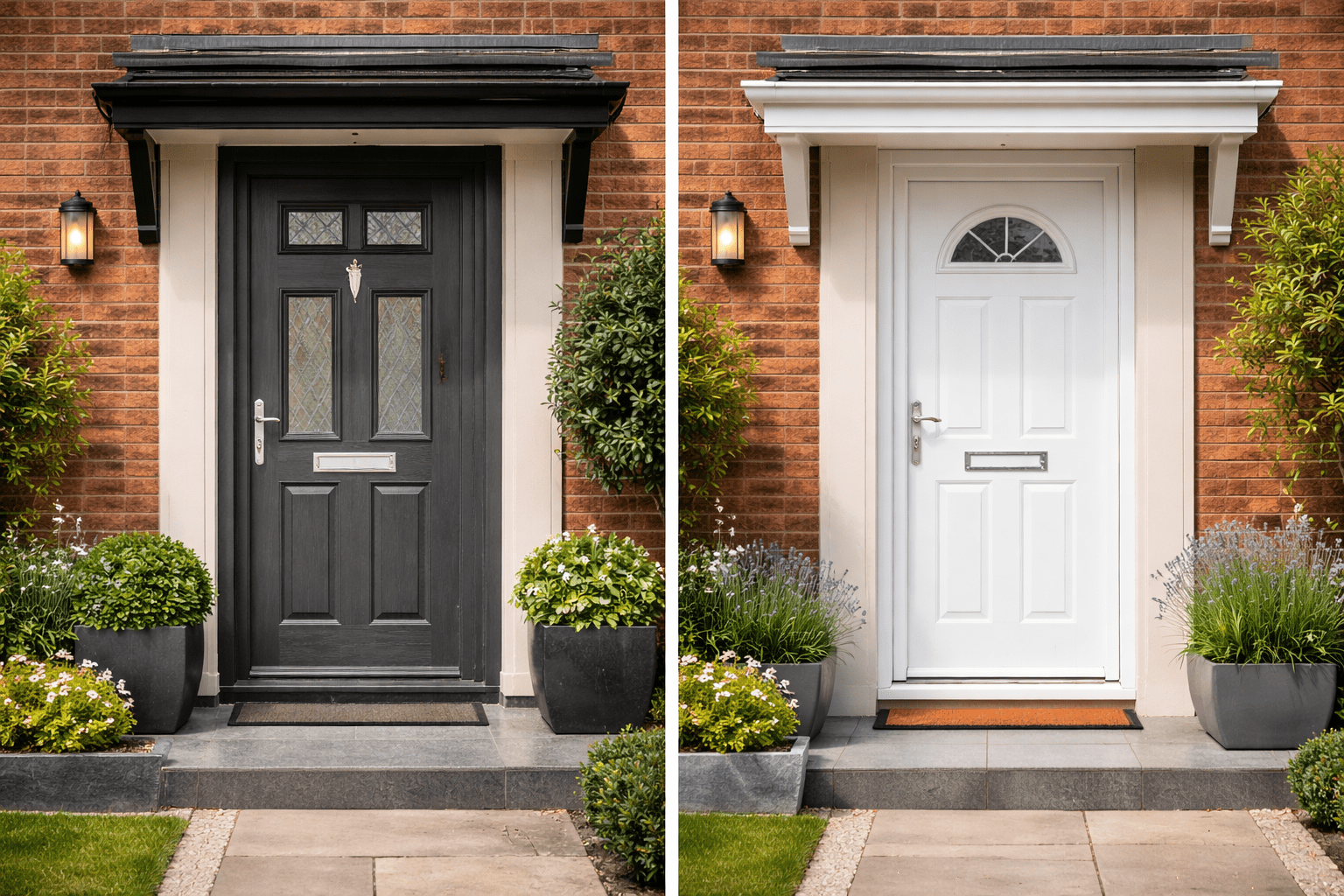
Front doors are no longer just about appearance. Security, insulation and long-term durability all play a role in choosing the right option — and for many UK homeowners, the decision often comes down to composite vs uPVC doors.
Both have their advantages, but they are built very differently.
What is the difference?
A uPVC door is made from a plastic frame, often reinforced with metal for strength. It’s lightweight, affordable and widely used across the UK.
A composite door combines multiple materials, typically including:
- a solid timber or foam core
- reinforced outer layers
- a durable external skin
This gives composite doors a more solid feel and improved performance in certain areas.
Which is more secure?
Security is one of the biggest differences.
Composite doors are generally considered:
- stronger
- more impact-resistant
- harder to force
That said, modern uPVC doors can still be highly secure when fitted with:
- multi-point locking systems
- reinforced frames
- quality cylinders
For a deeper breakdown, see our guide on uPVC door security, locks and upgrades.
Which lasts longer?
Composite doors tend to have a longer lifespan because of their solid construction and resistance to warping.
uPVC doors typically last:
- 20–30 years
Composite doors can often last longer with less visible ageing.
However, lifespan always depends on installation quality and exposure to weather.
What about insulation?
Both options perform well in modern systems, but composite doors usually have a slight edge due to their solid core.
This can result in:
- better heat retention
- improved sound insulation
For most homes, both options will meet current energy efficiency standards when properly installed.
Which is more affordable?
This is where uPVC doors clearly stand out.
uPVC doors:
- lower upfront cost
- widely available
- good value for money
Composite doors:
- higher initial cost
- premium feel and finish
For many homeowners, the decision comes down to budget vs long-term performance.
Which looks better?
This is subjective, but composite doors are often seen as more premium.
They typically offer:
- deeper textures
- more realistic woodgrain finishes
- wider colour options
uPVC doors are more limited in design, but still provide clean and modern styles suitable for many homes.
Which should you choose?
Choose uPVC doors if:
- you want a cost-effective solution
- you need reliable performance
- you are replacing multiple doors on a budget
Choose composite doors if:
- security is a top priority
- you want a premium look
- you are investing in long-term durability
Understanding costs before deciding
Door prices can vary significantly depending on size, glazing, hardware and installation.
Before requesting quotes, it helps to understand realistic price ranges.
You can use the double glazing cost calculator on Bestpricevalue.com to estimate typical UK costs and compare options.
Final thoughts
Both uPVC and composite doors are solid choices for UK homes. The right decision depends on what matters most — cost, appearance, or long-term performance.
Choosing a trusted installer is just as important as choosing the door itself.
For more home improvement insights and practical advice, follow Bestpricevalue.com on LinkedIn, where we regularly share guides and updates.