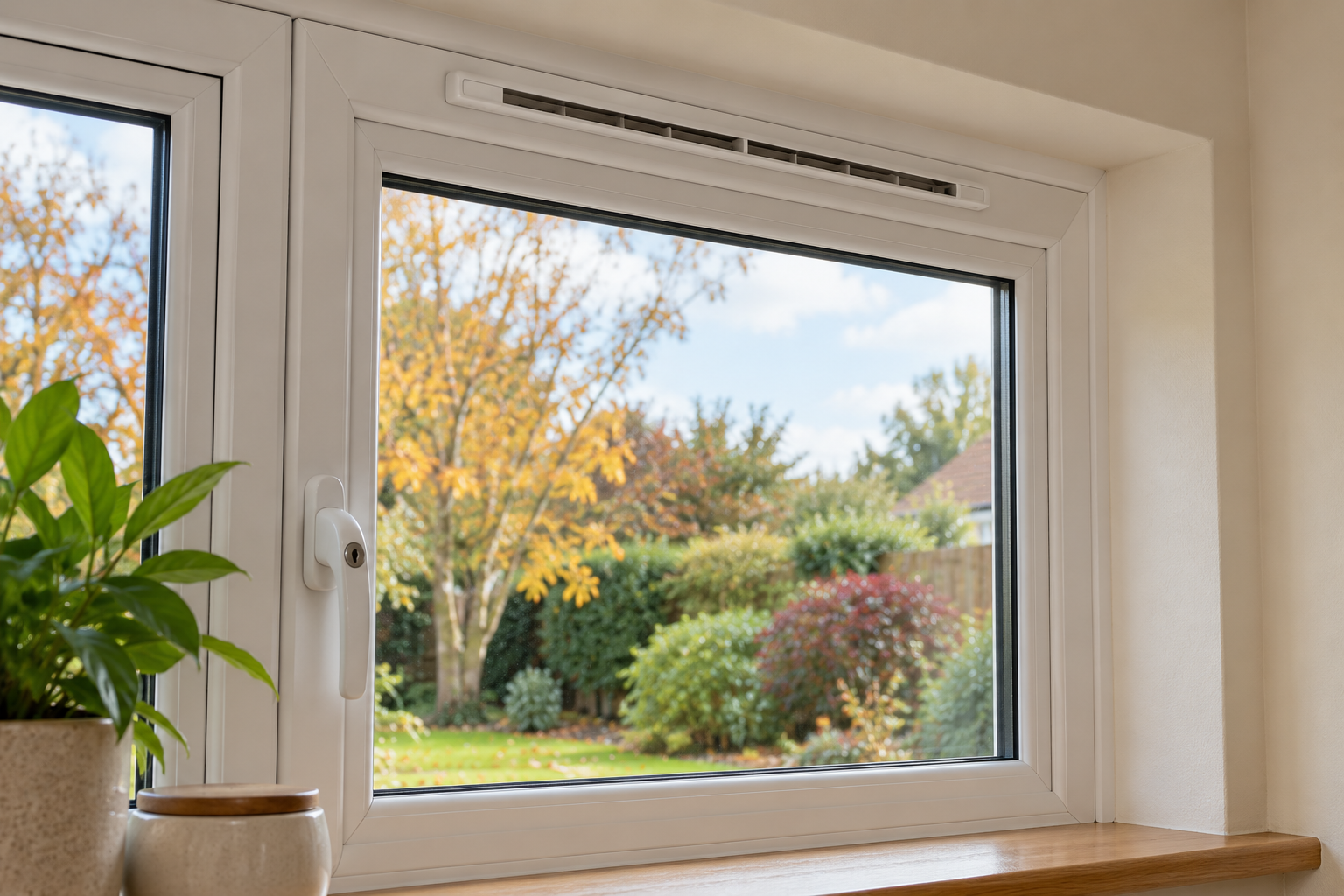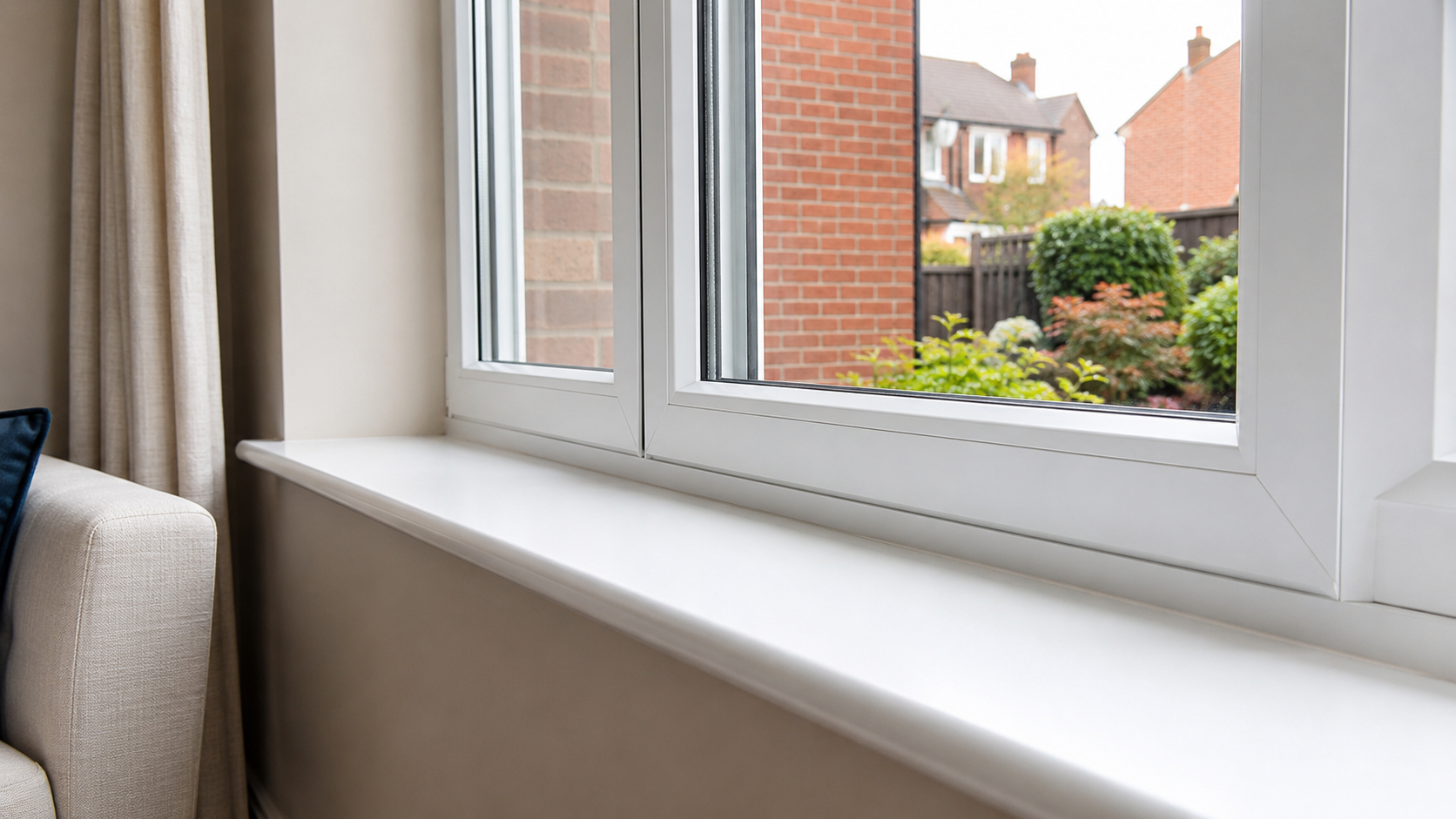
A window ledge is easy to ignore until it starts looking tired, cracking, staining or letting water sit where it should not. But the ledge or sill is not just a decorative finishing detail. It affects how the window looks, how rainwater drains outside, and how clean the installation feels inside the home.
That is why uPVC window ledge searches are common. Homeowners often want to know whether they need a simple trim repair, a new internal board, an external sill replacement, or a full window upgrade.
If you are comparing the wider performance, styles and costs of modern uPVC windows, the sill and ledge details are worth checking before you accept a quote.
What is the difference between a window ledge, sill and board?
People often use these words in different ways.
In simple terms:
- Internal window ledge / window board: the flat surface inside the room, often used for plants, decorations or storage
- External window sill: the outside bottom section designed to throw rainwater away from the wall
- uPVC trim: finishing pieces used around the frame to cover gaps and create a neater edge
The most important one for weather protection is usually the external sill. If water does not run away properly, it can mark brickwork, collect around the frame or make the installation look poor over time.
Why external uPVC window sills matter
A good external sill should project slightly beyond the wall and include a drip groove underneath. That groove helps stop rainwater running back towards the brickwork.
The practical solution is simple: when comparing quotes, ask whether the window includes a properly sized external sill and how it will be finished around the edges.
This matters especially when replacing older timber or aluminium windows with uPVC. The new frame depth, sill projection and finishing trims may be different from the original setup, so the installer needs to measure carefully.
A poor sill detail can make even a new window look badly fitted.
Common problems with uPVC window ledges and sills
Typical issues include:
- stained or yellowed internal ledges
- cracked or loose trim
- water pooling outside
- damaged external sill ends
- gaps around the frame
- silicone breaking down
- internal boards swelling from moisture
- messy finishing after window replacement
The right fix depends on where the issue is.
If the internal board is damaged but the window itself is fine, replacing the internal ledge may be enough. If the external sill is cracked or incorrectly draining water, the repair may be more important. If the frame, seals and glass are also failing, then a full window replacement may be better value.
Our guide on uPVC window seals is useful if you are also noticing draughts or gaps around the opening sash.
Can you replace a uPVC window ledge without replacing the window?
Sometimes, yes.
Internal window boards can often be replaced separately, especially if they are decorative MDF, timber-effect boards or uPVC finishing boards. This can refresh the room without changing the full window.
External sill replacement is more complicated because it connects more closely with the frame and weatherproofing. In some installations, the sill may sit under the frame, which makes replacement harder without disturbing the window.
The useful question to ask a fitter is:
Can the sill be replaced cleanly without affecting the frame seal?
If the answer is no, a bigger repair or full window replacement may be more sensible.
What material should you choose?
For internal ledges, common options include:
- uPVC board
- MDF window board
- timber
- moisture-resistant board
- laminate or painted finishes
For low maintenance, uPVC is practical because it is easy to wipe clean and resists moisture better than many basic painted boards.
For a more premium interior look, painted MDF or timber can look warmer, but it needs better maintenance and moisture control.
For external sills, the key is weather resistance and correct installation. A good external sill should be strong, correctly projected and sealed neatly into the surrounding structure.
What should be included in a good window quote?
When comparing uPVC window quotes, do not only look at the glass and frame colour. Ask what happens around the window too.
Check whether the quote includes:
- external sill size and projection
- internal making good
- trims and finishing pieces
- sealant work
- removal of old materials
- any plaster or reveal repairs
- VAT and waste removal
This is important because one quote may look cheaper simply because it excludes finishing work. Another may cost more but include a cleaner installation with better trims, sills and making good.
If you are replacing several windows, it also helps to benchmark likely costs first. The Double Glazing Cost Calculator on Bestpricevalue.com can help you compare realistic UK price ranges before speaking to installers.
When does full window replacement make more sense?
Replacing only the ledge or sill can be sensible when the window itself is still performing well.
But a full replacement may make more sense if you also have:
- misted glass units
- draughts around the sash
- stiff handles or hinges
- poor locking
- old frames
- multiple failing windows
- visible movement or gaps around the frame
If you are unsure whether the issue is cosmetic or part of a bigger problem, our guide on fixing uPVC window problems can help you compare the common symptoms before deciding.
Final thoughts
uPVC window ledges and sills may seem like small details, but they affect appearance, drainage, comfort and the overall quality of the installation. A clean internal ledge improves the room. A correctly fitted external sill helps protect the wall and frame from rainwater.
The best approach is to identify where the problem is first: internal board, external sill, trims, seals or the window itself. Once that is clear, it becomes much easier to decide whether a small repair is enough or whether new windows would offer better long-term value.
For more practical home improvement advice and project updates, follow Bestpricevalue.com on LinkedIn.