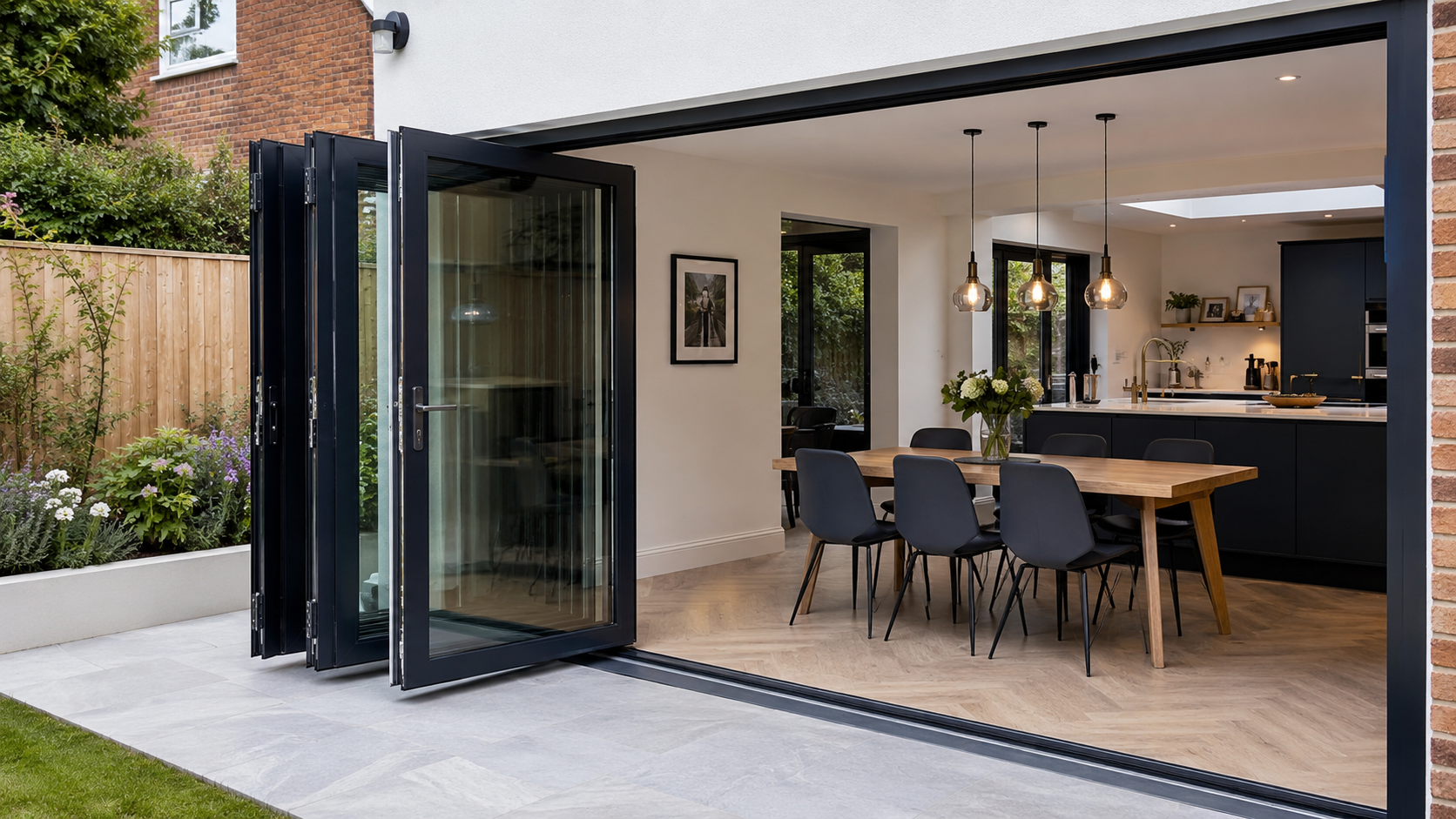
External bifold doors can completely change the way a home connects to the garden. They bring in more daylight, open up kitchen-diners and make a rear extension feel much more spacious.
But because they sit on the outside of the house, they need to do more than look good. They have to deal with rain, wind, security, heat loss, daily use and long-term movement. That is why choosing external bifold doors is not just about picking the nicest frame colour.
If you are still comparing the basics, our Bifold Doors (UK Guide) is the best starting point before looking at detailed specifications.
External bifold doors are different from internal bifolds
This sounds obvious, but it matters.
Internal bifold doors only separate rooms. External bifold doors form part of the outside wall of your home, so they need proper weather protection, secure locking, insulated glazing and a suitable threshold.
That means the cheapest-looking option is not always the best value.
A good external bifold door should be judged on:
- frame strength
- glazing performance
- weather rating
- locking system
- threshold design
- installation quality
- warranty and aftercare
The better question is not “how wide can we make the opening?” It is:
Will this door still feel secure, warm and smooth to use after several years?
Aluminium is usually the strongest choice
For most modern UK extensions, aluminium is the most common premium option for external bifold doors.
The reason is strength. Aluminium frames can usually support larger glass panels with slimmer sightlines than uPVC. This helps create a cleaner, more modern look while keeping the frame strong enough for daily movement.
The important detail is thermal performance. Older aluminium had a reputation for being cold, but modern aluminium bifolds should use a thermal break inside the frame. This reduces heat transfer and helps the door perform better in colder months.
When comparing quotes, ask:
- Are the frames thermally broken?
- What is the overall U-value of the full door set?
- Is the powder-coated finish suitable for long-term external use?
- What warranty applies to the frame and coating?
A slightly more expensive aluminium system can be better value if it gives stronger panels, better glazing and a longer-lasting finish.
Glazing matters as much as the frame
Because external bifold doors are mostly glass, the glazing specification has a big effect on comfort.
For most UK homes, a good-quality double-glazed unit is often enough when combined with a strong frame and proper installation. Triple glazing may help in some situations, but it is not always the automatic best choice because it can add weight and cost.
More useful things to ask about include:
- low-E glass
- argon-filled sealed units
- warm-edge spacer bars
- toughened safety glass
- laminated glass if extra security is needed
- solar-control glass for very sunny rooms
If your bifolds face south or west, solar-control glazing may be worth discussing. Its effect on solar heat, daylight and glare depends on the glass specification. Our guide to solar-control glass for bifold doors explains what to compare before choosing an upgrade.
The threshold can make or break the design
Many homeowners want a completely flush floor between the inside and patio. It looks excellent in photos, but the threshold needs to be planned properly.
A very low threshold may improve access, but external bifold doors still need to protect against rain and wind. In exposed UK locations, drainage and weather resistance matter more than simply choosing the flattest option.
The practical solution is to ask for a threshold that balances:
- easy access
- weather protection
- drainage
- insulation
- long-term durability
Our guide on bifold door thresholds explains this in more detail, especially if you are choosing between low, weathered and flush-style threshold options.
Security should be part of the quote
External bifold doors are a major opening in the home, so security should never be treated as an optional extra.
Ask whether the quote includes:
- multi-point locking
- secure cylinders
- strong hinges and running gear
- internal glazing beads where appropriate
- PAS 24 options where available
- toughened or laminated safety glass
PAS 24 is a useful security standard to ask about because it shows the door set has been tested against certain attack methods. Not every homeowner needs the highest security specification, but every external bifold quote should clearly explain what locking and hardware are included.
How much do external bifold doors cost?
External bifold door prices vary because the final quote depends on size, panel count, material, glazing, threshold and installation difficulty.
A small three-panel system will usually cost less than a wide five- or six-panel opening. However, the cheapest quote may also use a simpler threshold, lower hardware specification or more basic glazing.
The best way to compare quotes is to check whether each company is quoting the same:
- number of panels
- frame material
- glass specification
- threshold type
- colour finish
- installation work
- VAT
- removal of old doors
If you are still estimating your likely budget, the Double Glazing Cost Calculator on Bestpricevalue.com can help you compare realistic UK price ranges before requesting installer quotes.
External bifold door FAQs
Which glazing figures should I compare?
Ask for the U-value of the complete door set, the glass g-value and visible light transmission. U-value describes heat loss; g-value describes solar heat entering through the glazing. A lower g-value can help a sunny room, but the right balance depends on orientation, shading and how much daylight you need. Glare may still need separate shading.
Can a flush threshold keep heavy rain out?
A flush appearance alone does not confirm weather performance. Ask the installer to show the tested threshold arrangement, external drainage and finished floor levels for your site. Check that the quoted weather performance applies to the threshold you will actually receive.
What should be included in the installation price?
Ask each company to list surveying, fitting, removal, disposal, making good, drainage work and VAT where applicable. If the opening is being enlarged, clarify who covers structural design and building work. An online estimate is a starting budget; a surveyed specification is needed for a firm quotation.
Final thoughts
External bifold doors can be a brilliant upgrade, but they need to be specified properly. The best doors are not just the ones with the widest opening or the lowest price. They are the ones that suit the room, protect the home, perform well in UK weather and remain easy to use.
Before choosing, compare the frame, glazing, threshold, security and installation details. Once those are clear, it becomes much easier to see which quote offers the best long-term value.
For more practical home improvement advice and project updates, follow Bestpricevalue.com on Instagram.