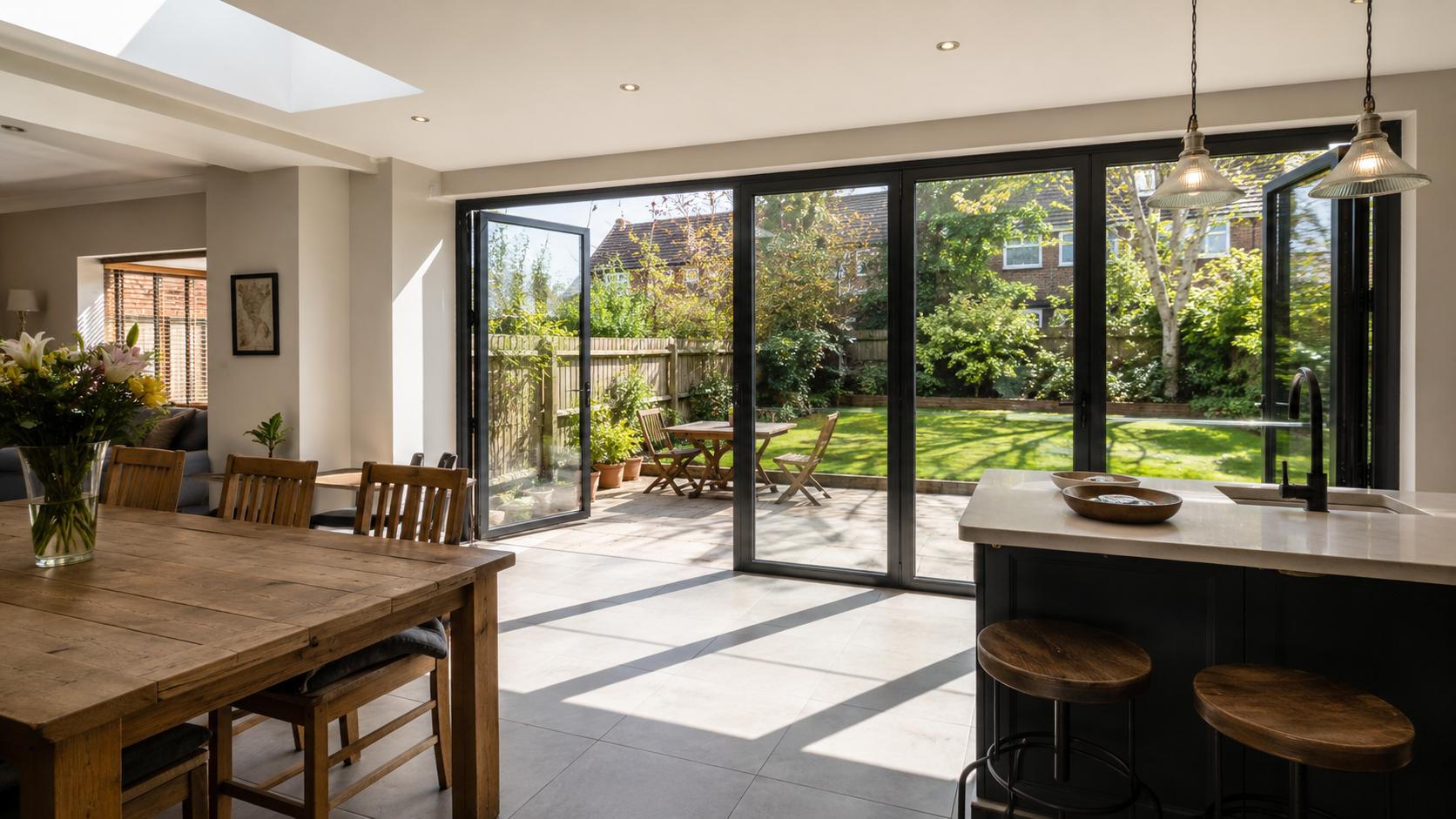
Bifold doors are often chosen for one simple reason: more glass, more light and a better connection to the garden. But once the doors are installed, some homeowners discover another side of large glazing. The room can become too bright, too warm or uncomfortable during sunny parts of the day.
That is where solar-control glass for bifold doors can make a real difference. It is not needed for every home, but in the right situation it can help reduce glare, manage solar heat and make a kitchen-diner or extension more comfortable to use.
If you are still comparing the main buying decisions, our Bifold Doors (UK Guide) is the best place to start before looking at specialist glazing upgrades.
Why bifold doors can overheat a room
The main benefit of bifold doors is also the reason they need careful planning. Large glass panels allow more daylight into the home, but they can also allow more solar heat to enter.
This is most noticeable when bifold doors are installed on:
- south-facing rear extensions
- west-facing kitchen-diners
- rooms with roof lanterns or skylights
- open-plan spaces with limited ventilation
- homes with dark flooring or surfaces that absorb heat
The problem is not that bifold doors are a bad idea. The problem is usually that the glazing specification has not been matched to the room.
The solution is to think about comfort before choosing the cheapest glass option.
What is solar-control glass?
Solar-control glass is designed to reduce the amount of solar heat entering through the glazing while still allowing natural light into the room.
In simple terms, it helps the room stay brighter without letting in as much heat from direct sun.
This can be useful if you want the look of large bifold doors but do not want the space to feel uncomfortable during summer afternoons.
When speaking to installers, ask about:
- solar-control coating
- low-E glass
- toughened safety glass
- warm-edge spacer bars
- argon-filled sealed units
- the full door U-value
- the solar factor or g-value of the glass
The U-value relates to heat loss. The g-value relates to how much solar heat passes through the glass. For sunny bifold doors, both numbers matter.
When is solar-control glass worth considering?
Solar-control glass is most worth considering when the bifold doors receive strong direct sunlight.
It can be especially useful for:
- south-facing bifold doors
- west-facing rooms that heat up in the afternoon
- large glass openings over 3m wide
- kitchen extensions with rooflights
- rooms used for working from home
- spaces where glare affects screens or dining areas
If the room is shaded, north-facing or only receives mild sunlight, standard high-quality double glazing may be enough.
The best approach is not to automatically upgrade every project. It is to match the glass to the direction, room use and amount of glazing.
Solar-control glass vs blinds
Many homeowners think blinds solve the overheating problem by themselves. Blinds can help, but they are not the same as solar-control glass.
Blinds are good for:
- privacy
- glare control
- evening comfort
- reducing direct sunlight
- softening the look of the room
Solar-control glass is better for:
- reducing solar heat before it fully enters the room
- keeping the room usable without closing blinds all day
- maintaining a cleaner open view
- improving comfort in large glazed spaces
In many homes, the best solution is a combination. Use solar-control glass for the main heat issue, then use blinds where privacy or flexible shade is needed.
Does solar-control glass make the room darker?
This depends on the glass specification.
Some solar-control glass has a subtle tint or slightly different appearance, while other options are designed to look clearer and more neutral. That is why it is important to ask for samples or examples before choosing.
The goal is not to make the room dark. The goal is to reduce excessive heat and glare while keeping the open, bright feeling that makes bifold doors attractive in the first place.
If a room already receives limited light, do not choose heavy solar control without checking how it will affect the appearance.
Why installation still matters
Even the best glass will not perform properly if the door system is poorly fitted.
A good bifold door installation should consider:
- frame material
- thermal breaks
- drainage
- threshold design
- weather sealing
- panel alignment
- ventilation
- glass specification
This is especially important for external door sets because they form part of the outside wall of the home. Our guide on external bifold doors explains what to check before buying for a UK property.
Do thresholds affect comfort too?
Yes, but in a different way.
A poor threshold choice can affect draughts, drainage, access and weather protection. If you choose a low or flush-style threshold, it needs to be planned carefully so the doors still perform well in UK weather.
For comfort, the best setup is usually a complete specification:
- suitable glass
- good frame system
- well-planned threshold
- correct drainage
- proper sealing
- ventilation where needed
Our bifold door thresholds guide is useful if you are deciding between low, weathered and more accessible threshold options.
What should you ask before accepting a quote?
Before choosing bifold doors, ask each installer:
- Is solar-control glass recommended for this room?
- What is the U-value of the full door set?
- What is the solar factor or g-value of the glass?
- Is the glass toughened or laminated?
- Will the glass look clear, tinted or reflective?
- Are warm-edge spacer bars included?
- Is low-E glass included?
- What threshold is included?
- Is ventilation being considered?
- Is the quote like-for-like with other companies?
This helps you compare value properly. One quote may be cheaper because it includes basic glass. Another may cost more but include better comfort features that make the room easier to use long term.
Before requesting installer quotes, you can also use the Double Glazing Cost Calculator on Bestpricevalue.com to compare realistic UK price ranges and understand what can affect glazing costs.
Final thoughts
Solar-control glass is not just a luxury upgrade. For the right home, it can be the detail that makes bifold doors more comfortable, especially in sunny kitchen-diners and open-plan extensions.
The key is to match the specification to the room. If the bifolds are south-facing, west-facing or part of a large glazed extension, solar-control glass is worth discussing before accepting a quote.
A good bifold door project should not only look impressive when the doors are open. It should feel comfortable, practical and easy to live with throughout the year.
For more home improvement tips, project ideas and quote advice, follow Bestpricevalue.com on Facebook.