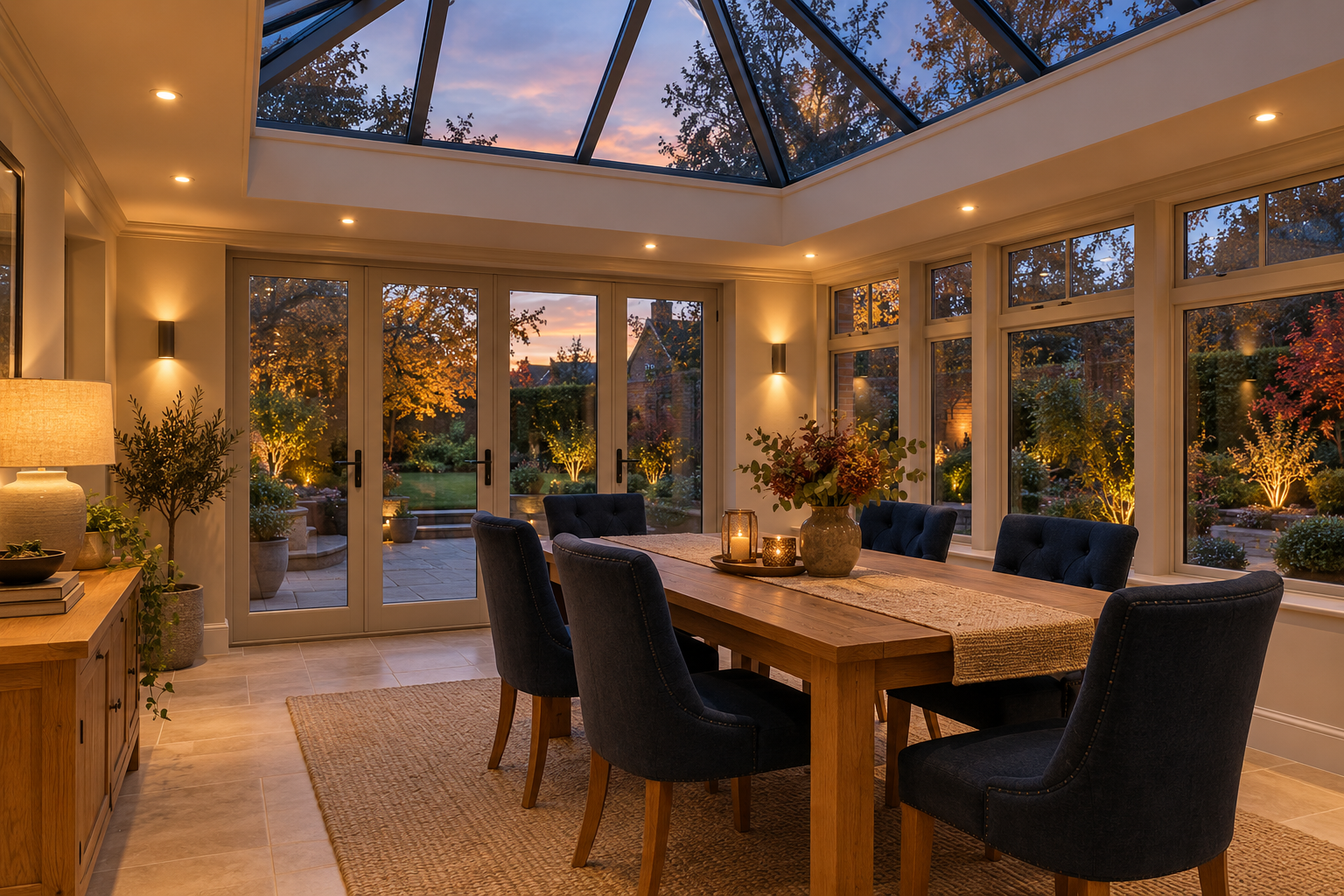
The best orangery lighting ideas start with what happens after sunset. An orangery with a roof lantern can be filled with daylight, but a glass-heavy space needs a separate evening lighting plan. Combine useful light for dining or working with softer light around the room, and decide where fittings can be supported before the ceiling is closed.
One bright row of downlights is rarely the whole answer. The table position, seating, reflections in the glazing and access to controls all affect whether the room feels inviting. For the wider design decisions, explore our overview; this guide focuses on practical lighting choices.
In this guide
- Start with the room layout, not the light fitting
- Use separate layers for everyday tasks and evening atmosphere
- Where can lights go around a roof lantern?
- Downlights, pendants or wall lights?
- Warm white, brightness and dimming: what do the numbers mean?
- How can you avoid glare and reflections in the glazing?
- A simple example for a dining orangery
- What should you include in the design and electrical quote?
- Frequently asked questions
Start with the room layout, not the light fitting
Draw the planned dining table, chairs, sofa, kitchen worktop and main walking routes before choosing lights. Decide which activities need clear task lighting and which parts of the room should feel quieter in the evening. A ceiling grid chosen before furniture can leave a table in shadow and illuminate an empty corner instead.
Try viewing the plan from a seated position. A lamp that looks attractive standing in the doorway may shine directly into someone’s eyes at the table. Consider where a television or computer screen will sit, because reflections can make an otherwise bright room uncomfortable.
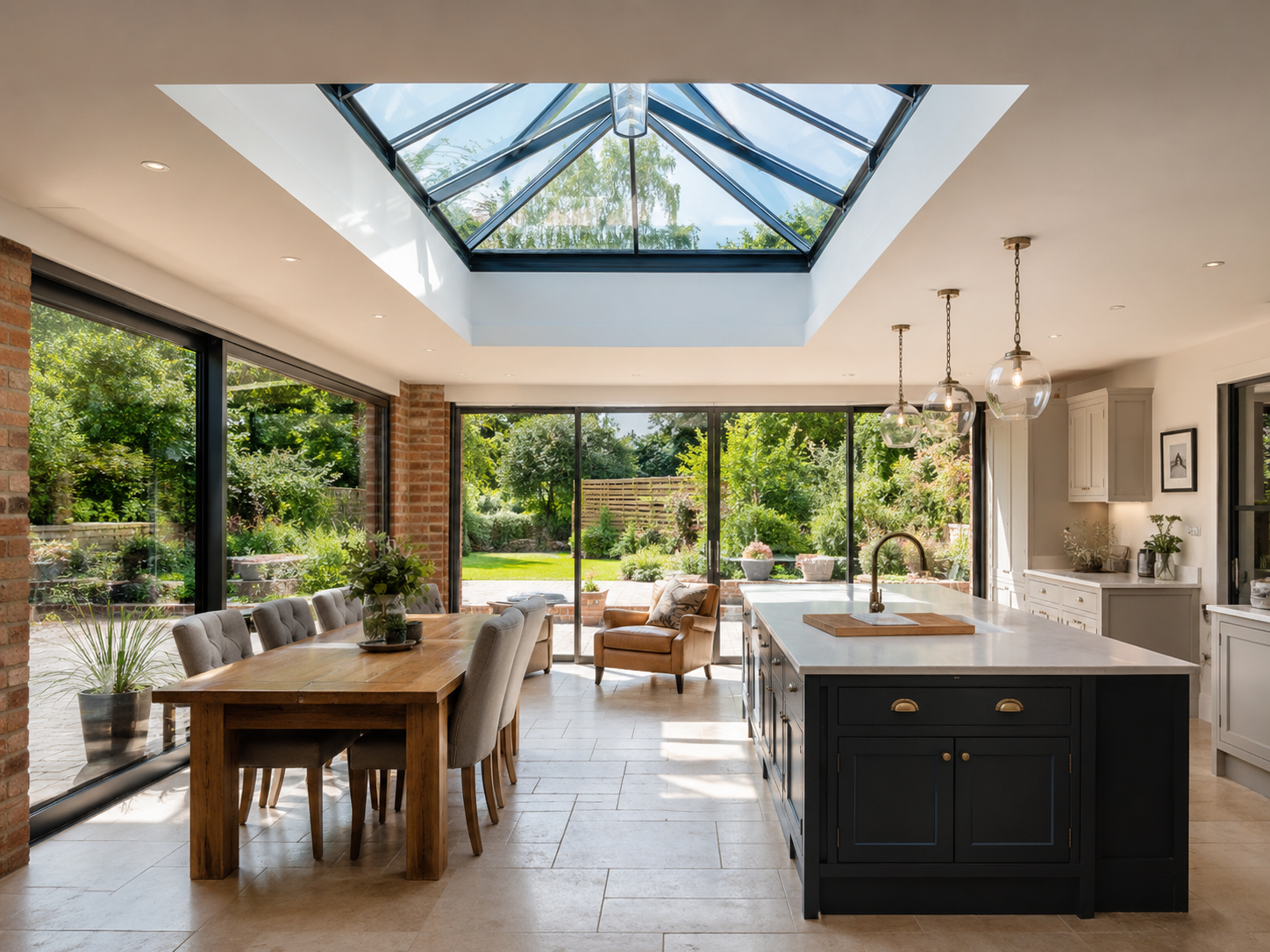
Daylight remains a separate design consideration. The lantern size, orientation, glazing and shading affect the room before the lights are switched on. Our orangery kitchen extension ideas explain how furniture, worktops and glazing fit together. Plan both together rather than expecting the lantern to solve every lighting need.
Use separate layers for everyday tasks and evening atmosphere
A practical starting point is general light for moving around, focused light for a table or worktop, and softer light for the edges of the room. These do not need to be three expensive systems. Carefully positioned ceiling fittings, a wall light and a table lamp can each serve a different purpose.
General light should make the room easy to use. Task light should help where a specific activity happens. Softer lighting can keep the perimeter from feeling like a dark border around one glaring centre. The balance matters more than the number of fittings.
Give useful groups separate controls. You may want brighter light for reading or clearing the table, then a gentler setting for dinner. A single switch for every fitting limits that flexibility even if all the lights are individually attractive.
Where can lights go around a roof lantern?
The solid ceiling perimeter is often the logical place to consider downlights or indirect lighting. The layout must respect the actual roof construction, insulation, services and clearances required by the fittings. Ask the roof supplier and electrician to coordinate positions before manufacture and plastering.
Do not assume that a pendant can hang from a lantern glazing bar or glass. A suspended fitting needs an approved support and a suitable electrical route. If the table is directly below the lantern, a pendant may need a purpose-designed solid panel or another supported position rather than an improvised attachment.
Our comparison of orangery roof options explains why the roof arrangement needs to be settled before the detailed lighting layout. Confirm current compatibility, support limits and product availability with your supplier rather than assuming every lantern accepts the same accessory.
Downlights, pendants or wall lights?
Downlights can provide a discreet general-light arrangement in suitable solid ceiling areas. Ask about beam angle, glare control and positioning; a fitting directly over the edge of a chair may be less useful than one placed for the intended activity. More fittings do not automatically give a better result.
A pendant can make a dining area feel distinct when its position and support work with the roof. Align it with the table, not simply the geometric centre of the room. Check whether the table might move or extend before fixing a permanent location.
Wall lights or portable lamps can soften the room and illuminate useful surfaces without filling the ceiling. Plan sockets where lamps will be used so cables do not cross walking routes. For a kitchen area, task lighting needs to serve the worktop rather than leave the user’s body casting a shadow over it.

Warm white, brightness and dimming: what do the numbers mean?
Compare light output in lumens rather than choosing by wattage alone. Watts describe power use; lumens describe the light produced. A lower-wattage LED can still provide the output needed for the task. The Energy Saving Trust’s lighting advice explains how to compare these labels.
Colour temperature is measured in kelvin. Around 2700–3000K is a useful warm-white starting point for an evening living or dining space, but preference and finishes affect the result. View a sample where possible; mixing several noticeably different whites in one room can look accidental.
Dimming needs compatible bulbs or fittings and controls. Not every LED is dimmable, and an old dimmer may not suit the replacement lights. Have the electrician check the combination before purchase. Also ask about flicker, minimum dimming level and whether any integrated LED component can be replaced later.
How can you avoid glare and reflections in the glazing?
After dark, glazing can reflect the illuminated room, making the garden harder to see. A very bright central fitting can dominate that reflection. Position lights to illuminate useful surfaces and try the scene with softer sources at different heights.
A lamp with a shade or a fitting designed to reduce direct glare may feel more comfortable than an exposed bright source. Check the sightline from the sofa and dining chairs, not just the appearance of the fitting in a product photograph.
Blinds can change privacy and reflections, but their fixings and operation need space. Coordinate them with lighting early so a pendant, pelmet or ceiling fitting does not obstruct the planned shading. Avoid promising that one bulb type will eliminate reflections from every angle.
A simple example for a dining orangery
Imagine a modest orangery used for family meals and occasional reading. A workable brief might include general light in the solid ceiling perimeter, focused table lighting where suitable support exists, and a lamp beside the reading chair. Put the general and dining lights on separately controlled groups.
Then walk through the evening: enter from the kitchen, set the table, eat, read and close the room. Can the lights be controlled from the entrance? Is the table clear enough for homework? Can the reading light work without making the entire room bright? This exercise finds more useful details than choosing a fashionable fitting first.
It is an example of a design process, not a universal layout or a prescribed number of downlights. Room dimensions, lantern geometry and actual fittings determine the final proposal.
What should you include in the design and electrical quote?
Ask for an annotated layout showing fittings, switches, sockets, cable routes and suitable support. Confirm the division of work between the roof installer, electrician and decorator. Establish who checks clearances and who repairs finishes if the layout changes.
Request fitting details, light output, colour temperature, control compatibility, access for maintenance and the installed price including VAT. Compare an allowance for basic lighting with a fully specified package carefully; they are not the same scope.
For the wider room budget, our Orangery and Conservatory Cost Calculator provides an indicative starting point. A bespoke lighting scheme needs its own specification. You can request quotes with your intended room use and layout so suppliers understand the project.
Frequently asked questions
Can I hang a pendant from a roof lantern?
Only where the roof system provides an approved support and a suitable electrical route. Do not assume glazing bars or glass can carry a fitting. Confirm the arrangement with the roof supplier and electrician.
Are downlights enough for an orangery?
They can provide general light, but a table, worktop or reading area may need a different arrangement. Plan around activities and furniture rather than treating a ceiling grid as a complete lighting scheme.
What colour temperature suits an orangery?
Around 2700–3000K is a useful warm-white starting point for evening living or dining. Check samples with the room’s finishes and your preferences before selecting the final fittings.
Can every LED light be dimmed?
No. The bulb or fitting and its control must be compatible. Ask the electrician to check the combination and minimum dimming level.
When should I plan the lights?
Before roof details, cable routes and the ceiling finish are finalised. Early coordination helps avoid unsuitable fixings, inaccessible controls and disruptive changes.
For more practical home improvement advice, follow Bestpricevalue.com on Facebook.