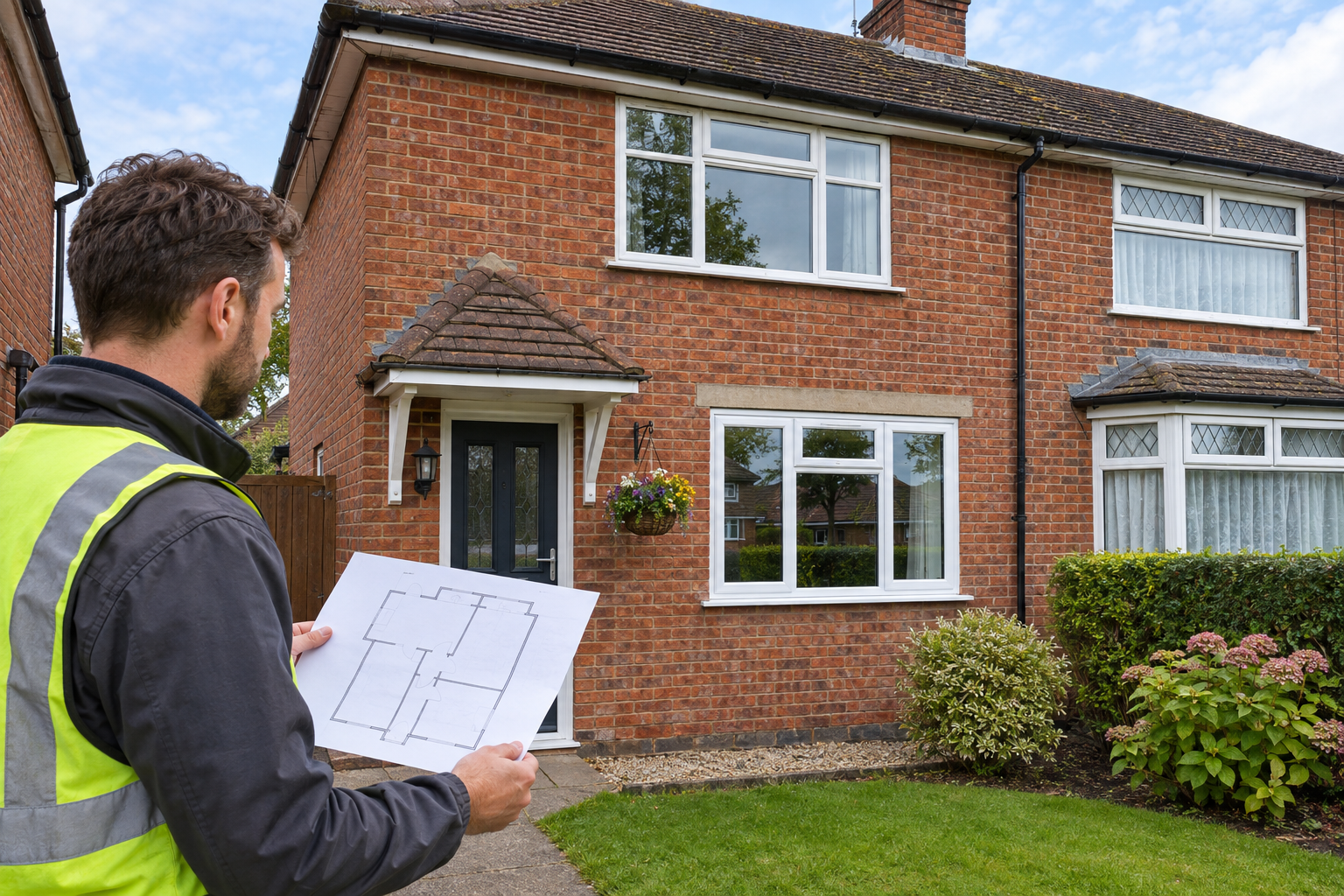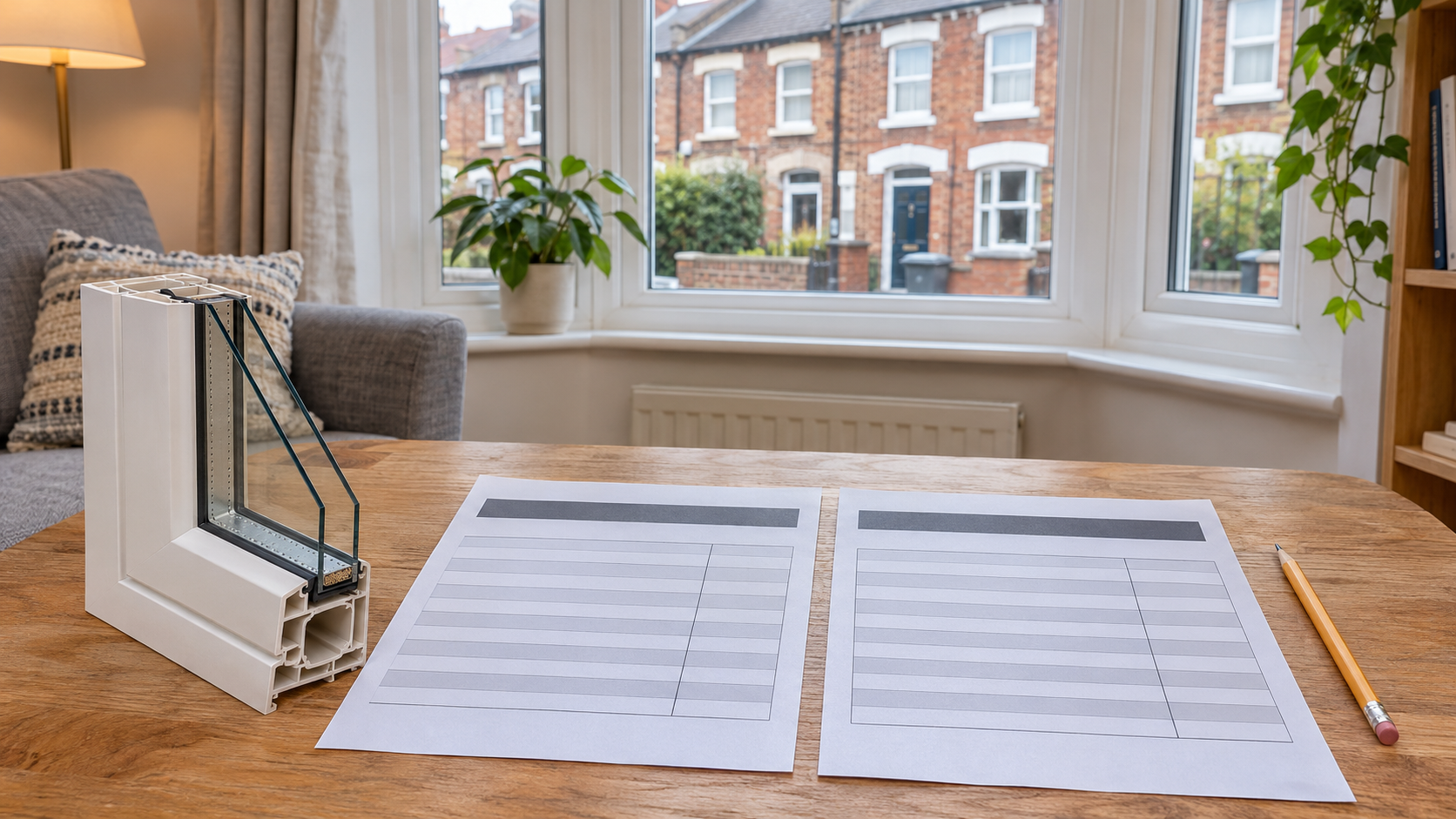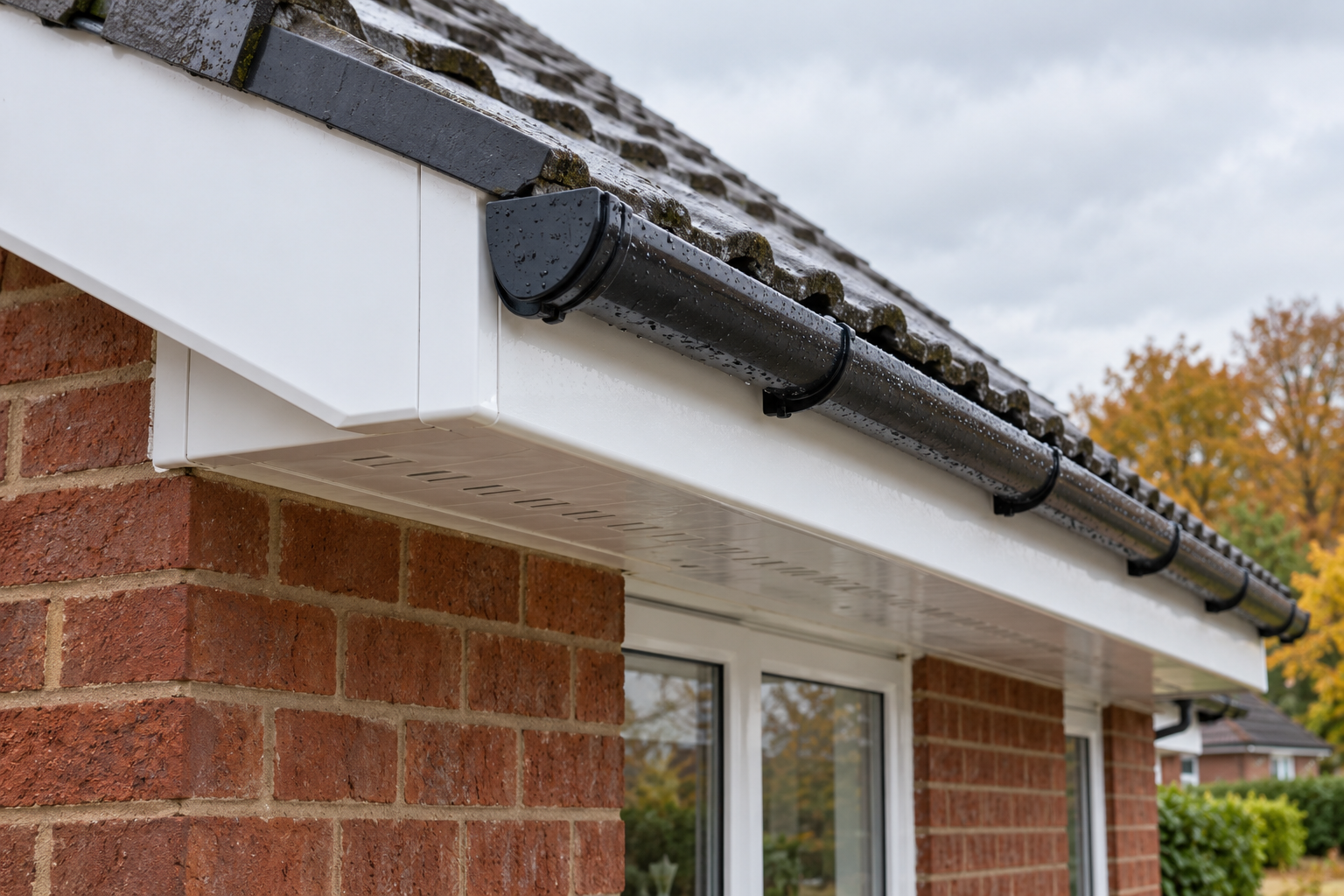
Fascia capping vs full replacement is a choice about the condition of the existing roof trim, not just its appearance. Capping puts a new cover over sound existing timber. Full replacement removes the old fascia and installs a suitable replacement system. If the timber is rotten, damaged or unable to provide reliable support, hiding it behind a new cover is not a repair.
A low quote can look attractive when both options leave a neat white edge. The difference is what remains behind that finish and how gutters, ventilation and drainage are dealt with. Our overview introduces the components; this article helps you compare these two scopes of work.
In this guide
- What is the difference between capping and replacement?
- When is fascia capping a reasonable option?
- When does full replacement make more sense?
- Gutters, eaves drainage and ventilation still need attention
- A practical example: two apparently similar quotes
- What changes the installed price?
- What should you ask before accepting the work?
- Frequently asked questions
What is the difference between capping and replacement?
Cap-over boards cover an existing fascia that remains in place. The retained timber needs to be suitable for the proposed installation. A replacement fascia board performs a different role: the old board is taken away and the replacement is fitted using the system’s specified support and fixings.
Sound timber without rot or decay can be considered for capping; replacing old timber fascia calls for a full replacement board. The product’s intended use matters as much as the finished colour.
Ask the installer to identify which approach is priced. “New uPVC fascias” is too vague: it could mean either option. Also establish whether the soffits and guttering are retained, covered or replaced, because these are separate parts of the scope.
| Question | Capping | Full replacement |
|---|---|---|
| Does the old fascia remain? | Yes; its condition must be suitable | No; removal forms part of the scope |
| Does it repair rotten timber? | No | Only with the necessary repairs specified |
| Are soffits and gutters included? | Confirm separately | Confirm separately |

When is fascia capping a reasonable option?
Capping can be reasonable where the existing timber has been properly inspected and is sound, dry and suitable to remain. It can provide a refreshed low-maintenance exterior without the same removal work as replacement. It should be an informed specification, not a way to avoid inspecting awkward areas.
Visible staining does not establish the full condition of a board. The important questions are whether moisture has caused damage, where that moisture came from and whether the proposed installation will manage it. Request the inspection findings and ask how concealed areas will be checked.
An installer should explain what happens if opening up reveals defects that were not visible at survey. Agree how additional work is authorised and priced. A clear contingency is better than an unspecified extra appearing after access equipment is already in place.
When does full replacement make more sense?
Where the fascia is deteriorated or the support is unsuitable, replacement allows the relevant defects to be exposed and addressed. Simply covering failed timber leaves the underlying problem in place. If there are problems at rafter ends or the roof edge, the quotation should explain the associated repairs rather than assume that changing the board fixes everything.
A full replacement also offers an opportunity to check how the roof covering drains at the eaves and how the roof space receives ventilation. The appropriate details depend on the roof construction. Ask for a proposal based on that roof, not a generic accessory package.
Replacement is not automatically the best answer for every sound roofline. It is normally more disruptive and may involve a broader scope. The objective is an appropriate, durable installation, not the largest possible invoice.
Gutters, eaves drainage and ventilation still need attention
The new fascia finish is only one part of the water-management arrangement. Water from the roof needs to reach the gutter rather than run behind it. The gutter’s position, support and outlet arrangements should be assessed together with the fascia work.
The proposed work should preserve suitable roof ventilation and ensure rainwater still drains into the gutters. Ask for the eaves and gutter details to be explained in the written specification. A tidy cover must not compromise these functions.
Ask where ventilation is provided in your roof and how the work preserves it. A vented soffit may be part of a suitable solution, but the visible grille is not the whole design. Do not seal an existing air route merely because the new finish looks cleaner without it.

A practical example: two apparently similar quotes
Imagine a quotation for “20 metres of new fascias” and another for “20 metres of full roofline replacement”. Their totals are not comparable until the written scopes are unpacked. One may retain timber, soffits and gutter brackets; the other may include removal, replacement soffits, guttering and access.
Ask both installers to price the same elevations and identify what stays in place. Then compare access, board system, soffit projection, rainwater goods, eaves work and disposal. These details can explain a price difference without either quote being unusually cheap or expensive.
If the capping proposal relies on timber being sound, request the evidence supporting that assumption. If the replacement proposal includes repairs, ask what was observed and whether the repairs are fixed-price items or allowances. This turns a sales comparison into a construction comparison.
What changes the installed price?
Length is a starting measurement, not the whole job. Height, access, awkward extensions, gables, soffit depth, finish, gutter profile and remedial work can change the cost. A small difficult elevation may be less straightforward than a longer accessible run.
Ask whether scaffolding or another safe access method is included. Also check whether downpipes, disposal and making good are separate charges. Do not assume the cheaper quote includes them just because its headline mentions installation.
Use our Roof Trim Cost Calculator to explore an indicative budget. Record access and additional items where appropriate, but let an installer’s survey establish the actual condition and final scope. An online estimate cannot tell whether your old timber is fit for capping.
What should you ask before accepting the work?
Request a written description of capping or removal and replacement, the exact products, retained components and repair allowances. Ask for the inspection findings, how ventilation and eaves drainage are handled, and what guttering and downpipe work is included.
Confirm access, VAT, removal, disposal, finish and aftercare. Distinguish the product guarantee from the installer’s workmanship cover. Ask whether any guarantee relies on the condition of retained timber and whether the supplier’s installation instructions will be followed.
Have inspections and roofline work carried out with suitable access and competence. Do not climb to test a suspect board yourself. Photographs taken by the installer can help document concealed conditions and completed details. You can request quotes with the same written brief so the proposals are easier to compare.
Frequently asked questions
Can you put uPVC fascia over rotten wood?
Covering rotten timber is not a repair. The existing fascia and its support should be assessed, and damaged material dealt with using an appropriate replacement and repair scope.
Is fascia capping always cheaper?
It may involve less removal work, but access, retained components and repairs affect the total. Compare matched written scopes rather than assuming the headline prices describe the same job.
Does full replacement include soffits and gutters?
Only if the quotation says so. Ask what is removed, retained and replaced for each roofline component, including downpipes and eaves details.
Can capping block roof ventilation?
It can compromise an existing air route if poorly specified. Ask the installer how ventilation is maintained or provided for the actual roof construction.
Can an online calculator decide whether my fascia is suitable for capping?
No. A calculator can indicate a budget, but the condition of the timber, supports and roof edge needs an installer’s inspection.
For more practical home improvement advice, follow Bestpricevalue.com on Facebook.