You do not have to assume every uPVC window needs replacing at the same time. A phased project can help spread disruption and spending, but it works best when there is one plan for the whole house. Start by identifying the faults and practical needs in each room rather than choosing an arbitrary number of windows for the first order.
Make a room-by-room condition record
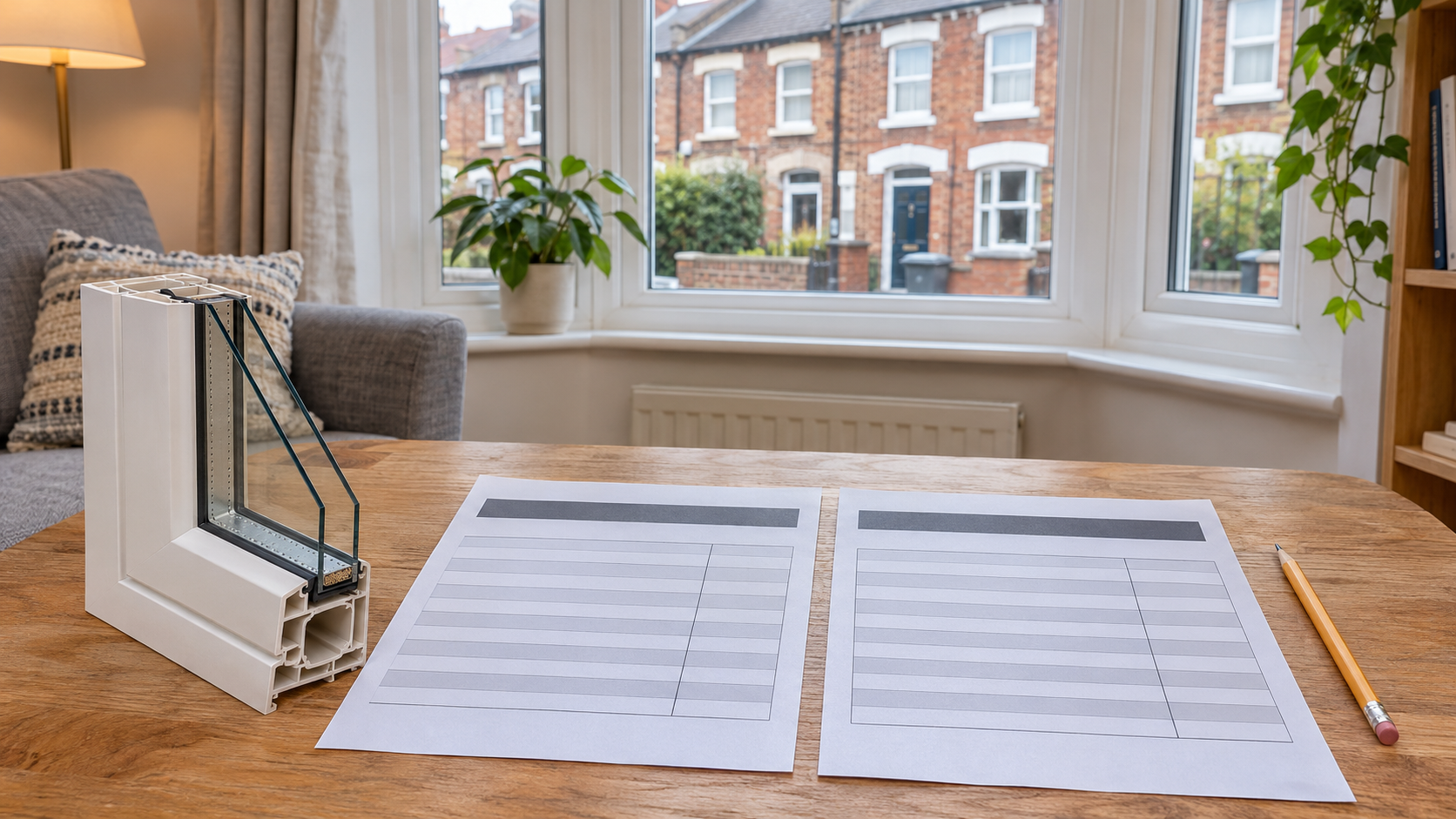
For every window, record whether the issue is a damaged frame, difficult operation, failed glass unit, worn hardware or an unwanted draught. Photograph the symptom and note when it occurs. Moisture on the room side of glass is a different observation from moisture trapped between panes.
Our condensation guide and window fault checklist can help organise that discussion. A repair assessment may identify a smaller job than full-frame replacement.
Prioritise safety and function before appearance
- Ask promptly for professional help if a window cannot be secured or a required opening cannot be operated.
- Identify rooms where the window repeatedly interferes with normal use.
- Compare repair and replacement for isolated faults before committing the whole room.
- Group cosmetic changes only after the functional priorities are understood.
A loose or broken handle can have several causes. The window handle replacement guide explains what to record before ordering hardware. Avoid forcing a jammed sash or dismantling a mechanism that supports heavy glass.
Specify the future phases now
Record the profile system, frame colour and finish, glass specification, opener positions, handles, vents and sill details. Keep drawings and the supplier’s product references with the first contract. A photograph alone is not a complete matching specification.
Ask how long the chosen range is expected to remain available, without treating that answer as a guarantee. Similar colour names from different systems may not match exactly. Compare sightlines and finishes on samples when a later phase meets an earlier installation. See window ledges and sills for details that are easy to omit.
Compare total project costs across the phases
Two small installations may repeat survey, travel, access or making-good costs. Ask for separate prices for the immediate phase and the complete proposed schedule. Confirm whether scaffolding or access equipment would need to return. A larger order is not automatically better value if it replaces sound windows unnecessarily.
Use the window cost calculator to create indicative item budgets, then compare written installer offers. Keep a separate allowance for repairs and decoration rather than assuming every finish is included.
Plan the occupied rooms
Discuss working hours, room access, protection for furniture, pets and children, and how the home will be secured at the end of each day. Agree what needs clearing and who repairs disturbed finishes. The installer should explain the expected sequence for the actual property; a generic promise of one-day completion is not a programme.
For the wider product decision, read choosing uPVC windows for a modern home.
Frequently asked questions
Does doing one room at a time save money?
It can spread spending, but repeated access and installation visits can increase the overall cost. Compare both programmes for the same specification.
Should every old window be replaced?
Age alone does not identify the fault. Ask for a condition assessment and compare repair options, replacement benefits and the intended use of each room.