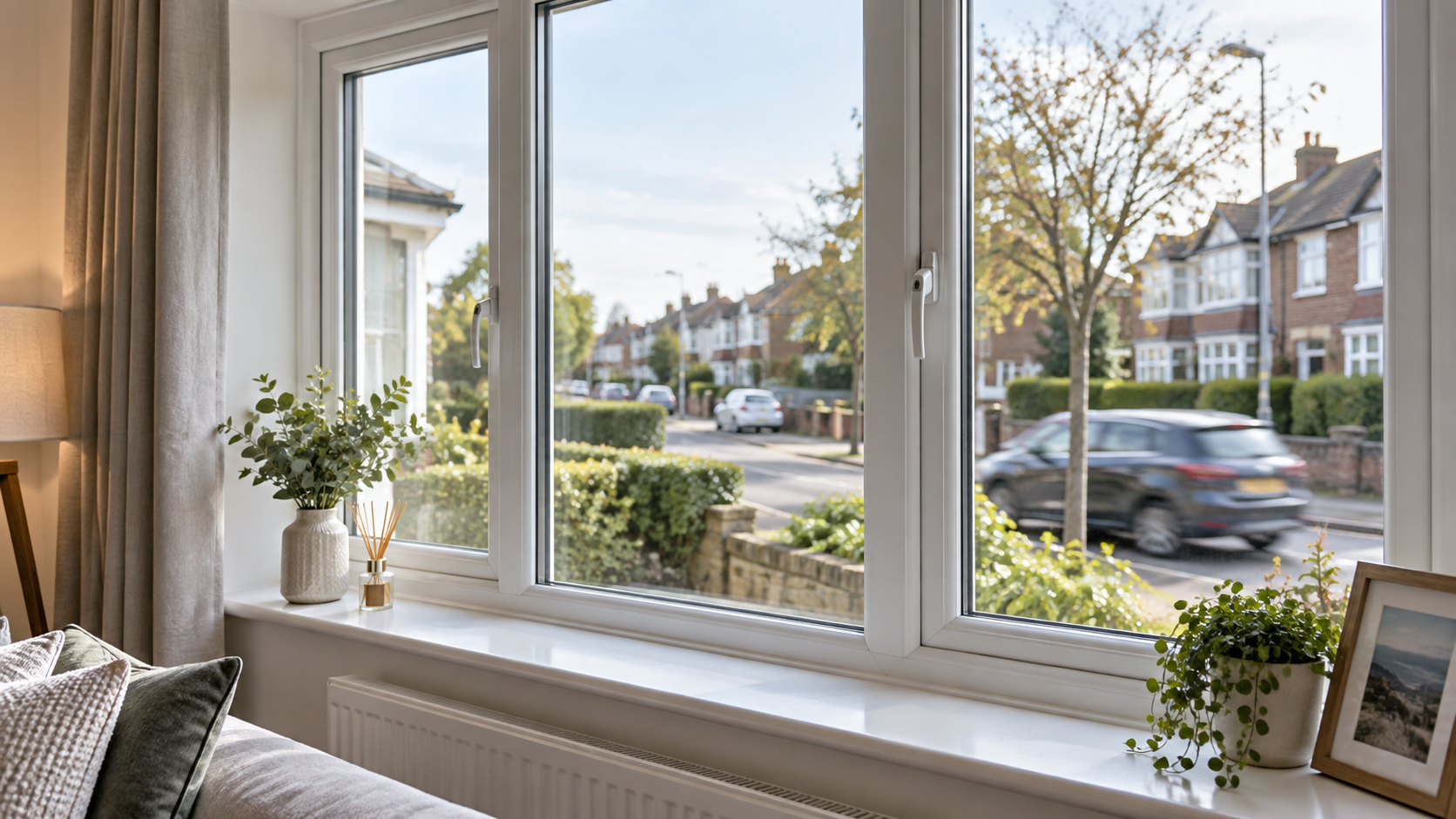
Traffic outside at 6am, buses stopping nearby, aircraft overhead or neighbours coming home late can make an otherwise comfortable house surprisingly difficult to relax in.
Many homeowners start looking for “soundproof windows”, but completely soundproof domestic windows are not really the goal. A more realistic solution is acoustic glazing designed to reduce the amount of outside noise passing through the window.
For homes near busy roads, railway lines, flight paths or lively town centres, the right glazing specification can make a noticeable difference. But simply ordering thicker double glazing does not automatically give you the best result.
If you are still comparing window styles, efficiency and replacement options, our uPVC Windows Guide is the best starting point before looking at specialist glass.
How does noise actually get through a window?
Sound can travel through several parts of the window:
- the glass
- the frame
- opening sections
- seals around the sash
- installation gaps around the frame
- trickle vents and other ventilation openings
That last point is important.
You could install excellent acoustic glass but still be disappointed if air gaps around the window are letting sound through.
That is why noise reduction needs to be considered as a complete window system, not simply as a special piece of glass.
What is acoustic glazing?
Acoustic glazing is glass specifically designed to improve sound insulation.
One common solution uses laminated glass containing a specialist acoustic interlayer between panes of glass. The interlayer helps absorb sound energy and reduce the amount transmitted into the room.
Another useful technique is using panes of different thicknesses.
For example, rather than making both panes identical, an acoustic double-glazed unit may use different glass thicknesses because each pane reacts differently to sound frequencies.
UK glazing manufacturers also offer specialist acoustic laminated products designed for homes exposed to road, rail and aircraft noise.
The practical lesson for homeowners is simple:
Ask for the acoustic performance of the complete glazing unit rather than just asking whether the window is double or triple glazed.
Is triple glazing automatically quieter?
Not necessarily.
This surprises many homeowners.
Adding another pane can improve thermal performance, but noise behaves differently from heat. Three similar panes are not automatically the best arrangement for reducing traffic noise.
A carefully designed acoustic double-glazed unit using:
- different pane thicknesses
- laminated acoustic glass
- the right cavity
- properly sealed frames
may be more suitable for a noise problem than simply choosing standard triple glazing.
Pilkington, for example, specifically notes the use of varying pane thicknesses and acoustic laminated glass in noise-control insulating units.
So if an installer simply says “triple glazing is better because it has another pane”, ask for the actual acoustic specification.
What do Rw, C and Ctr mean?
This is where acoustic quotes can start looking technical.
You may see ratings such as:
Rw
A laboratory rating showing overall sound reduction across a range of frequencies.
You may also see adjustments called C and Ctr.
For homeowners, Ctr can be particularly relevant to lower-frequency traffic-type noise.
You do not need to become an acoustic engineer to buy windows. But if noise reduction is one of your main reasons for replacing them, ask the installer:
“What acoustic rating does this exact window and glass specification achieve?”
That gives you something meaningful to compare between quotes.
Traffic noise is different from voices
Not all unwanted noise behaves in the same way.
A neighbour talking outside, a barking dog and passing vehicles produce different frequency patterns.
Low-frequency sounds from heavy vehicles can be particularly difficult to control.
This is another reason why simply asking for “soundproof glass” is not enough. Tell the company what type of noise is bothering you.
For example:
- motorway or road traffic
- buses and lorries
- aircraft
- trains
- nightlife
- schools
- general street noise
A better supplier can then recommend the glass configuration around the actual problem.
Do uPVC frames work well with acoustic glass?
Yes, uPVC frames can form part of an effective acoustic window system.
The important things are:
- good frame construction
- correct glazing specification
- effective compression seals
- properly adjusted hinges and locking points
- professional installation
- minimal uncontrolled air leakage
Sound can exploit tiny openings.
That means a high-specification glass unit inside a badly adjusted window may still underperform.
If you can feel air movement around your existing windows, read our guide to uPVC window seals before assuming the glass itself is the only problem.
What about trickle vents?
This is an important compromise.
Ventilation is necessary in homes, but any opening through the building envelope can affect sound insulation.
You should not simply block required ventilation to reduce noise.
Instead, if external noise is a serious issue, ask the window company or designer about acoustic ventilation options and how the ventilation strategy affects the overall performance.
Current Building Regulations in England include separate requirements concerning ventilation, while government guidance on healthy homes also notes that ventilation strategies may need to consider external noise.
This is particularly relevant for bedrooms facing busy roads.
Secondary glazing can also be surprisingly effective
If you live in an older or character property, replacing the original windows may not always be desirable or possible.
Secondary glazing adds another glazed layer behind the existing window.
A relatively large air space between the existing window and secondary glazing can offer useful acoustic benefits, especially when combined with suitable glass.
It may be worth considering for:
- period properties
- sash windows
- conservation situations
- homes where the external appearance should remain unchanged
It is a different solution from standard replacement double glazing, so the right choice depends on the property.
When are acoustic windows worth considering?
They make the most sense when noise is already interfering with everyday life.
Typical situations include homes:
- beside busy A-roads
- close to motorways
- near railway lines
- beneath flight paths
- close to schools
- in busy town centres
- near pubs or late-night areas
Bedrooms and home offices are often the rooms where upgrading makes the biggest practical difference.
You may not need acoustic glass throughout the whole property. Specifying it only on the noisy elevation can sometimes be a more sensible use of the budget.
Check the existing windows before replacing them
Before assuming you need specialist glass, look at the condition of the existing windows.
Noise can become noticeably worse when:
- seals have deteriorated
- hinges no longer pull the sash firmly closed
- frames have moved
- installation gaps are present
- opening sections no longer align correctly
If your windows are already old and multiple components are failing, replacement may make more sense than trying to repair each problem separately.
Our guide on how long uPVC windows last can help you decide whether the windows are still worth repairing.
What should you ask installers?
If reducing noise is one of your priorities, do not simply ask for a quote for “double glazing”.
Ask:
- What acoustic glass configuration are you recommending?
- Does it use laminated acoustic glass?
- Are the panes different thicknesses?
- What is the tested acoustic rating?
- Is that rating for the glass or the complete window?
- How will ventilation be handled?
- Are the frames and seals suitable for acoustic performance?
- Will installation gaps be properly insulated and sealed?
- Would secondary glazing perform better for this property?
- Is acoustic glass required throughout the house or only on certain elevations?
Those questions immediately make quote comparisons more useful.
How much does acoustic glazing cost?
There is no useful single national price because the cost depends on:
- window size
- number of windows
- glass specification
- laminated glass thickness
- frame style
- opening configuration
- installation access
- whether only one elevation is upgraded
Specialist acoustic glass will normally increase the specification compared with basic double glazing, so compare quotes on a like-for-like basis.
Before contacting installers, the Double Glazing Cost Calculator on Bestpricevalue.com can give you a starting point for typical replacement-window costs. You can then ask companies to price the acoustic upgrade separately.
Final thoughts
Acoustic glazing can make a meaningful difference to homes affected by traffic and other external noise, but the solution is more sophisticated than simply choosing the thickest glass.
Glass thickness, laminated acoustic layers, pane configuration, frame seals, ventilation and installation all matter.
If noise reduction is one of your main reasons for replacing your windows, tell each installer exactly what noise you are trying to reduce and ask for the actual acoustic specification they recommend.
The best window is not simply the one with the most panes. It is the window designed around the problem you are trying to solve.
For more practical home improvement advice and project updates, follow Bestpricevalue.com on LinkedIn.