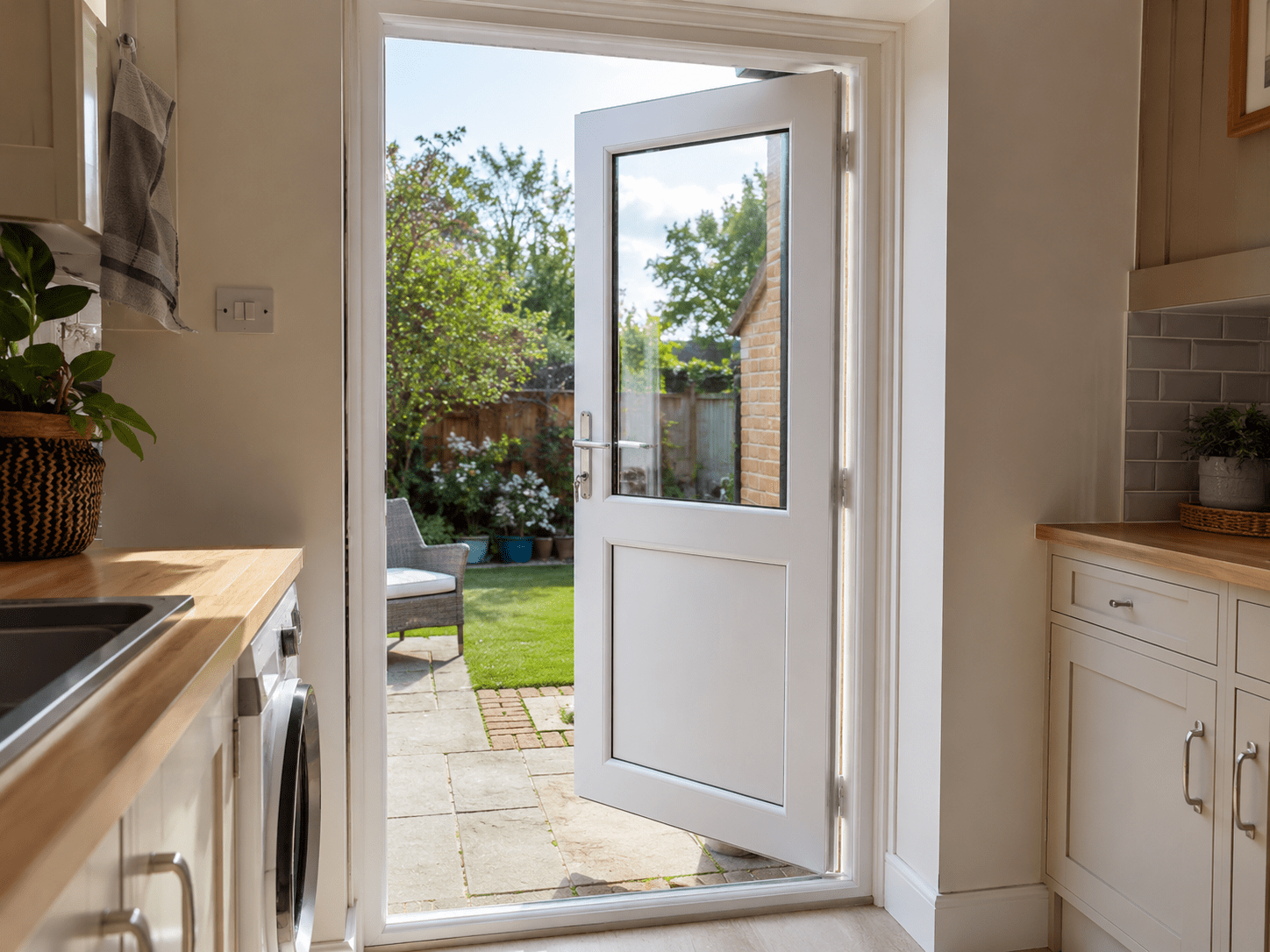
A back door is easy to overlook because it is not usually the “showpiece” entrance. But in daily life, it often works harder than the front door. It may lead to the garden, utility room, kitchen, side path or garage area — and that means security, insulation and usability really matter.
If you are comparing modern uPVC doors, the back door should not be treated as the cheap extra. A well-specified uPVC back door can make the home warmer, safer and easier to use every day.
Start with how the door will be used
The right back door depends on where it sits.
A kitchen back door may need good light, easy garden access and strong weather sealing. A side entrance may need more privacy and security. A utility room door may need practical glazing, ventilation and a durable threshold.
The solution is to choose the design around the use, not just the lowest price. For example:
- choose more glazing if the room lacks natural light
- choose obscure glass for privacy
- choose the panel and glazing around privacy, daylight and the tested security of the complete door
- choose a low-threshold option if step height is a concern
This makes the door more practical long term.
Security: what should you ask for?
A basic uPVC back door can look fine but still vary a lot in security. The useful question is not “is it secure?” but “what security specification is included?”
Ask installers about:
- multi-point locking
- reinforced frame or sash
- anti-snap cylinder
- toughened or laminated safety glass
- PAS 24 availability where suitable
For most homeowners, a good target is a properly fitted multi-point locking system with a quality cylinder and reinforced frame. If security is your main concern, compare this with our guide on uPVC door security before accepting the cheapest quote.
Glazing: privacy, warmth and safety
Back doors often include glass, but the type of glass changes how the door performs.
For privacy, ask for obscure glazing. For impact safety, ask what safety glazing is included. Toughened and laminated glass behave differently when broken; if resistance to intrusion matters, ask for the security specification of the complete door and glazing. For warmth, check whether the door uses modern double glazing with low-E glass and warm-edge spacer bars.
Triple glazing is not always necessary for a back door, but a better double-glazed unit can make a clear difference compared with a basic panel. The key is to compare the actual glass specification, not just the door style.
Back door cost: why quotes vary
Two uPVC back doors can look similar but cost different amounts because of:
- glass type
- lock quality
- colour choice
- threshold style
- panel design
- fitting complexity
A white half-glazed door will usually be cheaper than a coloured, fully glazed or upgraded-security option. Before comparing quotes, it helps to understand wider pricing using the Double Glazing Cost Calculator on Bestpricevalue.com.
uPVC back door FAQs
Is a solid or glazed back door better?
A solid panel offers privacy; a glazed panel can brighten a kitchen or utility room. Neither appearance alone proves security or insulation performance. Compare the whole-door specification and use our uPVC door panels guide to weigh solid, half-glazed and fully glazed options.
Can I replace the panel without replacing the whole door?
Sometimes, if the frame, sash, hinges and lock remain sound and a compatible panel is available. Ask a specialist to check the panel thickness, glazing arrangement and overall condition. A new panel will not fix a distorted frame or a worn locking mechanism.
What should a back-door quote include?
Request the door dimensions, opening direction, panel and glass specification, lock, threshold, finish and whole-door U-value in writing. Check installation, disposal, making good, VAT where applicable and warranty exclusions. Use the calculator for a starting budget, then compare surveyed quotes on the same specification.
Final thoughts
A uPVC back door should be practical, secure and suitable for the room it serves. The best value usually comes from getting the right specification — not simply choosing the cheapest door.
For more practical home improvement advice and updates, follow Bestpricevalue.com on LinkedIn.