If you’re researching orangery extension cost, you’ll quickly notice a frustrating pattern: two quotes can look “similar” on paper, yet come back thousands apart.
That’s not always down to sales tactics — it’s usually because one quote includes the boring but expensive bits (groundworks, structure, thermal upgrades, making good), while another focuses on the visible finishes (doors, glazing, lantern) and leaves the rest vague.
This guide gives you realistic price ranges and explains the key cost drivers, so you can compare like-for-like and avoid surprises.
Typical orangery extension cost ranges (installed)
Using our calculator-based assumptions, installed costs typically land around £1,800–£2,900 per m² (small projects trend higher per m² because fixed elements don’t scale down much).
Realistic installed ranges by common sizes (before optional upgrades below):
-
Small orangery (around 3m × 3m / ~9m²): £21,300 – £26,100
-
Medium orangery (around 4m × 4m / ~16m²): £32,000 – £39,300
-
Large orangery (around 5m × 4m / ~20m²): £35,800 – £43,900
Why the range is wide: fixed items like roof/lantern, electrics, door packages, and making-good don’t scale down much, so smaller builds can look “expensive per m²”. Medium/large builds can swing a lot depending on doors, lantern size, and spec upgrades.
Common add-ons that move quotes quickly
These are the upgrades that frequently create “same size, totally different price” quotes. The figures below are calculator-based differences between a simpler package (e.g., French doors, standard glazing/spec) and a higher spec package (e.g., wider bifolds, upgraded glazing/spec, larger lantern):
Premium glazing/door packages (bifolds + higher spec glass/lantern choices):
-
Small (~9m²): typically +£4,300 to +£5,300
-
Medium (~16m²): typically +£5,000 to +£6,100
-
Large (~20m²): typically +£5,200 to +£6,400
Structural opening / steelwork (opening into kitchen/diner):
This can be one of the biggest real-world cost swings, so it’s best handled as a clearly stated allowance in quotes. Ask installers to specify what’s included, what’s excluded, and what would trigger variations (steel size, engineering, making-good, and Building Control requirements).
1) Size and shape: why layout matters more than square metres
Two orangeries with the same floor area can cost very differently.
What changes pricing fast:
-
More perimeter wall (L-shapes, returns, complex corners) = more foundations, brickwork, insulation detail
-
Bigger openings (wide bifolds/sliders) = more structural support and higher-spec frames
-
Roof lantern size and position = larger lanterns often require stronger structure and better solar control glazing
A simple rectangle with one main set of doors is usually cheaper than a design with multiple openings.
2) Foundations and groundworks: the biggest “hidden” variable
This is where quotes often stop being comparable.
Groundworks costs can jump if you have:
-
soft ground, slopes, trees or existing drains
-
difficult access for machinery/materials
-
requirements for deeper foundations (especially near boundaries or older homes)
-
extra drainage, soakaways, or rerouting services
A good quote should clearly state what’s assumed for:
-
excavation depth
-
concrete and footings
-
drainage connections
-
waste removal and making-good
If it doesn’t, you’ll often get “variations” later.
3) Structure: brick piers, cavity build-ups, and steels
An orangery feels more “built-in” because it usually includes:
-
brick pillars / dwarf walls
-
insulated perimeter roof with a lantern
-
stronger structural openings than a typical conservatory
Watch for differences in:
-
cavity wall specification and insulation
-
lintels/steelwork over wide openings
-
whether the roof is genuinely insulated (not just “improved”)
If your orangery is opening up a rear wall into a kitchen/diner, steelwork and structural design can become a significant cost driver.
4) Roof lantern and roof spec: comfort costs money (but it’s worth it)
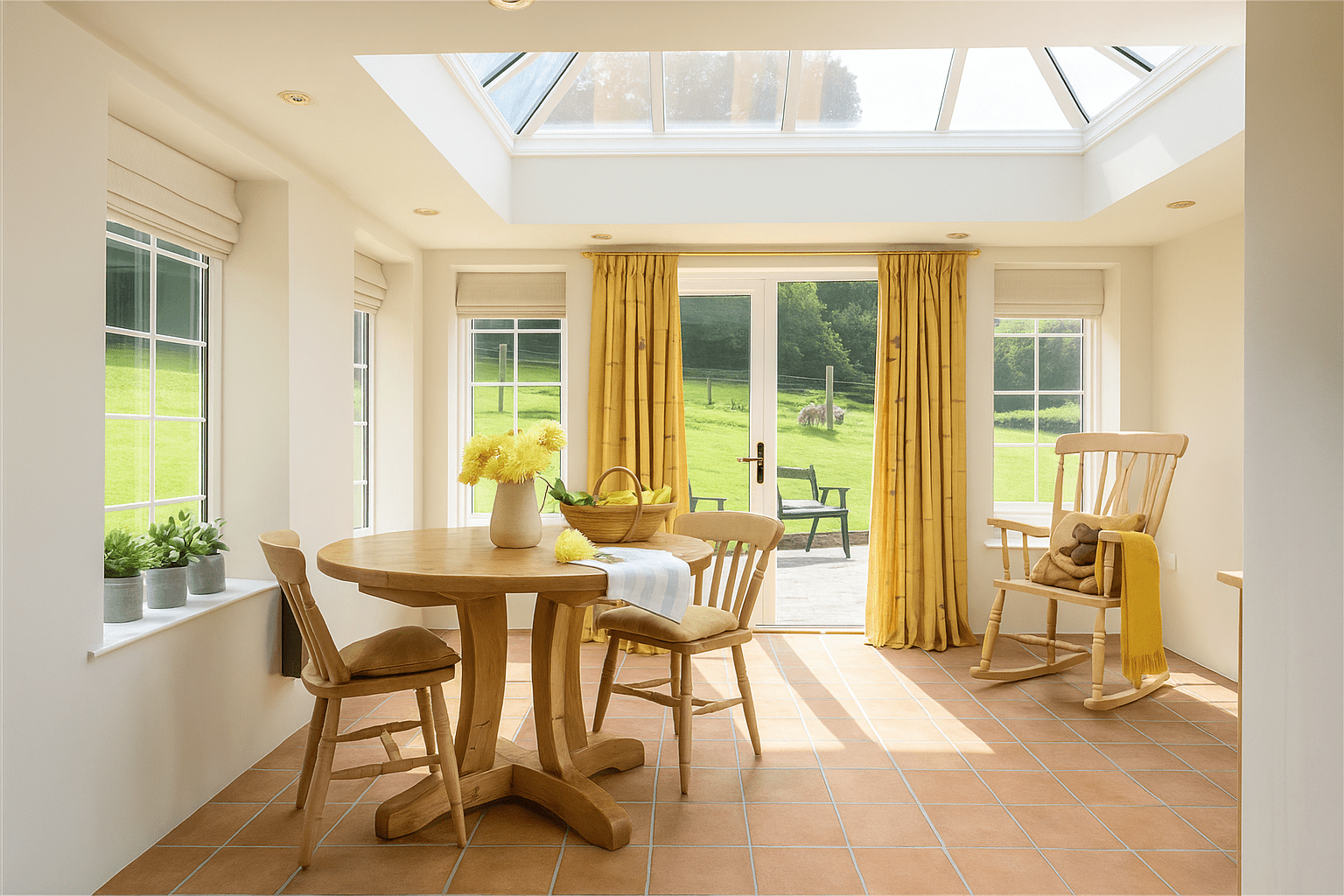
The lantern isn’t just a “style feature” — it affects comfort year-round.
Key upgrades that change pricing:
-
solar control glass (reduces overheating)
-
self-clean coatings (reduces maintenance)
-
better U-values (winter comfort)
-
integrated blinds (looks tidy, costs more)
-
ventilation options (manual vs electric openers)
The cheaper the roof spec, the more likely you’ll spend later on blinds, fans, or retrofits because the room gets too hot in summer.
5) Doors and glazing: why “just picking bifolds” isn’t the full story
Many people expect doors to be a simple line item (e.g., “3m bifold”), but door costs vary massively based on:
-
uPVC vs aluminium vs timber-look systems
-
threshold type (standard vs low threshold)
-
hardware and security spec
-
glazing thickness and performance
Security is often overlooked here — but it matters for large glazed openings. If you want a quick reference on what to ask about (locks, glass type, cylinders, PAS 24), link this in your research: home security guide.
When replacing doors, you may need to replace connected windows too
Here’s a detail that catches homeowners out:
If your uPVC back door is connected to a side window (shared frame / coupled units), many installers can’t safely replace only the door without disturbing the whole assembly. Some larger firms prefer to fix into brickwork or a reinforced adjacent unit — and many standard uPVC frames are not reinforced enough for the installer’s preferred method.
So even if you “only want the door”, you may be quoted for:
-
door plus the connected window unit
-
new coupled frame / reinforced sections
-
extra making-good around the opening
If you’re weighing door-only replacement vs replacing the whole set, it helps to price the full window/door combo too using the Double Glazing Cost Calculator so you have a realistic benchmark before you accept a quote.
6) Electrics, heating and ventilation: the livability costs
To make an orangery feel like part of the house, you’ll often want:
-
new lighting circuit and sockets
-
underfloor heating or radiators
-
ventilation (trickle vents, roof ventilation, extractor upgrades if it’s a kitchen orangery)
These aren’t “optional extras” if the orangery is becoming a main family space — and they can be priced very differently depending on what’s already available in your home.
7) Why orangery quotes vary so much (even for “similar” builds)
Two orangeries can look alike but differ massively in:
-
structure & thermal build-up (insulation levels, cavity build, roof spec)
-
doors/glazing performance (U-values, solar control, laminated glass)
-
security hardware (locks, cylinders, hinges, PAS 24-style spec)
-
groundworks assumptions (depth, drainage, access, waste)
-
making-good quality (plastering, finishes, matching bricks, pointing)
-
warranty and aftercare (who supports issues in year 5+)
A good installer will write assumptions clearly. A weak quote often hides risk behind vague wording.
A quick checklist to compare quotes properly
Before you decide, make sure each quote clearly states:
-
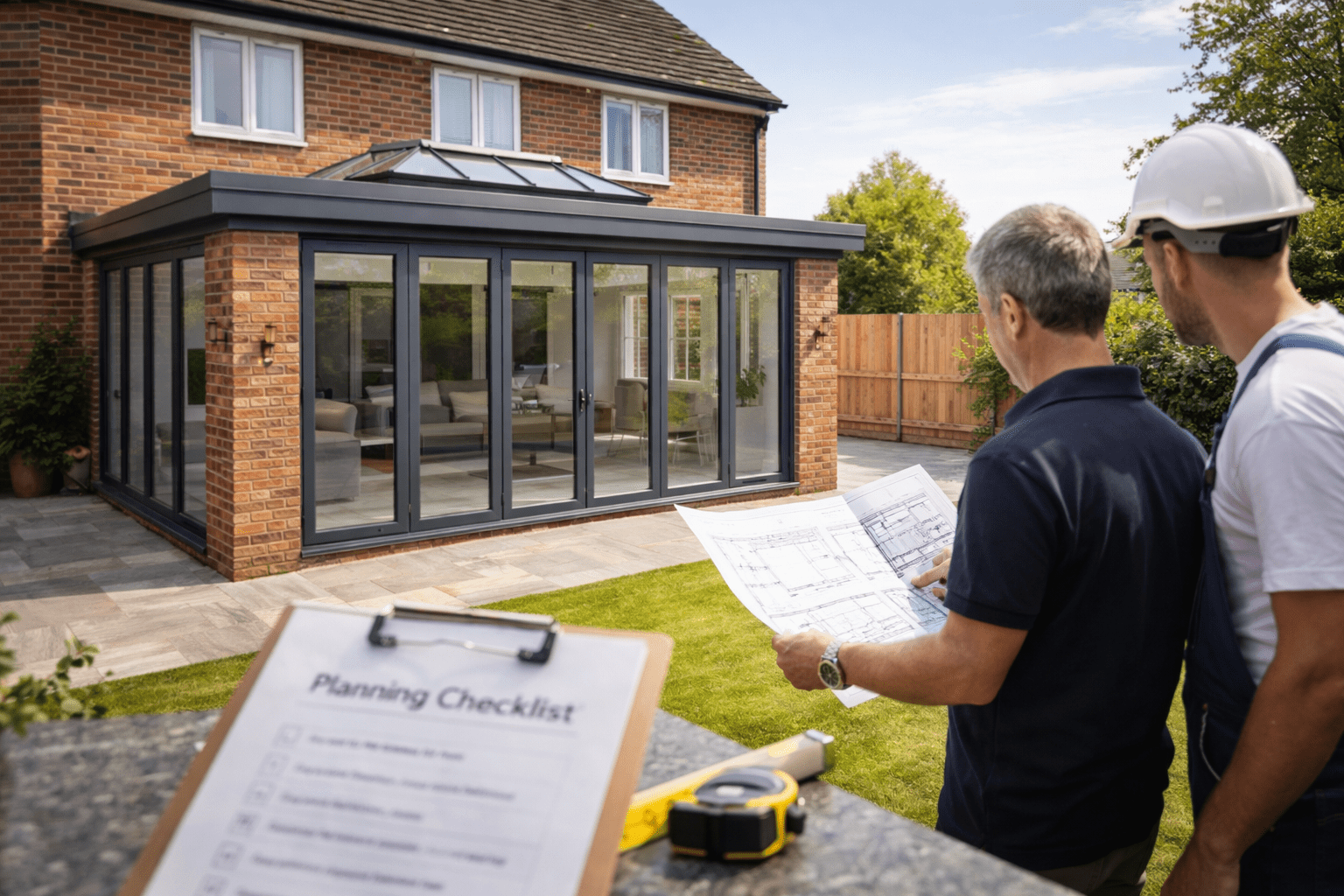
exact size and layout (with drawings if possible)
-
foundations depth assumptions and drainage scope
-
roof lantern spec (glass type + U-values if available)
-
door system material and hardware
-
insulation approach (roof + walls)
-
electrics/heating included or excluded
-
making-good level (inside and outside)
-
warranty length and who holds responsibility
Next step: get a realistic range before you book surveys
If you want a fast, realistic estimate range before speaking to installers, use our free Orangery & Conservatory Cost Calculator — it’s designed to help you understand what specs and sizes do to the budget, so you can discuss quotes confidently.