Glass doors can completely change how a room feels. More light, better garden views and a cleaner link between inside and out all sound great on paper. The real question is simpler: should that opening be bifold or sliding?
Both options are popular in the UK, but they suit different priorities. Updated UK buying guides tend to compare them on the same decision points: opening width, sightlines, floor space, thermal performance, maintenance and price.
Choose bifold doors if opening space matters most
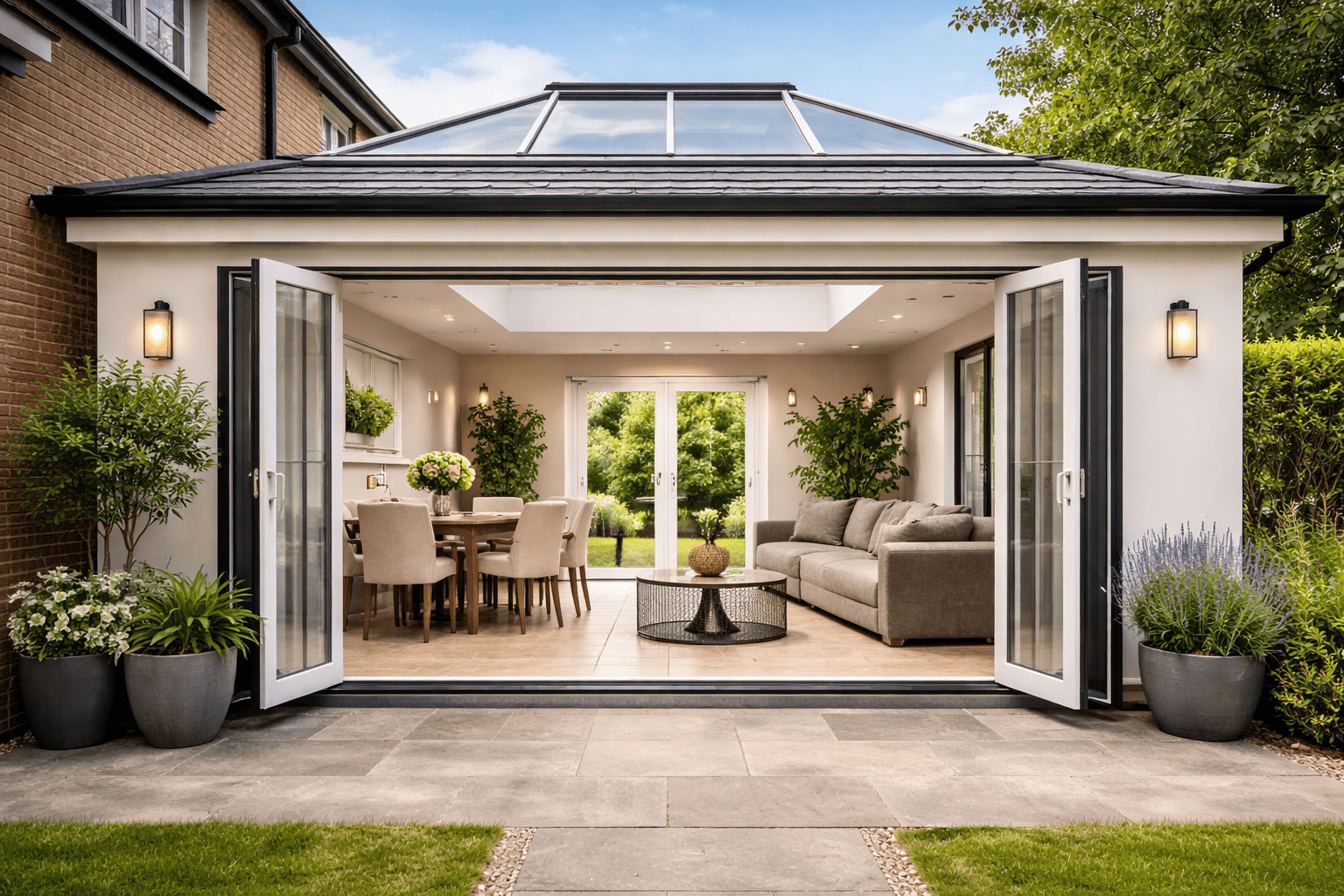
Bifold doors are usually the better choice when the goal is to open up as much of the aperture as possible. The panels fold and stack to one or both sides, which creates a wider clear opening than most sliding systems. That makes them especially appealing for garden-facing kitchen extensions and entertaining spaces.
They also work well when you want a traffic door for everyday use, so you do not always need to slide or fold the full set open.
Choose sliding doors if glass and views matter most
Sliding doors usually win on sightlines. Because they have fewer vertical frames, they tend to give you bigger panes of glass and a less interrupted view of the garden. They are also a good option where furniture sits close to the opening, because the panels do not fold into the room or onto the patio in the same way bifolds do.
So the trade-off is clear:
-
bifolds = bigger opening
-
sliders = bigger glass views
Which is better for warmth and weather?
Modern systems in both styles can perform well, but sliding doors are often seen as slightly simpler because they have fewer moving parts, fewer panel junctions and less hardware to maintain. Bifolds can still be highly weather-resistant, but quality of manufacture and installation matters even more because of the hinges, rollers and multiple seals.
For UK homes, that means the right installer matters just as much as the door style.
Which is easier to live with day to day?
Sliding doors are usually easier for:
-
uninterrupted views
-
quick operation
-
tighter layouts
Bifolds are usually better for:
-
family entertaining
-
wide openings
-
that “open wall” effect in summer
That is why neither option is automatically “better”. It depends on how you will actually use the room.
What about cost?
This is where many homeowners are surprised. A lot of UK guides note that bifold and sliding doors can be closer in price than people expect, because bifolds involve more hardware while sliders often use larger and heavier glass units. Final quotes still depend on size, frame material, glazing specification and installation complexity. Panel count can also make a big difference, which is why many homeowners compare prices based on how many panels their opening requires. For a clearer breakdown, see our guide to bifold door cost per panel (2–7 panels).
The simplest way to choose
Go for bifold doors when you want the opening itself to feel as wide and flexible as possible.
Go for sliding doors when you care more about clean lines, bigger panes and uninterrupted views.
For many homes, the best answer is not the trendiest product. It is the one that matches the room, the layout and how you use the space every day.
If you want realistic price ranges before speaking to installers, check out our double glazing cost calculator or the closest relevant glazing calculator on Bestpricevalue.com.