uPVC windows are built to be low-maintenance, but in real UK weather (and real UK houses), they can still develop annoying issues: the handle gets stiff, the sash drops slightly, the window won’t seal tight, or the lock doesn’t “catch” like it used to.
The good news: a lot of uPVC window problems are adjustment problems, not “replace the whole thing” problems. In this guide, you’ll learn the most common faults, what causes them, the fixes that usually work, and the red flags that mean it’s time to consider replacement.
Before you start: quick safety + tool checklist
Most basic fixes are DIY-friendly, but don’t force anything—uPVC frames and multi-point locks don’t respond well to brute strength.
Helpful tools:
-
Allen keys (commonly 4mm)
-
Pozidriv screwdriver
-
Silicone spray (not WD-40 for long-term use on moving parts)
-
Clean cloth + mild detergent
-
Thin card/paper (for checking seal pressure)
-
Step stool (for tall windows)
If the window is on an upper floor and you need to lean out or remove parts, stop and use a professional.
Problem 1: uPVC window won’t close properly (or you have to “lift” it)
What it feels like
-
You need to lift the sash to close it
-
The window rubs the frame
-
It closes, but the locking points won’t line up
Common causes
-
The sash has dropped slightly over time (hinge wear or weight)
-
The hinges are slightly out of adjustment
-
The keep/strike plates no longer align with the locking rollers (“mushrooms”)
Fixes to try
1) Clean the hinge area + check for debris
Even small grit in the hinge channel can change alignment.
2) Adjust the hinges (if your window type allows it)
Many uPVC casement windows have adjustable friction hinges. Look for adjustment screws and make tiny changes, then test close.
3) Align the keeps/strike plates
If the lock points are missing the keeps, you can often loosen the keep screws, nudge slightly, then retighten.
When to stop DIY
If you see cracking around hinge screws, stripped fixings, or the sash looks twisted—call an installer. That can indicate the unit is no longer sitting correctly.
Problem 2: uPVC window handle is stiff, loose, or spins
What it feels like
-
Handle is hard to turn
-
Handle turns but nothing happens
-
Handle wobbles or pulls away from the frame
Common causes
-
Lack of lubrication in the gearbox/lock mechanism
-
Screws have loosened
-
Gearbox failure (especially if it “turns freely”)
-
Misalignment causing too much friction
Fixes to try
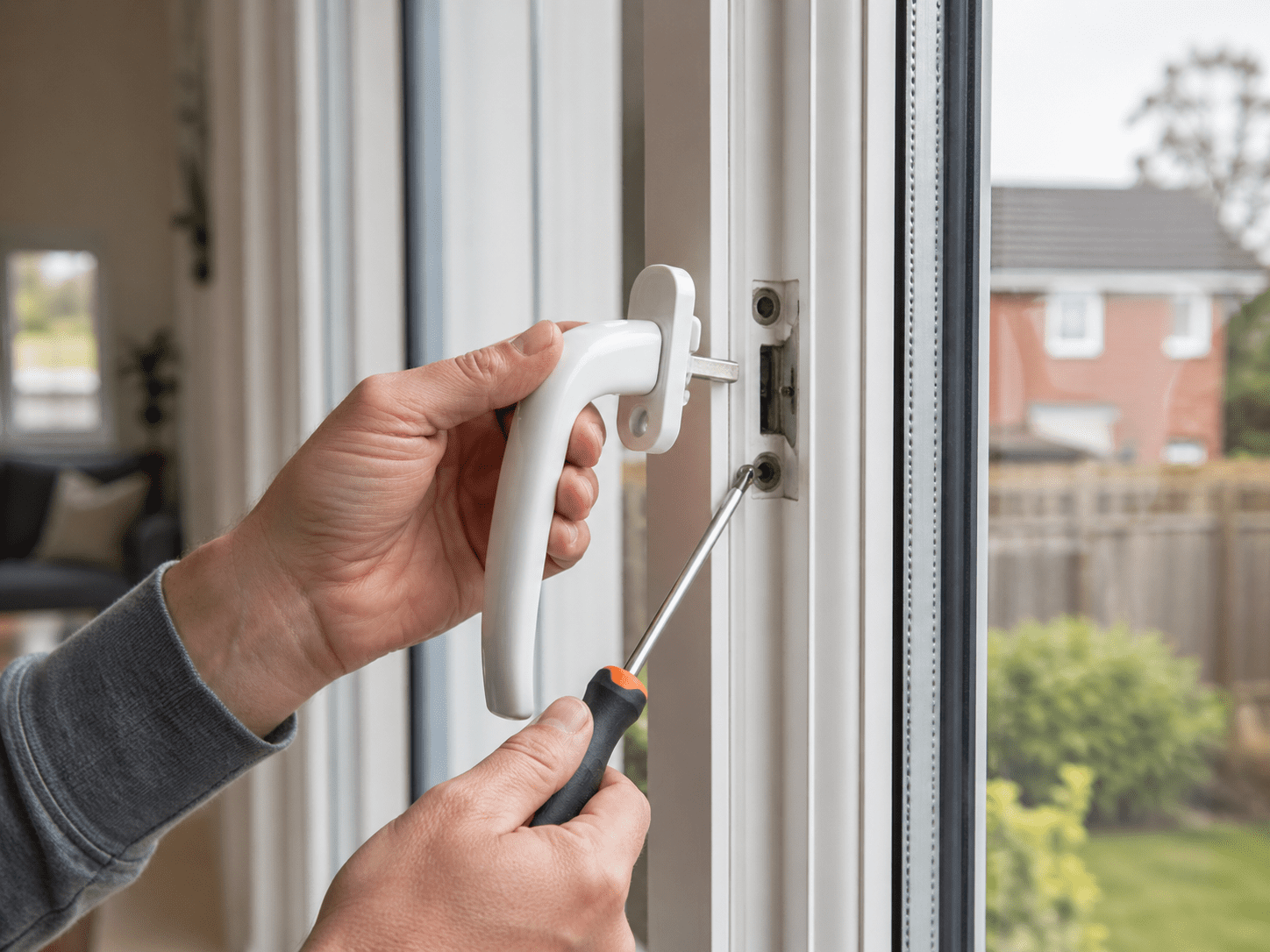
1) Tighten the handle screws
Many handles have two screws hidden behind a cover plate—rotate the cover to access them.
2) Lubricate the moving parts (properly)
Use silicone spray (or a lock-appropriate lubricant) on the locking points and moving components. Work the handle gently.
3) If the handle spins: likely gearbox issue
A spinning handle often means the internal mechanism isn’t engaging. In many cases, the fix is gearbox replacement (a common repair).
Tip: If you’re replacing a handle, measure the spindle length and the screw-hole centres before ordering.
Problem 3: Drafts around the window (even when closed)
What it feels like
-
Cold air near the frame
-
Whistling in wind
-
Curtains move slightly near the window edge
Common causes
-
Worn or compressed gaskets/seals
-
The window isn’t pulling in tight enough (compression issue)
-
Frame-to-wall gaps (older installations)
Fixes to try
1) Clean the seals first
Dirt can stop the gasket sealing. Warm soapy water, then dry.
2) Do the paper test
Close the window on a thin strip of paper. If it slides out easily, you don’t have enough compression in that area.
3) Adjust the locking rollers (if present)
Some windows have eccentric rollers you can rotate to increase compression. Small changes make a big difference.
4) Replace the gasket if it’s perished
If the seal is cracked, flattened, or shrinking at corners, replacing the gasket can restore performance quickly.
When replacement is more sensible
If the draught is coming from inside the double-glazed unit (not the seal) or the frame is warped, repairs may not hold.
Problem 4: uPVC window won’t lock (or the key won’t turn)
This is both a comfort and security issue—don’t leave it unresolved.
Common causes
-
Misalignment of keeps/rollers (most common)
-
Dirt/grit in lock points
-
Failed cylinder (less common on windows than doors, but possible)
-
Gearbox or multi-point strip failure
Fixes to try
1) Check alignment first
If it locks when you push the sash hard into the frame, it’s alignment/compression.
2) Clean + lubricate
Lubricate lock points and try again gently.
3) Inspect the keeps
If a keep is slightly off, the roller won’t seat properly.
Security note: If your window isn’t locking reliably, check our uPVC Window security article and advise prioritising this fix.
Problem 5: Condensation issues (inside vs outside vs between panes)
Condensation is one of the most misunderstood window issues.
-
Outside condensation (on the exterior glass): often normal, can indicate good insulation.
-
Inside condensation (room side): usually ventilation/humidity issue.
-
Between panes: more serious—often points to a failed sealed unit.
For a full breakdown (including causes and fixes), see our condensation in double glazing article.
Problem 6: Window is hard to open / hinge feels “grindy”
Common causes
-
Hinges need cleaning/lube
-
Friction hinge wear
-
Warping or alignment shift
Fixes to try
-
Clean hinge channel
-
Light silicone spray
-
If the hinge is bent or noisy under load, replacement hinges are often the real fix.
When it’s time to repair vs replace
Repairs are usually worth it when:
-
The frame is sound
-
The issue is alignment, seals, handles, hinges, or a gearbox
-
The glazing unit is okay (no moisture between panes)
Replacement may be the better route when:
-
You have repeated failures across multiple windows
-
Sealed units are failing in several places
-
Frames are warped, cracked, or poorly installed
-
You’re upgrading for efficiency/security and want modern specs
If you’re considering replacement, internally link readers to your double glazing cost calculator so they can understand a realistic price range before speaking to installers.