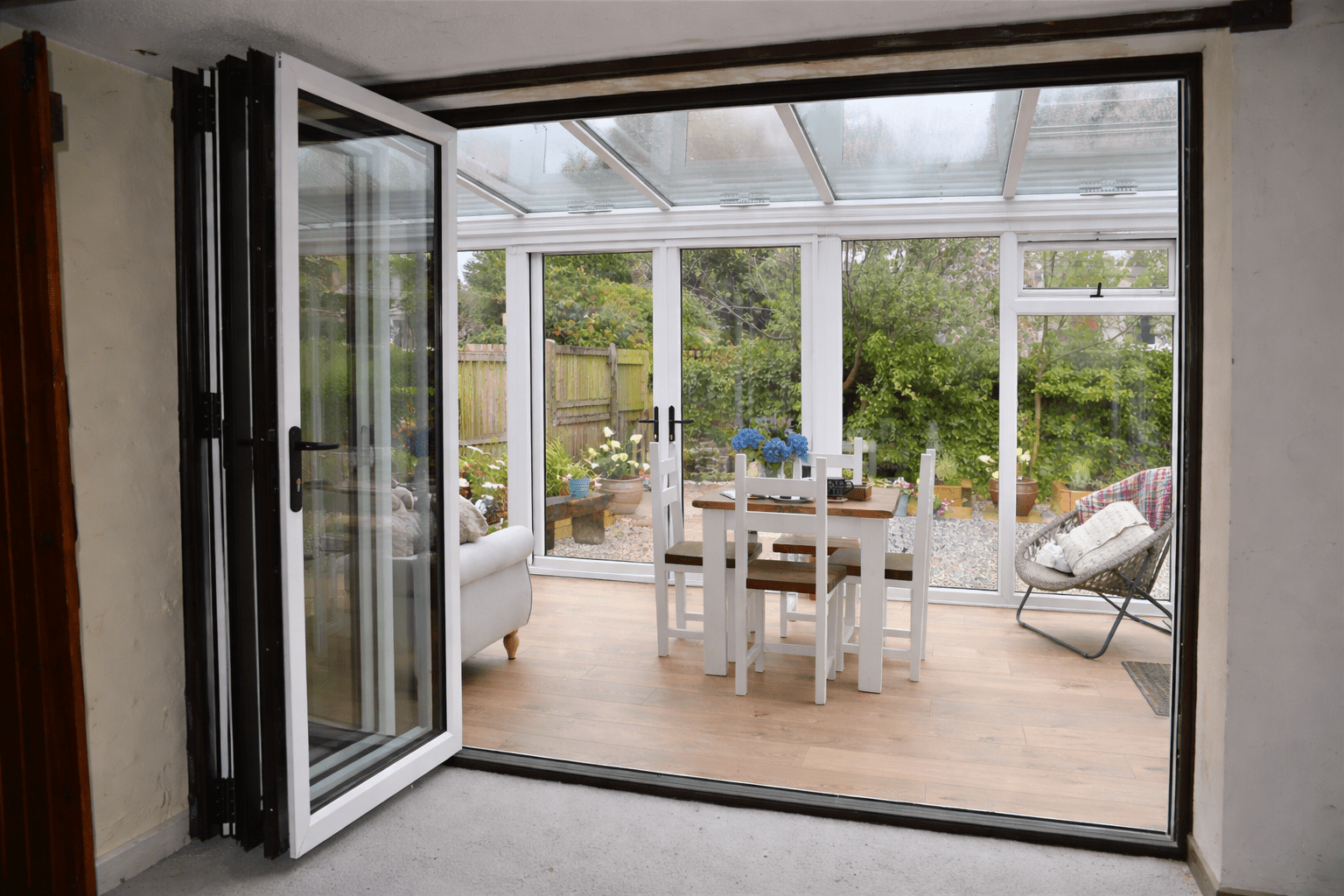
If you’re searching for bifold doors inside, you’re probably planning one of two things:
-
using bifolds as a room divider (kitchen–diner, lounge–conservatory, hallway–living room), or
-
installing an “internal-looking” bifold set to connect a warm room to an extension.
The idea is brilliant — flexible space when you want it open, and separation when you need it. But getting it right depends on four things: privacy/blinds, thermal performance, threshold/floor levels, and how the panels stack in real life.
1) Where internal bifolds work best
Internal bifolds are at their best when you want one big space most of the time, but still need the option to close it off:
-
kitchen–dining room to contain cooking smells
-
lounge–snug for noise control
-
home office separation without building a full wall
-
linking a main room to a conservatory/orangery so you can “shut off” cold space in winter
If the goal is temperature control, the key is treating the opening like an external boundary: you’ll want proper insulation planning, sealing, and glazing choices.
2) Blinds for bifold doors inside: what actually works
This is the #1 frustration people hit after installation: the doors look great, but privacy and glare become an everyday issue.
The most practical options are:
Perfect-fit blinds
Great for tidy looks, especially on uPVC frames, and they don’t flap about. Best for light control and privacy.
Pleated blinds
Good for modern interiors and can work well on large glazed panels. They’re popular because they look “softer” than roller blinds.
Integral blinds (inside the glass)
Excellent if you want zero cleaning hassle — but they usually push quotes higher, and not all frame systems offer them.
Curtains
Yes, curtains still work — but make sure the track clears the door stack zone and handles.
Tip: before choosing blinds, confirm where the doors fold/stack and whether handles will clash with a blind system.
3) Privacy without killing natural light
For internal bifolds, you often want privacy sometimes, not always. Options that keep light while improving privacy:
-
frosted film for lower sections
-
reeded / fluted glass for character (great in older homes)
-
top-down/bottom-up blinds so you can block sightlines while keeping daylight
If you’re separating a warm room from a colder extension, privacy choices also affect solar gain and comfort — something most people don’t consider until after the first winter.
4) Heating, drafts and why internal bifolds can still feel “cold”
Even when bifolds are technically “internal”, they often sit between a heated room and a space that behaves like outside (older conservatory, poorly insulated extension, or a room with lots of glazing).
Common reasons internal bifolds feel chilly:
-
the extension side has cold bridging at the slab/wall junction
-
the threshold area isn’t insulated properly
-
glazing spec is too light for the exposure
-
poor sealing or rushed fitting
If your plan is to use bifolds to manage temperature, choose the door system like you would for an external set: good seals, correct glazing, and proper fitting standards.
5) Floor levels and thresholds: the “trip hazard” problem
A big reason internal bifolds annoy people is a bad transition:
-
a raised threshold that catches toes
-
mismatched floor finishes
-
underfloor heating zones not planned around the frame line
Before you order, decide:
-
do you need a flush internal threshold?
-
will the doors open across a high-traffic path?
-
will furniture placement force you to walk through the stack area?
Planning this early prevents the “beautiful doors, awkward daily use” outcome.
6) Room layout and the reality of the stack
The stack zone is the space the doors occupy when folded. In a showroom, it feels minimal. In your house, it’s where your sofa corner, dining chair, or sideboard wanted to go.
Quick rules:
-
avoid putting fixed furniture where the doors stack
-
check the handle swing and clearance
-
think about where people actually walk — especially in open-plan kitchens
7) Security and peace of mind for internal sets
Internal bifolds aren’t usually your “frontline security”, but they can still be a weak point if they’re separating a secure room from a less secure space (e.g., an older conservatory). Multi-point locks and better cylinders can still matter.
If you’re choosing specs right now, use your security checklist here:
https://bestpricevalue.com/bifold-doors-security-guide/
8) Choosing the right system: uPVC vs aluminium (inside)
For internal use, both can work — but they behave differently:
-
Aluminium: slimmer sightlines, modern look, strong frames for larger spans
-
uPVC: often lower cost, good thermal performance, and popular for “match the existing” projects
9) Why quotes vary (even when doors look similar)
Two “similar-looking” bifolds can differ massively in:
-
frame quality and reinforcement
-
glazing spec
-
hardware grade (rollers, hinges, locks)
-
labour time and making-good
-
warranty length and aftercare
That’s why it helps to compare like-for-like specs — and to sanity-check pricing before committing.
To estimate typical price ranges and compare options quickly, use the calculator here:
https://bestpricevalue.com/double-glazing-cost-calculator/