If your uPVC door lock has started sticking, feeling stiff, or refusing to latch properly, you’re not alone. Lock issues are one of the most common reasons homeowners call for help — and they’re also one of the biggest reasons two “similar” quotes can come back wildly different.
This guide breaks down why uPVC door locks fail, what you can safely try yourself, what a professional usually fixes in one visit, and when replacing the whole door is the better long-term choice.
1) The most common uPVC door lock problems (and what they actually mean)
Most uPVC door lock issues fall into a few predictable buckets:
-
Misalignment (door dropping slightly): The door still closes, but the latch doesn’t meet the keep cleanly. You may need to lift the handle harder than usual.
-
Swollen or tight fit in cold/heat: Seasonal changes can make the door rub or bind, especially if it was fitted slightly tight.
-
Handle lifts but won’t “throw” the hooks: Multi-point locking relies on smooth movement. If one part binds, the system can feel jammed.
-
Key turns but nothing happens: Often the gearbox or cylinder isn’t engaging properly.
-
Door locks but doesn’t feel secure: The latch may be catching, but the hooks aren’t fully engaging.
A useful rule: if you have to force the handle, the issue usually isn’t “the key” — it’s alignment or the multi-point mechanism.
2) Quick checks you can do before calling someone out
You don’t want to make things worse, so keep it simple:
-
Check the door shuts freely before you lift the handle. If it doesn’t, alignment is likely the root cause.
-
Look at the keeps (the metal plates on the frame). If you see fresh scraping marks, the lock points are hitting off-centre.
-
Try locking with the door open (gently). If the mechanism moves smoothly when open but binds when closed, it’s almost always alignment.
-
Lubricate correctly. Use a silicone-based spray for moving parts and graphite for the cylinder (avoid heavy oils that attract grit).
If the handle is already very stiff, don’t keep forcing it — that’s how gearboxes get damaged.
3) The two “real” culprits: alignment and the gearbox
Most uPVC door lock call-outs end up being:
A) Alignment / hinge adjustment
uPVC doors can drop slightly over time. A fitter may adjust hinges and keeps so the lock points align again. This often solves the problem quickly and cheaply.
B) Gearbox or multi-point strip wear
If the gearbox is failing, you may notice crunching, slipping, or the key turning without action. When gearboxes go, the fix can be more involved — and this is where quotes start to vary, because parts compatibility matters.
4) Cylinder upgrades: a small change that improves security
If you’re replacing any lock component, it’s a good time to consider a higher-security cylinder (especially if your current one is old). Many break-ins exploit weak cylinders rather than “picking” the lock.
A quality cylinder upgrade is often cheaper than people expect and can improve both security and peace of mind — but only if the door and locking strip are still in good condition.
5) When it makes sense to replace the whole uPVC door
Sometimes you can keep repairing… but it’s not the best value.
Replacing the door may be smarter if:
-
You’ve had repeated lock/handle failures over a short period
-
The door is warped, has poor seals, or draughts badly
-
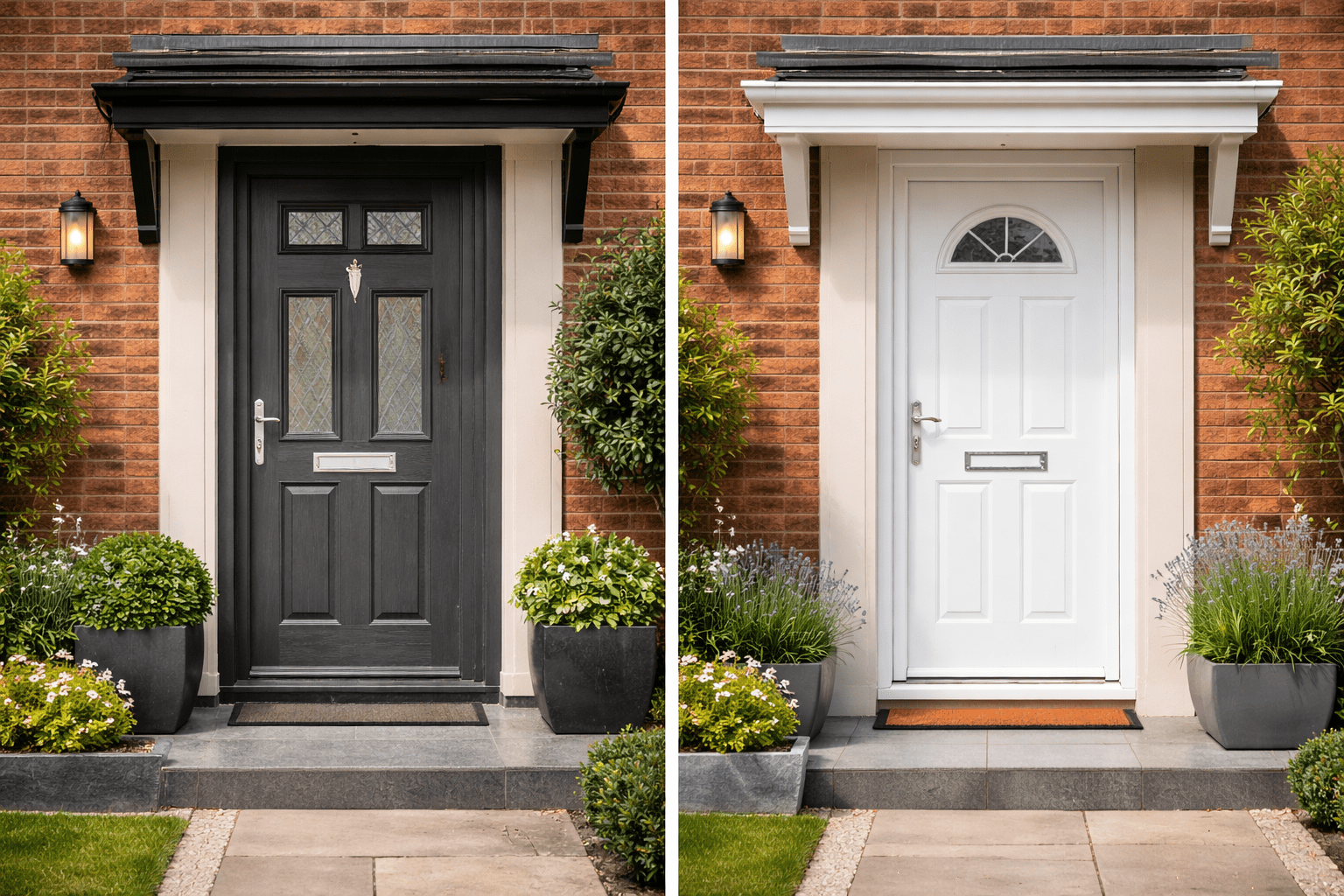
You want a security upgrade (better lock spec + stronger hardware + better frame)
-
You’re planning other upgrades and want a consistent look across the home
This is also where the “same size, different price” effect appears: higher quotes often reflect better hardware, more robust profiles, better fitting standards, and longer warranties — not just margin.
6) Why uPVC door quotes vary so much (even for “similar” doors)
-
Profile quality and reinforcement (steel-reinforced sections, thicker walls, better corner strength)
-
Lock spec and cylinder grade (standard vs high-security cylinders and multi-point systems)
-
Hinges and threshold detail (low-threshold options, drainage, weather protection)
-
Fitting method and time allowed (proper making-good, trims, sealing, internal finishes)
-
Guarantees and aftercare support
There’s also a big “hidden” price factor many homeowners don’t realise:
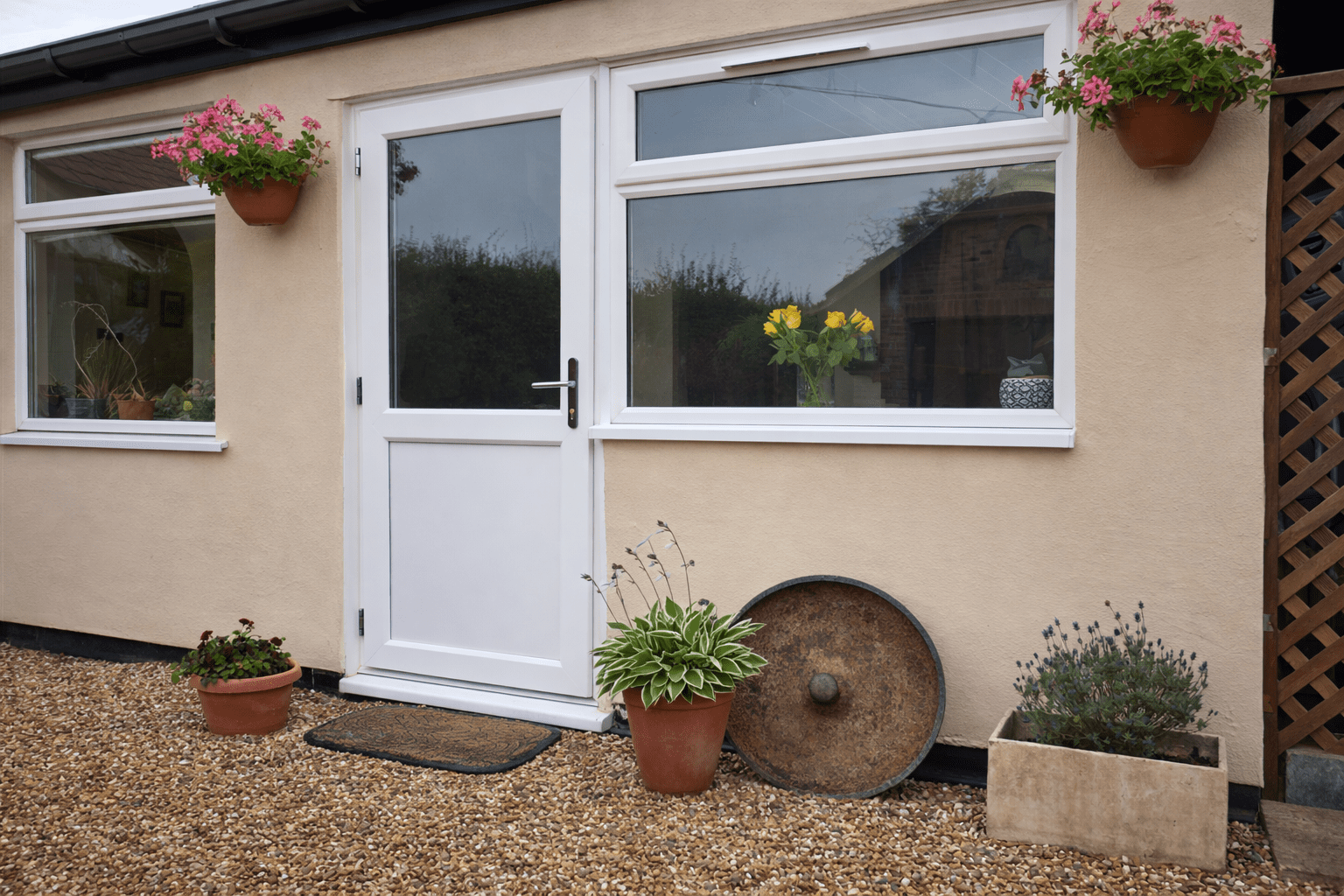
If your uPVC back door is physically connected to a window (or side panel) in a shared frame, some installers can’t—or won’t—replace only the door.
That’s because the door and window can be a coupled unit (shared frame/joiner), and removing one section can compromise alignment, fixing points, and overall rigidity.
Why this changes quotes:
Some larger firms often prefer to fix the new frame into brickwork or a properly reinforced adjacent section, rather than relying on a potentially weak joiner between units. In practice, that can mean:
-
replacing the door + attached window/side panel together to keep the structure rigid,
-
or upgrading to a specification that includes reinforcement where it’s needed.
Also, many suppliers don’t offer strong reinforcement as standard on every configuration—so when a firm quotes higher, it may be because they’re pricing a more robust solution (or pricing both sections to ensure the installation is sound and warranty-safe).
If you’re weighing up a new uPVC door versus replacing a combined door-and-window unit, it’s worth checking rough price ranges first so you can compare quotes like-for-like. You can use our Double Glazing Cost Calculator.
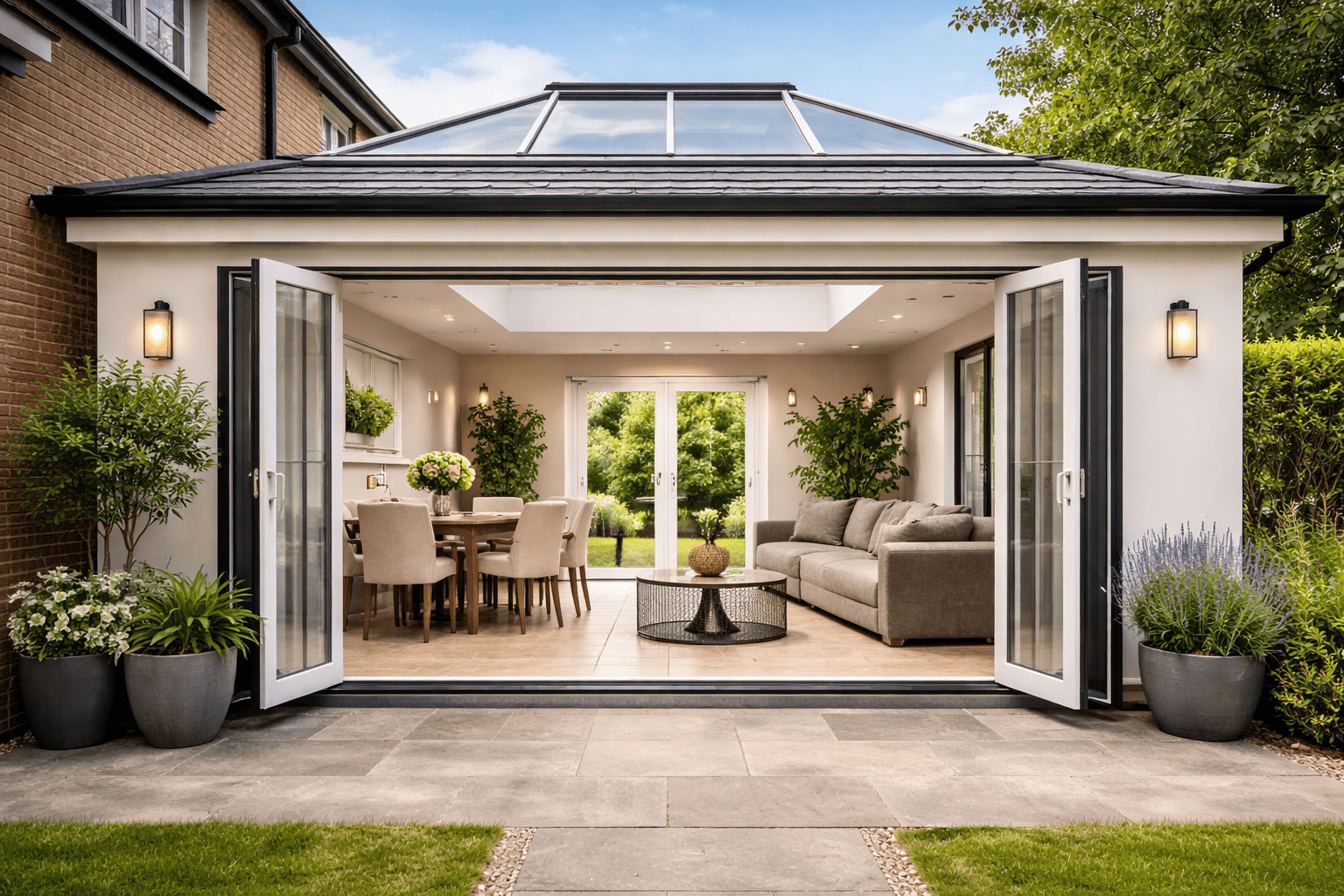
7) If you’re planning an extension, sort doors early
If you’re adding space (rear extension, orangery, conservatory), door choices affect layout, insulation, and the build sequence. A door that “just about fits” later can become an expensive compromise.
If you’re exploring a new space and want a realistic budget range before requesting quotes, use our free calculator here:
Extension Cost Calculator