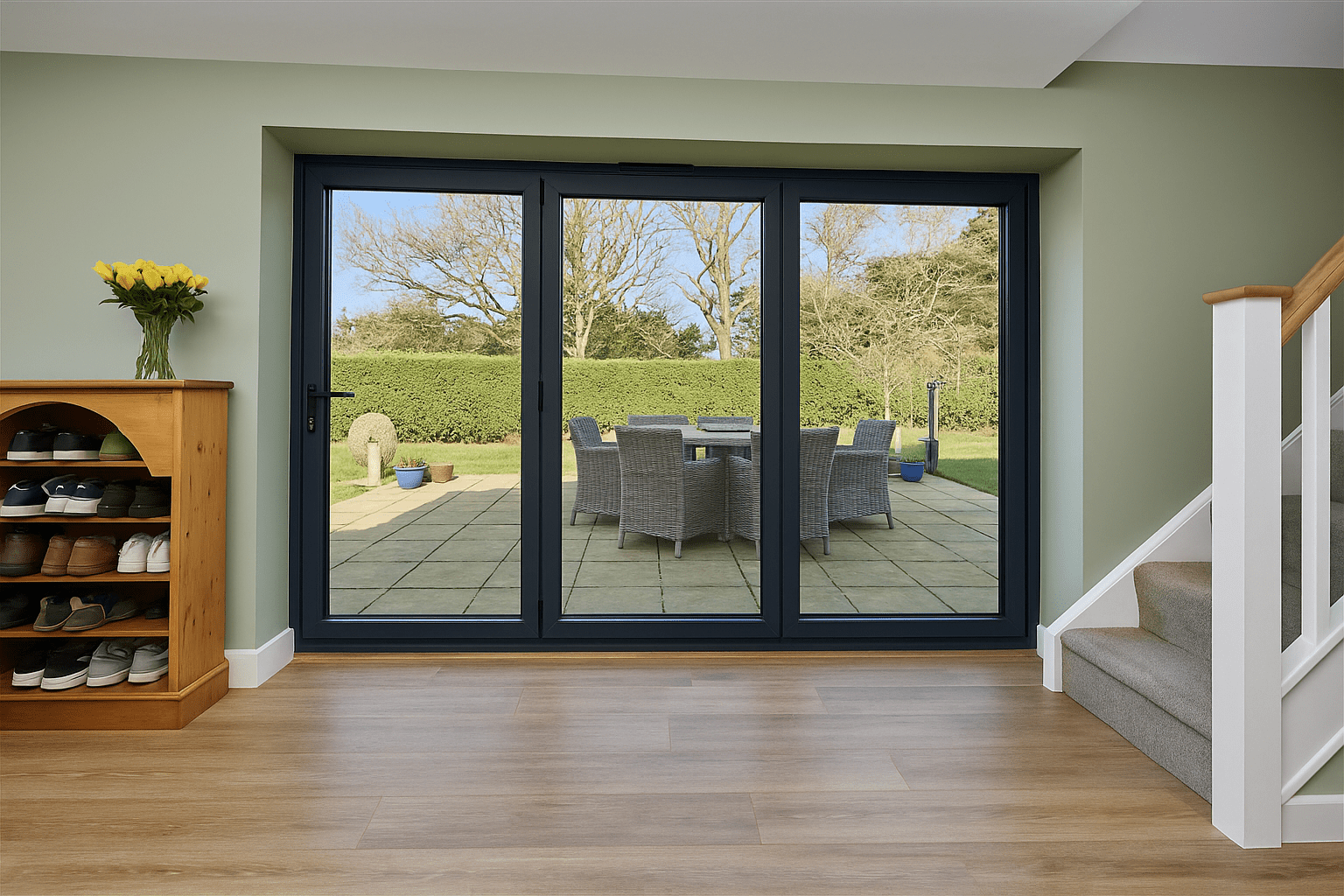
Bifold doors look impressive, but many homeowners quietly worry about one thing: security. The good news is that bifold doors can be very secure when the right components are specified. However, security depends far more on hardware, glass and installation detail than on appearance or frame material alone.
Understanding how bifold door security really works helps you avoid weak specs that only look good in brochures.
Start with the locking system (not the frame)
Most modern bifold doors use multi-point locking, but not all systems perform equally. The real security comes from how the panels lock together and into the frame.
Look for:
-
Shootbolts or hook locks rather than basic rollers
-
Locks that engage top and bottom, not just at handle height
-
A solid central meeting stile where panels close together
In addition, key-locking handles should be standard, not an upgrade. If a quote treats them as optional, that’s a red flag rather than a saving.
Glass choice: the most overlooked security upgrade
Many break-ins happen by breaking glass, not forcing frames. That’s why glass specification is critical for bifold door security.
For ground-floor doors, consider:
-
Laminated glass (it stays intact even when cracked)
-
Toughened glass alone is stronger than standard glass, but it can shatter
-
Laminated inner panes paired with toughened outer panes for balance
If your bifolds sit near a side access path or quiet garden area, laminated glass is one of the most effective upgrades you can make.
Track and threshold security (often ignored)
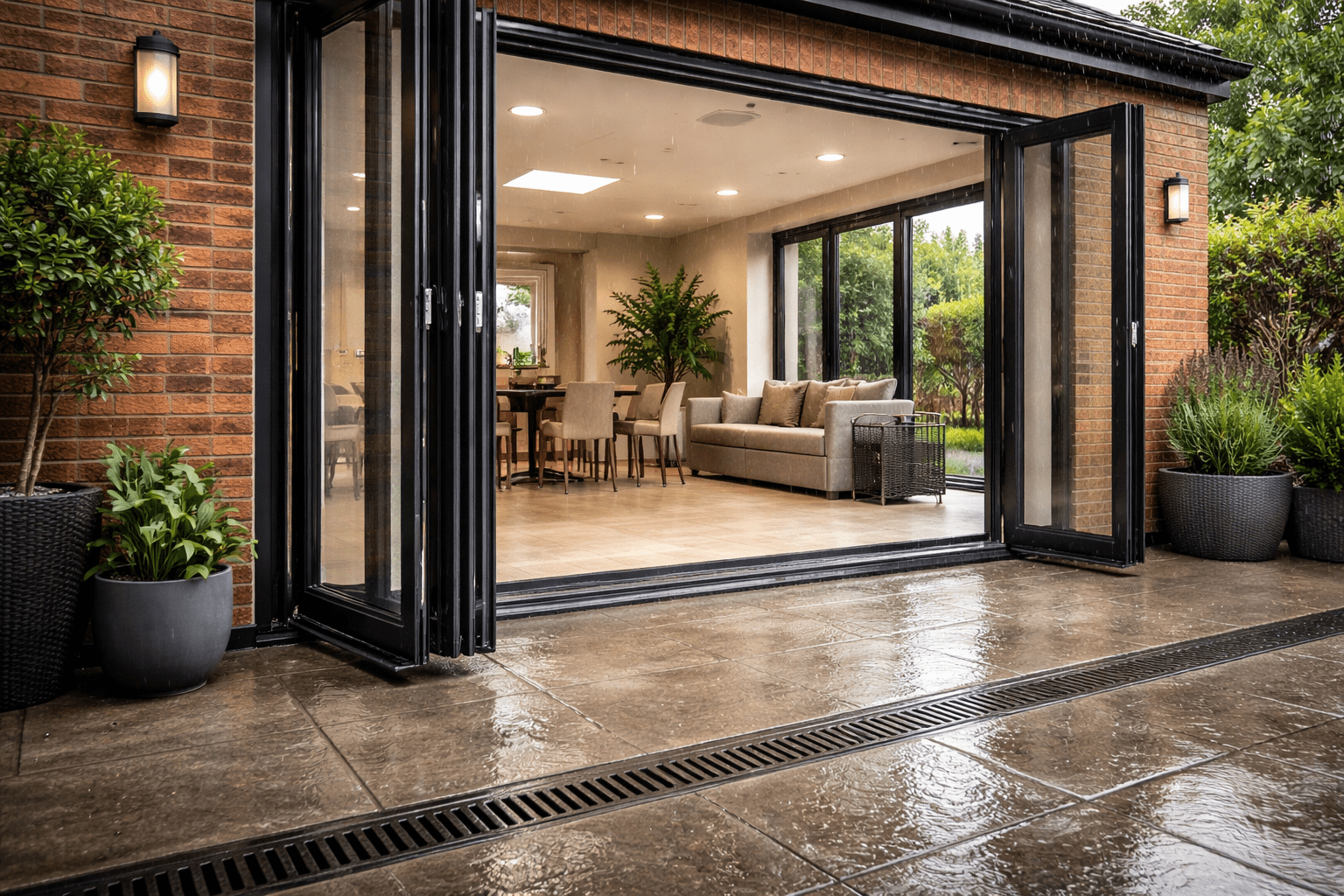
The bottom track is a structural and security component, not just a sliding surface. Poorly fixed tracks can flex or loosen over time.
A secure setup includes:
-
Proper mechanical fixings into solid substrate
-
Anti-lift protection to prevent panels being lifted out
-
Thresholds matched to exposure level (flush is not always best)
Therefore, a slightly raised threshold can actually be more secure and weather-resistant on exposed sites.
Panel configuration affects security too
Large openings are appealing, but very wide panels place more stress on hardware. As a result, security improves when:
-
Panel sizes stay within manufacturer recommendations
-
Heavier glass is matched with upgraded rollers and hinges
-
Traffic doors are used for daily access instead of folding the full set
This reduces wear and keeps locking points aligned over time.
Installation quality matters more than brand names
Even the best bifold system becomes insecure if installed poorly. Common installation-related weaknesses include:
-
Frames packed incorrectly, allowing movement
-
Uneven apertures causing misaligned locks
-
Poor sealing that leads to long-term frame distortion
For that reason, always ask what preparation and making-good work is included. A secure door starts with a square, stable opening.
Simple add-ons that genuinely improve security
Some low-cost extras are genuinely worth considering:
-
Internal sash jammers as a visible deterrent
-
External lighting near bifold openings
-
Integrated alarms or sensors if the doors sit at the rear of the home
Meanwhile, ignore vague “high-security” labels unless they come with clear explanations of locks, glass and fixings.
How to compare quotes properly
Two quotes may both say “secure bifold doors” while offering very different protection. Ask these direct questions instead:
-
What locking system is used on each panel?
-
Is laminated glass included, and where?
-
How is the bottom track fixed and protected?
-
Are handles key-locking as standard?
-
What happens if the opening needs structural adjustment?
As a result, you’ll compare real specifications rather than marketing phrases.
Final thought
Bifold door security is not about making doors look heavy or complicated. It’s about locks that engage properly, glass that resists attack, and installation that keeps everything aligned for years.
If you want to sanity-check how different specifications affect overall budget before comparing installer quotes, the Double Glazing Cost Calculator is a practical starting point for building a like-for-like comparison.