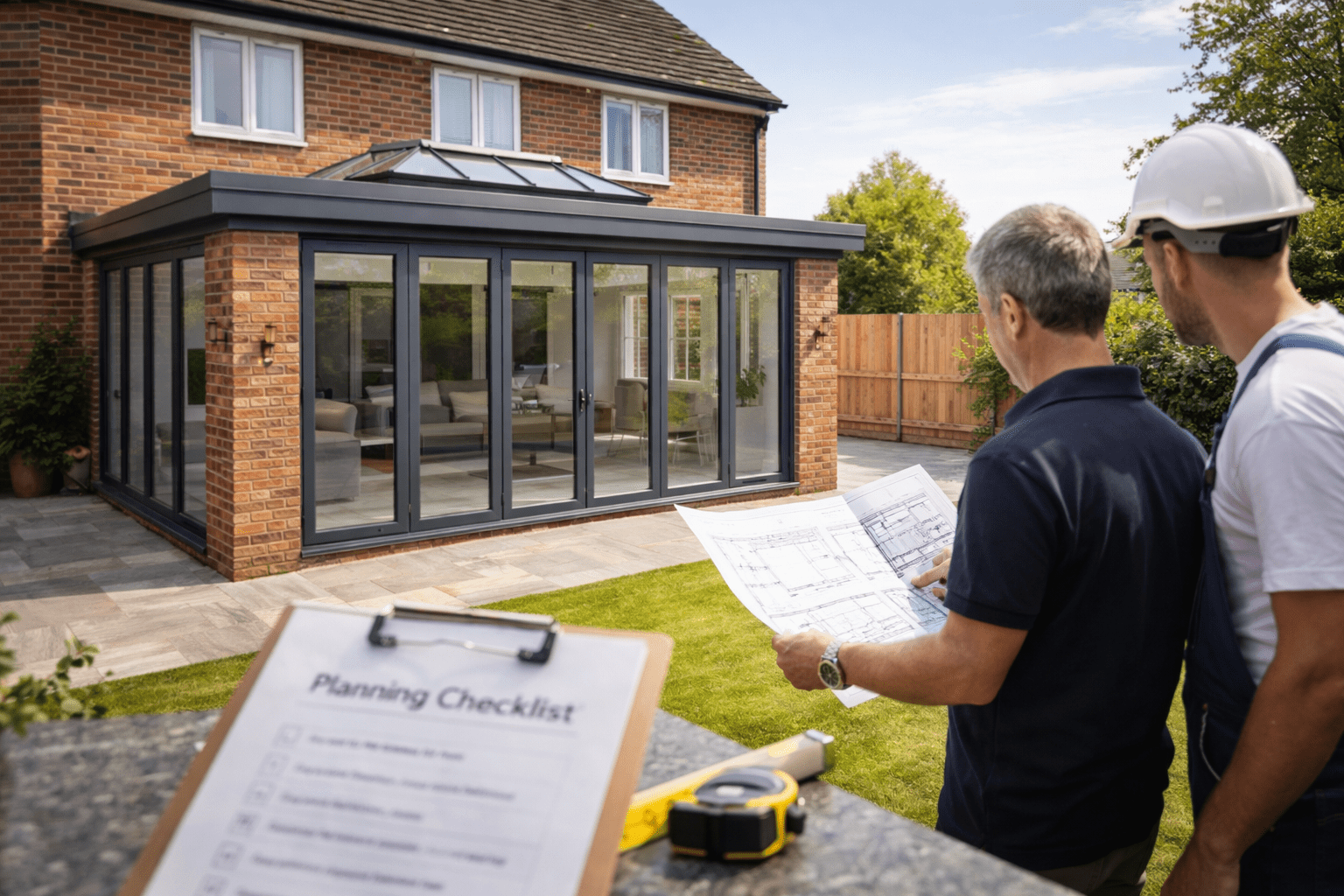
If you’re researching orangery planning permission, you’re probably trying to avoid two things: delays and surprise costs. The good news is that many orangeries can be built under Permitted Development (PD) — but only if you stay inside the rules for size, height, and location.
In this guide, you’ll get a simple checklist you can use before you speak to installers, plus the common scenarios where planning (or Building Control) becomes more likely.
If you want a full orangery overview (styles, specs and comfort upgrades), start here: orangery.
1) Planning permission vs Building Regulations (people mix these up)
-
Planning permission is about what you’re allowed to build (size, height, boundary rules, appearance in some areas).
-
Building Regulations are about how it’s built (structure, insulation, safety glass, electrics, ventilation, drainage, etc.).
You can be fine for planning but still need Building Regs sign-off depending on how the orangery connects to the house.
2) The 3 checks that decide if planning is “likely”
A) Projection (how far it comes out from the rear wall)
Rear projection limits are often tighter for attached homes than detached ones. If your orangery sticks out further than typical PD limits, planning becomes more likely.
B) Height (especially if you’re near a boundary)
The biggest “gotcha” is height near boundaries. If the build is within ~2 metres of a boundary, height is often more restricted — especially around the eaves.
C) Location and restrictions
Planning is more likely if:
-
your home is listed
-
you’re in a conservation area
-
you’re on certain new-build estates with removed PD rights
-
the design significantly changes the street scene (less common for rear builds)
3) Orangery size: what’s “normal” and what triggers extra checks?
Most orangeries sit in the range of:
-
Small: around 3m × 3m
-
Medium: around 4m × 4m
-
Large: 5m+ wide or a more “extension-like” footprint
The bigger you go, the more important it is that your quote includes the “boring but expensive” parts: foundations assumptions, drainage scope, structural opening requirements, and making-good.
If you want a fast estimate range based on your exact size and spec, use our calculator here: Orangery & Conservatory Cost Calculator.
4) The “open-plan orangery” trigger (Building Regs)
Many conservatory-style builds stay simpler if they’re thermally separated from the house with external-quality doors.
Building Regs are more likely if:
-
you want an open-plan connection to your kitchen/diner (no separating doors)
-
you choose a solid/tiled roof or a flat roof + lantern
-
the structure involves large openings and steelwork
This doesn’t mean you can’t do it — it just means the job needs to be specified properly so you don’t get hit with unexpected variations later.
5) What to ask installers so quotes are like-for-like
Before you compare quotes, make sure each company confirms:
-
Exact footprint and heights (and whether the design stays inside PD)
-
Foundations assumptions (depth, ground conditions, drainage moves)
-
Roof build-up (warm roof / flat roof + lantern spec)
-
Glazing performance (solar control, self-clean, U-values where possible)
-
Doors spec (material, threshold type, security hardware)
-
Making-good (internal plastering, external finishes, matching brickwork)
-
Warranty and aftercare (who you call in year 5, not just year 1)
6) Don’t ignore security when you add large openings
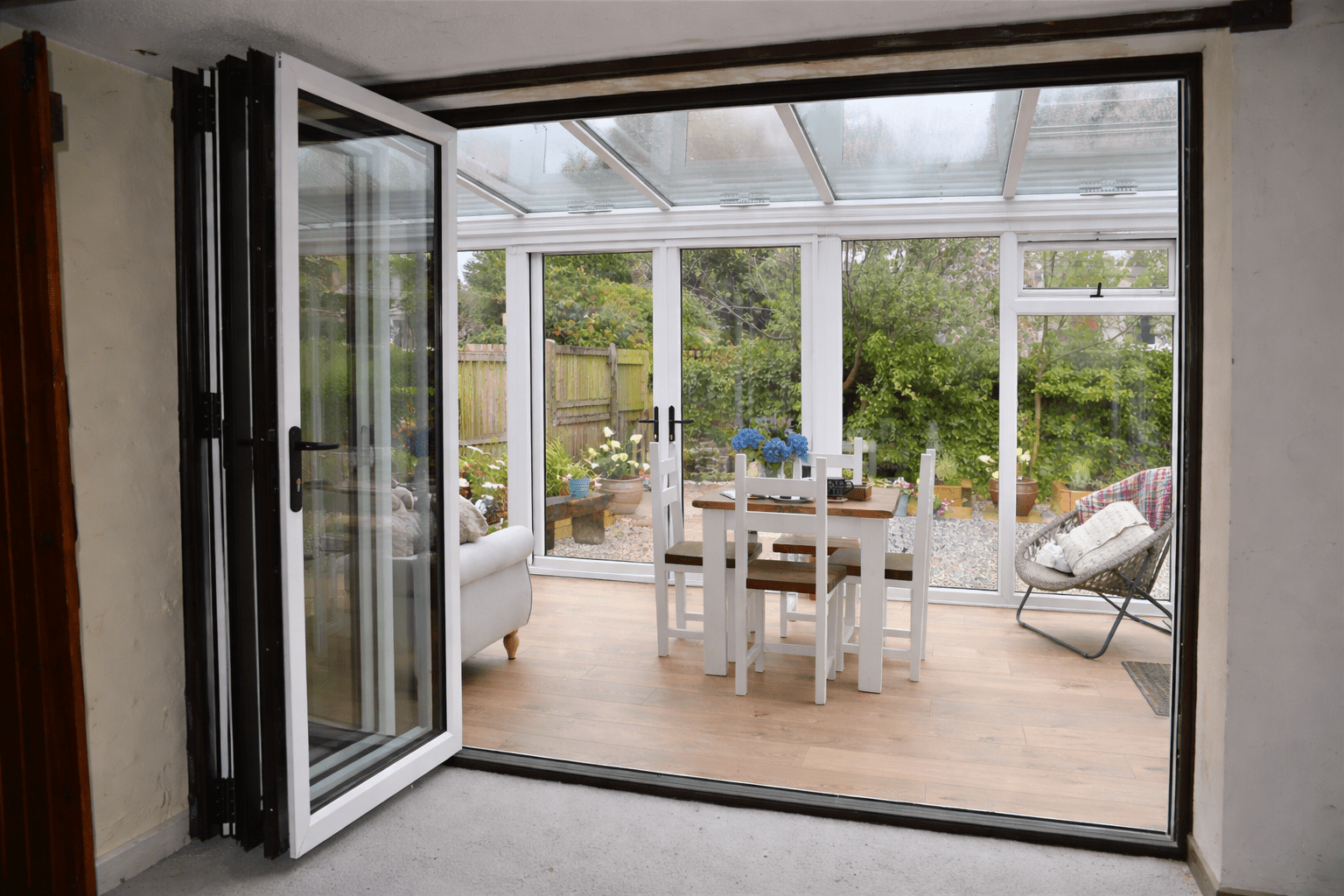
Orangeries often include wide sliding doors or bifolds — that’s a lot of glass.
At minimum, ask for:
-
laminated or toughened safety glass where required
-
modern multi-point locks
-
a quality cylinder (anti-snap / anti-drill)
If you’re also upgrading doors/windows elsewhere at the same time, it’s worth reading Bestpricevalue.com’s security guidance before you accept a spec (Security Guide link) and sanity-checking window/door budgets here: Double Glazing Cost Calculator.
Quick takeaway checklist
If you want the simplest route:
-
keep the footprint reasonable
-
avoid pushing height near boundaries
-
decide early whether it’s separated or open-plan
-
make sure your quote includes foundations assumptions + making-good