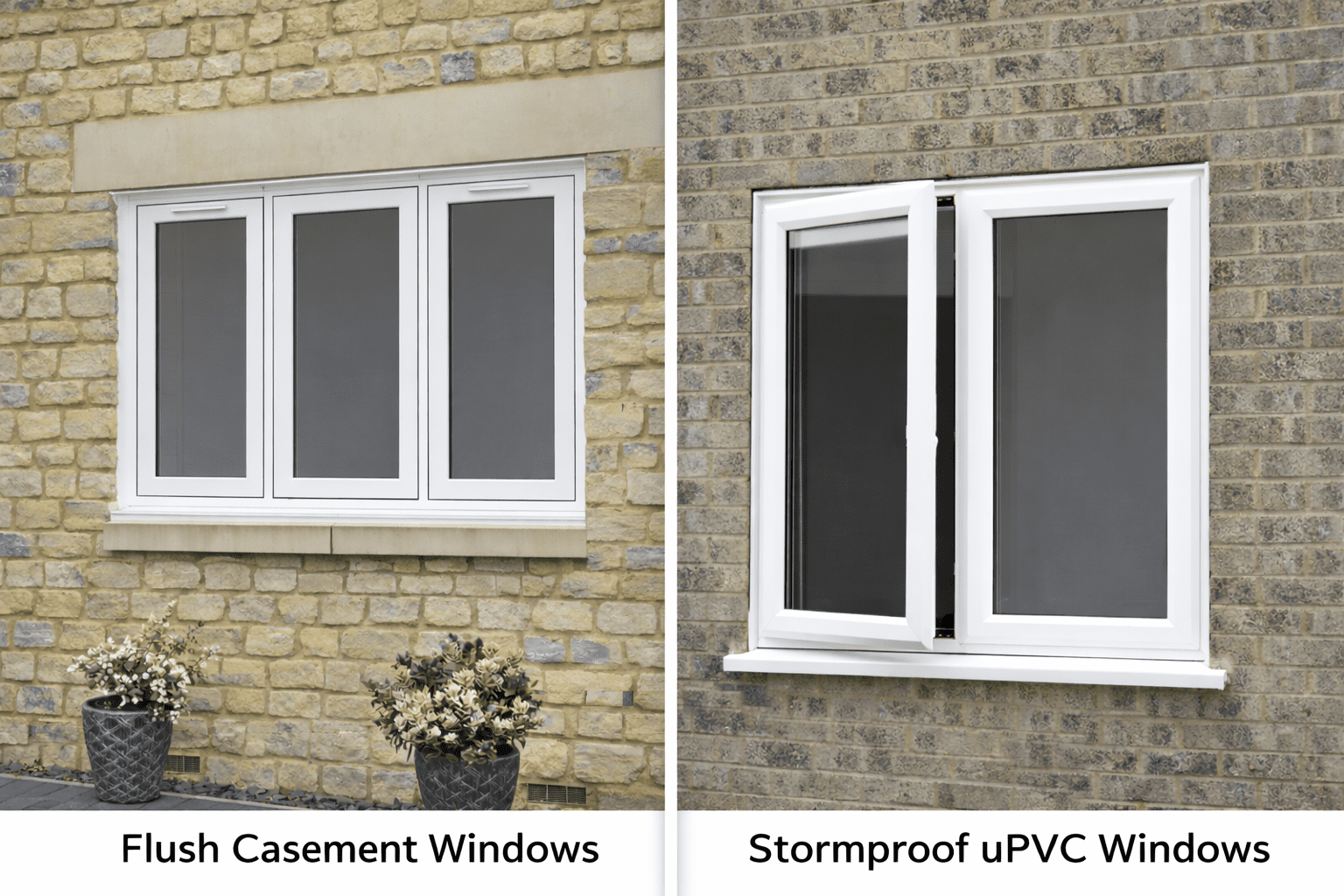
If you’re comparing flush casement vs stormproof uPVC windows, this guide explains the real differences that affect comfort, security and quotes.
They can look similar in photos, but they behave differently in real life — and they’re one of the biggest reasons two “like-for-like” quotes can come back hundreds (or thousands) apart.
This guide breaks down the practical differences (looks, weather protection, cleaning, security, and price drivers) so you can choose the right style and compare quotes properly.
If you want a full overview of uPVC options, styles and specs, you can also browse our uPVC windows guide.
What’s the actual difference?
Flush casement (flush sash)
A flush casement sits level with the outer frame when closed — the sash doesn’t “stick out”. It’s chosen for a cleaner, more premium look and is especially popular on:
-
period-style homes and cottages
-
modern minimal designs
-
homeowners who want “timber-style” lines without timber maintenance
What it feels like: tidy, refined, “architectural”.
Stormproof casement (lipped/overlapping sash)
A stormproof casement has a sash that overlaps the frame. That lip gives extra weather protection and is the more common mainstream uPVC style.
What it feels like: robust, practical, familiar.
Which looks better on your home?
Choose flush casement if…
-
You want a more premium, modern or heritage-friendly look
-
You like straight lines and minimal frame “steps”
-
You’re matching a timber aesthetic (especially with woodgrain foils)
Choose stormproof casement if…
-
You want the most common style (usually easier to match later)
-
Your priority is weather resistance and simplicity
-
You’re focused on best value for typical family homes
Tip: If your home has traditional features (brick arches, bay fronts, older-style detailing), flush often looks more “intentional” than stormproof.
Weatherproofing and draughts: which performs better?
People assume stormproof must be warmer because of the overlap. In reality, both can be excellent if the key specs are right:
What matters most:
-
glazing unit quality (spacer bar, gas fill, thickness)
-
seals and gaskets
-
correct installation (level frames, proper fixing, expanding foam + sealing, tidy trims)
-
trickle vents and how they’re fitted (if required)
A well-made flush window can outperform a poorly-made stormproof one — so don’t judge purely on the style name. Judge on spec and install standard.
Cleaning and daily use
Flush casement
-
Usually easy to wipe clean because the face is flatter
-
Great for a “clean façade” look
-
Depending on design, some flush styles can be slightly more “premium hardware” focused
Stormproof casement
-
The lipped sash can create an extra edge where dust gathers
-
Still easy to clean, just a bit more detailing around the overlap
-
Very common parts/hardware and familiar operation
If you have upstairs windows you’ll clean from inside, ask how the openings work (egress hinges, restrictors, fire escape hinges) — these can change cost and usability more than the style.
Security: style matters less than the security package
Both styles can be secure. The differences in quotes usually come from the security spec, not whether it’s flush or stormproof.
When comparing quotes, check:
-
multi-point locks (and how many locking points)
-
hinge-side security (hinge bolts / dog bolts)
-
glazing security (toughened vs laminated; internal beading)
-
handle type (key-locking, anti-drill, child-safe)
-
PAS 24 / Secured by Design (if you’re upgrading security spec)
If you want a simple checklist of what to ask installers so quotes are truly like-for-like, check our uPVC Window security guide.
Why flush casement often costs more
Flush windows often price higher because they’re typically sold and specified as a more “premium” product. Common reasons include:
-
more complex profile design (to achieve the flush look)
-
more finishing work (tidier lines, premium trims)
-
colour/foil finishes are more common (and can add cost)
-
buyers often pair flush with better glazing packages and hardware
That said, you can also find expensive stormproof windows if the spec is upgraded heavily (laminated glass, premium colours, PAS 24 packages, oversized units, tricky access, etc.).
The real reasons two “same size” quotes can be wildly different
If you want accurate comparisons, don’t just compare “flush vs stormproof”. Compare these:
1) Profile and reinforcement
-
chamber count and build quality
-
reinforcement type (where needed)
-
higher-spec profiles are often more stable and longer-lasting
2) Glazing package
-
double vs triple (and unit thickness)
-
low-E coatings, warm-edge spacers
-
acoustic upgrades (great near roads)
3) Hardware and security
-
standard locks vs upgraded packages
-
hinge security and anti-jemmy features
4) Installation complexity
-
access (scaffold / towers / high ladders)
-
bay/bow structures, lintels, making good
-
internal finishing and external trims
5) Brand overhead
Some national firms price higher for the same measurements because:
-
bigger overheads (sales structure, marketing, admin)
-
longer warranty structures
-
bundled extras
That doesn’t automatically mean “bad value” — it just means you should compare spec + install standard, not just the headline figure.
Quick decision guide (flush casement vs stormproof uPVC windows)
Choose flush casement if you want:
-
the cleanest look
-
a more premium finish
-
timber-style aesthetics with low maintenance
Choose stormproof casement if you want:
-
best value and widest availability
-
robust, traditional uPVC practicality
-
easier matching if you replace windows in phases
Before you request quotes: a simple “like-for-like” spec you can copy
If you want installers to quote properly, send them something like this:
-
Style: Flush / Stormproof (choose one)
-
Colour: White / Anthracite / Woodgrain / Dual colour
-
Security: multi-point locks + hinge bolts (yes/no)
-
Glass: toughened where required + upgrade option (laminated/acoustic)
-
Vents: trickle vents if needed (yes/no)
-
Finish: internal trims and making good included (yes/no)
-
Waste removal included (yes/no)
-
Access: any scaffold/tower costs included (yes/no)
This prevents “cheap” quotes that later add extras.
Want a fast price range before you speak to installers?
If you want a quick, realistic guide range based on size and spec (and a postcode-based regional adjustment), use our Double Glazing Cost Calculator to benchmark quotes and spot overpriced offers.