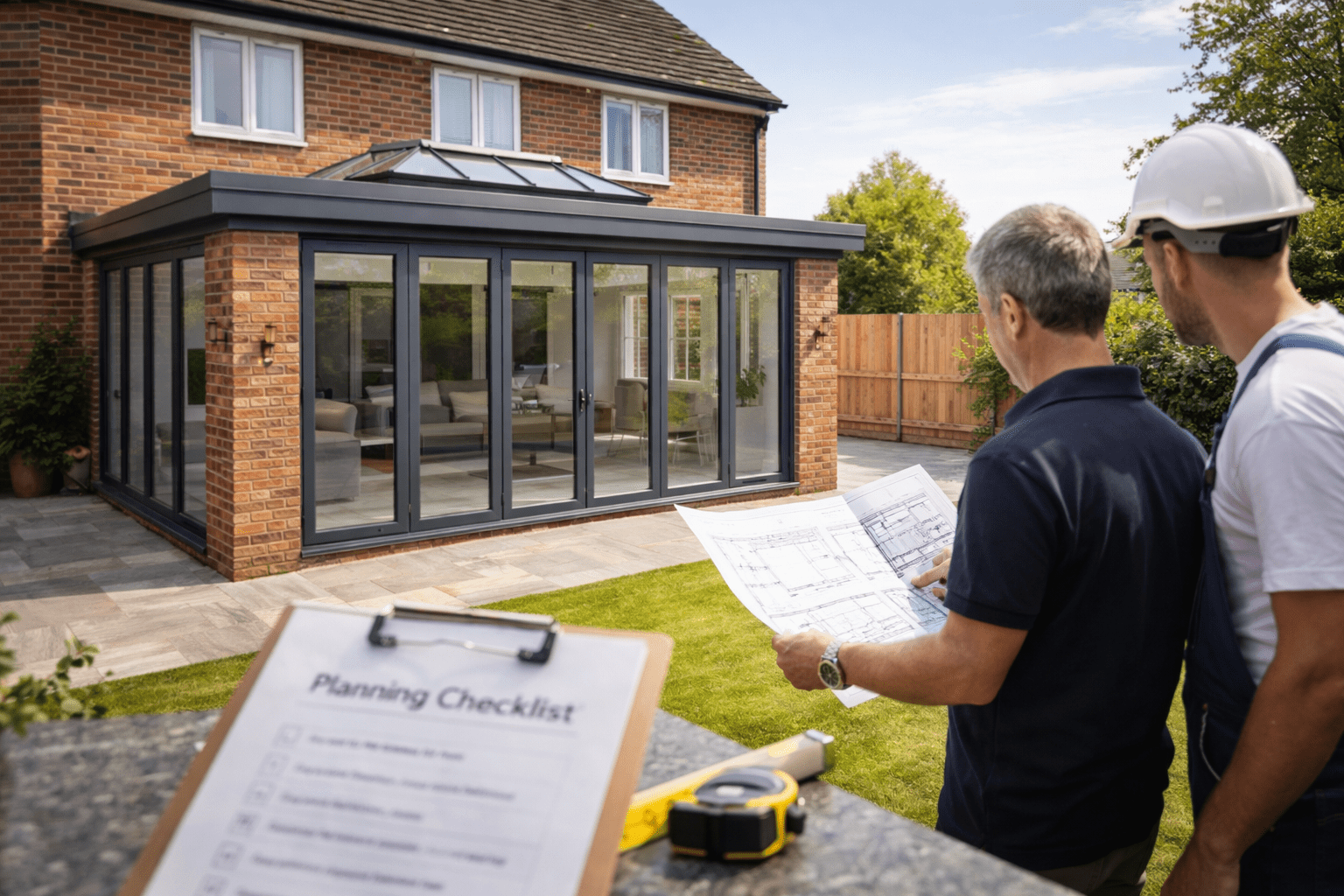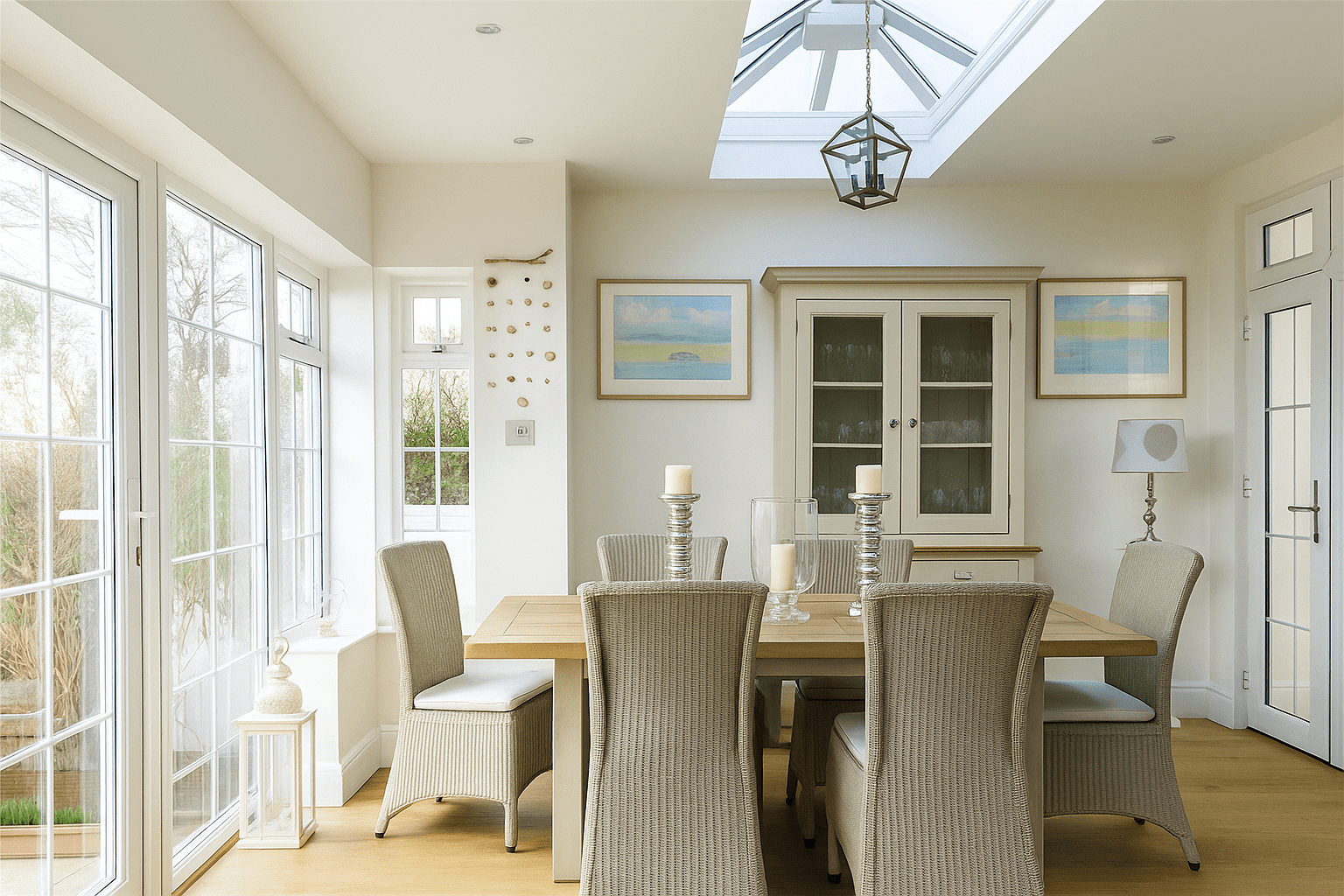
When people picture an orangery, they usually imagine light pouring in from above — but the roof choice changes everything. Roof design affects temperature, noise, insulation, and cost more than most homeowners expect. Before making decisions, it helps to understand the main options and what they’re best used for.
An orangery with the wrong roof can feel hot in summer, cold in winter, and loud in heavy rain. An orangery with the right roof feels like a proper room. If you’re planning one, start by reviewing the options on the Orangery page, then build from there.
1. Roof lanterns (the “classic orangery” look)
Lanterns are the most recognisable orangery roof feature. They sit on a solid perimeter roof with a glazed structure at the centre.
Strengths
-
Beautiful focal point for dining rooms and kitchens
-
Works with modern or traditional properties
-
Good daylight without feeling over-exposed
Consider if you want
-
A “proper room” feel with controlled light
-
A space you’ll use daily, not occasionally
Watch out for
-
Cheaper lanterns with weak thermal breaks
-
No ventilation strategy (can trap heat in summer)
2. Fully glazed roofs (more like modern conservatories)
This option suits large openings, open-plan kitchens, and properties that already have good insulation.
Strengths
-
Maximum natural light
-
Seamless feel with bifold or sliding doors
-
The most modern look
Consider if
-
You want a bright, open-plan kitchen/orangery
-
Your glazing upgrade budget allows for better glass
Watch out for
-
Basic double glazing that overheats south-facing rooms
-
Noise transmission on heavy rain (material choice matters)
3. Hybrid roofs (solid perimeter + glazed sections)
A hybrid roof is a blend: solid structure for thermal stability, glazed areas for light. It’s the best compromise for many UK homes.
Strengths
-
Better insulation and acoustic comfort
-
Works all year without feeling like a glass box
-
More privacy compared to full glazing
Consider if
-
You want to use the space as a lounge or office
-
Your home is in an exposed or windy location
4. Glass choices that actually matter
Glass performance is more important than style names or brand claims. These are practical upgrades worth understanding:
-
Low-E insulated units → everyday efficiency
-
Solar control glass → south-facing or sunny plots
-
Laminated inner panes → comfort + durability
-
Toughened outer pane → safety requirement
Choosing better glass prevents the “too hot / too cold” problem homeowners worry about.
5. Opening vents, airflow & mechanical ventilation
A beautiful orangery with poor ventilation becomes uncomfortable. At a minimum, consider:
-
Roof venting or trickle vents
-
Automatic opening where budgets allow
-
Mechanical extract if the orangery connects to a kitchen
Airflow is as important as insulation.
6. Cost expectations: why quotes vary so much
Orangery roof pricing changes based on:
-
Size, material and glass upgrades
-
Lantern or hybrid structure choice
-
Ventilation / electrical prep
-
Structural work (steel, lintels, support)
If you want to check how these choices affect price before speaking with installers, the Double Glazing Cost Calculator is a solid starting point for building realistic expectations.
Final thought
Orangery roof options aren’t about picking what looks best — they’re about picking what feels comfortable all year. A well-planned roof turns the space into a room you live in daily, not a room you visit occasionally.
A good rule of thumb:
Choose the roof for how you plan to use the room, not just how you want it to look.